Where did you get started?
As a professional, I cut my teeth in Asia, finding this place exuberantly life-confirming, and I have loved this job from the start, from early days in Singapore and Hong Kong, to setting up shop in Bangkok.
I started out building exotic gardens, mostly in Bali, but honestly, I did not like many of the hotel buildings I was engaged to tart up with my tamed jungles! As time went on, I learnt the spoken and architectural languages of south-east Asia, and became erudite of all things Bali.
What is your proudest project to date?
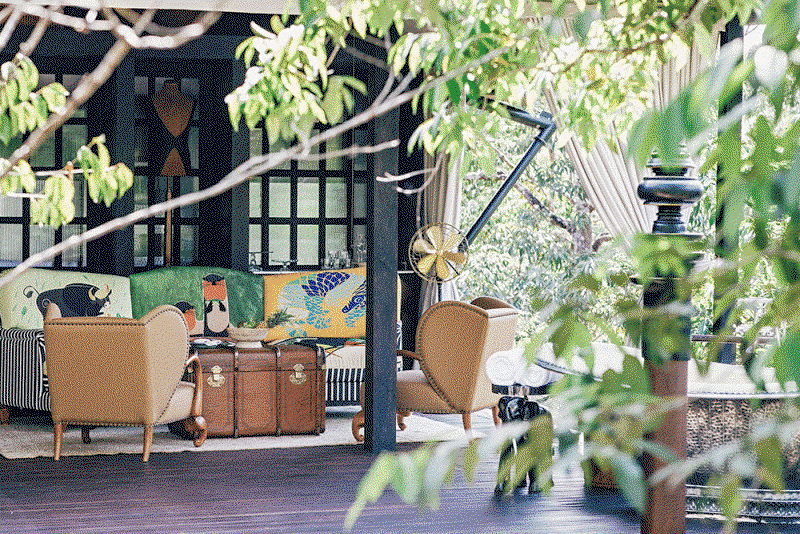
It has to be Shinta Mani Wild in Cambodia. It is, in many ways, my dream hotel, from the zip line check-in, to the immersion in one of the last great wildernesses of south-east Asia, and the conservation efforts at its heart.
Our handful of divine little tents in the forest exist to help fund the protection of the forest by the Wildlife Alliance, day in and out, and teach all our guests about conservation as well.
Best of all, it has created work for 120 people, 70% of which are from the local village. Many were poachers and loggers, as this region had little infrastructure and fewer opportunities to work: this is now a long-term employment opportunity without which they would be forced to turn to destroying the local flora and fauna.
How many people are part of Bensley? And what do you look for in a colleague?
There are about 80 of us in Bangkok and 60 in Bali – a great many more than I had ever dreamed. It’s a team of designers, architects, artists and thinkers who make the wild things I dream up become a reality.
I look for people who know how to do things I don’t, and are more skilled than me. I like to think that if I hire people who are experts in what they do, some of it rubs off – they teach me a great deal and vice versa. If I don’t have the answer, they always find a way.
“I look for people who know how to do things I don’t.”
What were your earliest travel memories?
Every weekend me and my family of five – English immigrants to California – would travel with our little family trailer to a camp spot close by. And every summer, we would hop into our own trailer and travel all over the US.
I loved exploring and still do, growing up with a great love for wilderness. As I got older my chums and I would backpack for 10 days and more in the high Sierras, living off the land.
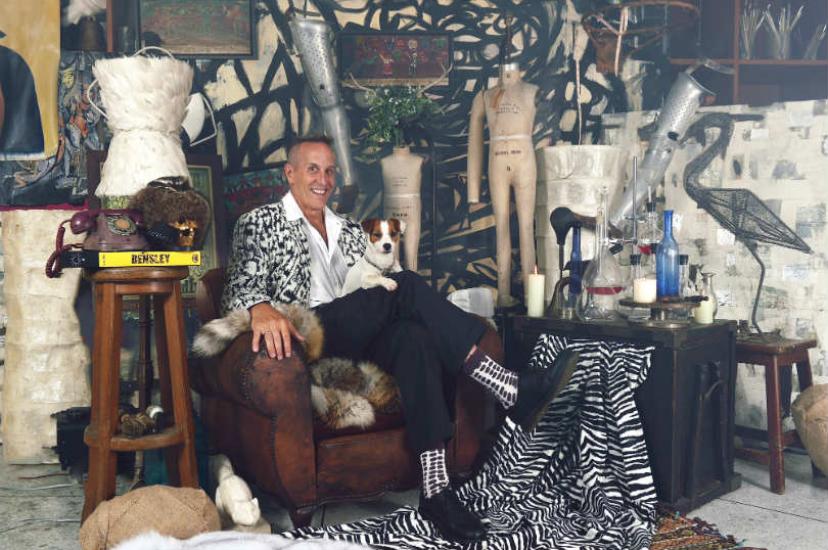
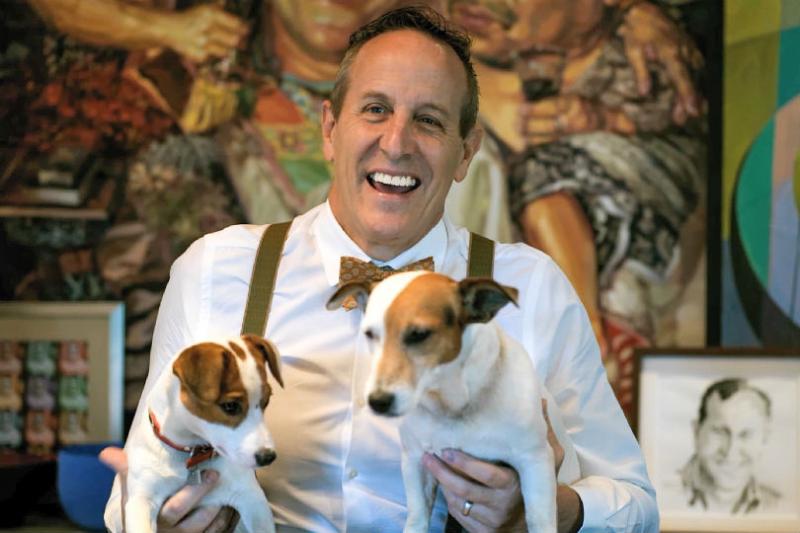
These days – now I’m a big kid – I like to make a mess and get covered in paint on a Sunday, drawing with my husband, my dogs and some friends to draw in the garden. Sometimes I cut trips away short to come back for it – it’s just too much fun to miss!
What trip or place has had the most profound impact on you?
Cambodia is the place that touched me the most, and one trip in particular was the jolt which began my work in philanthropy.
The first time I saw real poverty was in a small village on the outskirts of Siem Reap in the 1990s. At the time, one could still hear regular gunshots from the Khmer Rouge.
Siem Reap was just a few dusty roads; to visit Angkor Wat, one needed an armed soldier to come along, as the monuments were still littered with mines – we were the only visitors there and it was breathtaking.
A friend brought me to meet a family of seven – dad was long gone, mom was struggling to keep her six children alive, living on gathered branches above wet soil.
The two-year-old had an extended stomach from malnutrition; in that instant that poverty kicked me in the gut and I promised myself to help these folks.
“It was a hand up, not a hand out.”
That is where, 25 years on, the Shinta Mani group comes in.
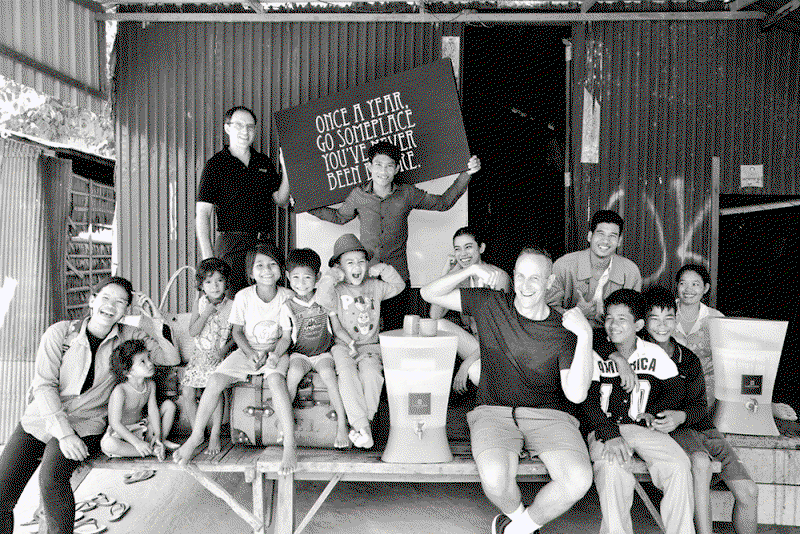
Our three Shinta Mani hotels in Siem Reap house a hospitality school, while through the Shinta Mani Foundation, we have started a farm for the distribution of better crops for Cambodian farmers, we build wells and distribute water filters to around a thousand people, administer free dental and medical care (over 9,000 check-ups so far), give micro-loans for small businesses… and all of that comes from just 5% of revenues and guest donations.
A little can go so very far. And as for the family who started it all? All of them went to school on new bikes, live in a new house with a veggie garden, pigs and a sewing machine… and surprise, surprise, dad came home.
It was a hand up, not a hand out, which is the philosophy of Shinta Mani founder, Sokoun Chanpreda, my dear friend.