Travel Counsellor Dean McMackin has a tattoo with the words, ‘what doesn’t kill me makes me stronger’. It’s a personal reminder that while he’s hit rock bottom, he’s also grafted his way back up.
“It was all my own doing,” he admits. “I wasn’t that child growing up. I played football, we had a good family lifestyle. But I was stubborn, I thought I knew better than everybody else. It wasn’t said at the time, but I had definitely mental health issues.”
When he was 18, Dean fell in with the wrong crowd and moved into a hostel, where experimentation with drugs developed into a heroin addiction.

The hostel was meant to be only for a night or two, but it became a more permanent residence, and so began what he describes as a “messy few years”.
Gritty reality
“I was effectively homeless, living in car parks and doorways. I had various run-ins with the police. It was always shoplifting. Heroin users become a little community,” Dean explains. “Someone else who’s using might have money one day, the following day it’s you who has the money, you share it, and you become very resourceful to fund the lifestyle.”
“The film Trainspotting is a realistic depiction. It becomes impossible to function, your body just withdraws.”
Dean hit rock bottom countless times – waking up alone to find his sleeping bag on fire, or that he was being urinated on. He survived a brutal attack on the streets, but discharged himself from hospital… because he needed his next hit.
He says, in a strange way, these experiences made him more resourceful: “I’m not trying to glorify it – it is a disgustingly horrible position to be in – but you do have to think outside the box. It took me a while to realise it, but these life lessons formed who I am and how I deal with stuff.”
Turning point
Dean’s friendship network dwindled – but an encounter with a friend’s mum gave him a wake-up call.
“We had some old family friends, and their son, Frank, about my age, died in a car crash. His older brother, Rodney, had passed away a few years earlier. Neither had addiction problems, it was just bad luck. I went to Frank’s funeral, and I’ll always remember his mum giving me a hug and saying thank you for coming.
“At that moment, I realised that she could have been thinking – why have I lost both my sons, and you still have a chance, which you’re not taking. She didn’t say that, but I wouldn’t have blamed her for thinking of it.”
That encounter motivated Dean to ask his mum for help again – his family had always supported him best they could. Although he had talked about coming off heroin before, this time felt different. And so cocooned with his family, he started to beat his addiction.
“On Monday 28 June, 2001, I took my last bit of heroin. I went to bed and I’ve not touched it since.” But he wasn’t out of the woods yet. His recovery was brutal. Dean weighed nine stone, faced hallucinations and was unable to walk.
And then he got arrested. “I replaced the drugs with going out drinking and getting into trouble. I was very angry – and I got detained at a football match for fighting.”
There’s a certain irony, he remarks, to escaping prison for shoplifting crimes while on heroin only to end up with a custodial sentence at the point he was trying to get clean.
“But in the end, a year alone in a prison cell was the thing that finally woke me up,” he says. “It dawned on me – this will be your life. You need to fix it.”
‘Every time I went to throw in the towel, my wife caught it’
With an early release tag in September 2002, Dean returned to the Swindon Foyer, a better class of hostel that had been keeping a bed for him, and where he could help young addicts. He landed his first proper job, a telesales role with a mortgage company. “My boss – Pete Guntrip – who gave me the job, has probably been one of the biggest influences on my life without knowing it. He gave me an opportunity when no one else would give me one.”
Not only did this job give him an income and stability, it also gave him a budding romance with a colleague, Sam, now his wife, with whom he has two daughters.
It wasn’t easy and he still faced hostility: “There were people within the business who didn’t like me. It was hard to shake off my past. Every time I went to throw in the towel, Sam caught it.”
After he lost his job in the financial crisis of 2008, he secured a role at Fast Track Holidays, thanks to personal contacts. This was an early incarnation of Imagine Cruising, where he found another supportive mentor in co-founder Robin Deller.
Dean started to benefit from the perks of travel, visiting the likes of Australia and Dubai, but found them hard to enjoy: “I had imposter syndrome for a long time – I didn’t want to shout about it, because I didn’t want people looking at me, saying, why are you there, you don’t deserve to be in Australia.”
He had a goal though – to work for Travel Counsellors, inspired by a close friend who was already doing so.
Dreams on hold
However, life threw another curveball Dean’s way. His Travel Counsellors’ business went live one week before lockdown started in March 2020. As he wasn’t entitled to any government help or furlough, he secured a job in the NHS 119 call centre, fielding calls from elderly people who didn’t have email addresses to book Covid tests. “That was as harrowing as 20 years ago when I was on the streets, listening to vulnerable people coughing on the phone, struggling to get help. I worked all hours of the day and night.”
At the same time, Dean was learning the ropes with Travel Counsellors, but instead of picking offers to post on his socials, he was learning about Covid entry requirements and traffic light systems.
Road to self-acceptance
Post Covid, Dean’s business started to grow. He was grateful to have the Travel Counsellors community around him, but redemption was still not quite within his grasp.
“In 2023 I had a wobble and – for the first time in my life – I started talking to a counsellor.”
With professional help, at last Dean’s imposter syndrome started to vanish: “I finally realised, I’m doing all right now and I am allowed to be happy. What do I want my legacy to be? At some stage in my life, I’d rather people didn’t say, ‘haven’t you done well to turn your life around’, but rather, ‘Dean, you’re a really great travel agent.’”
This new-found confidence has been the tipping point, and last year Dean turned over £1 million in travel sales, focusing on premium travel, honeymoons and cruise. And the icing on the cake? At last, he can enjoy and appreciate those travel perks.
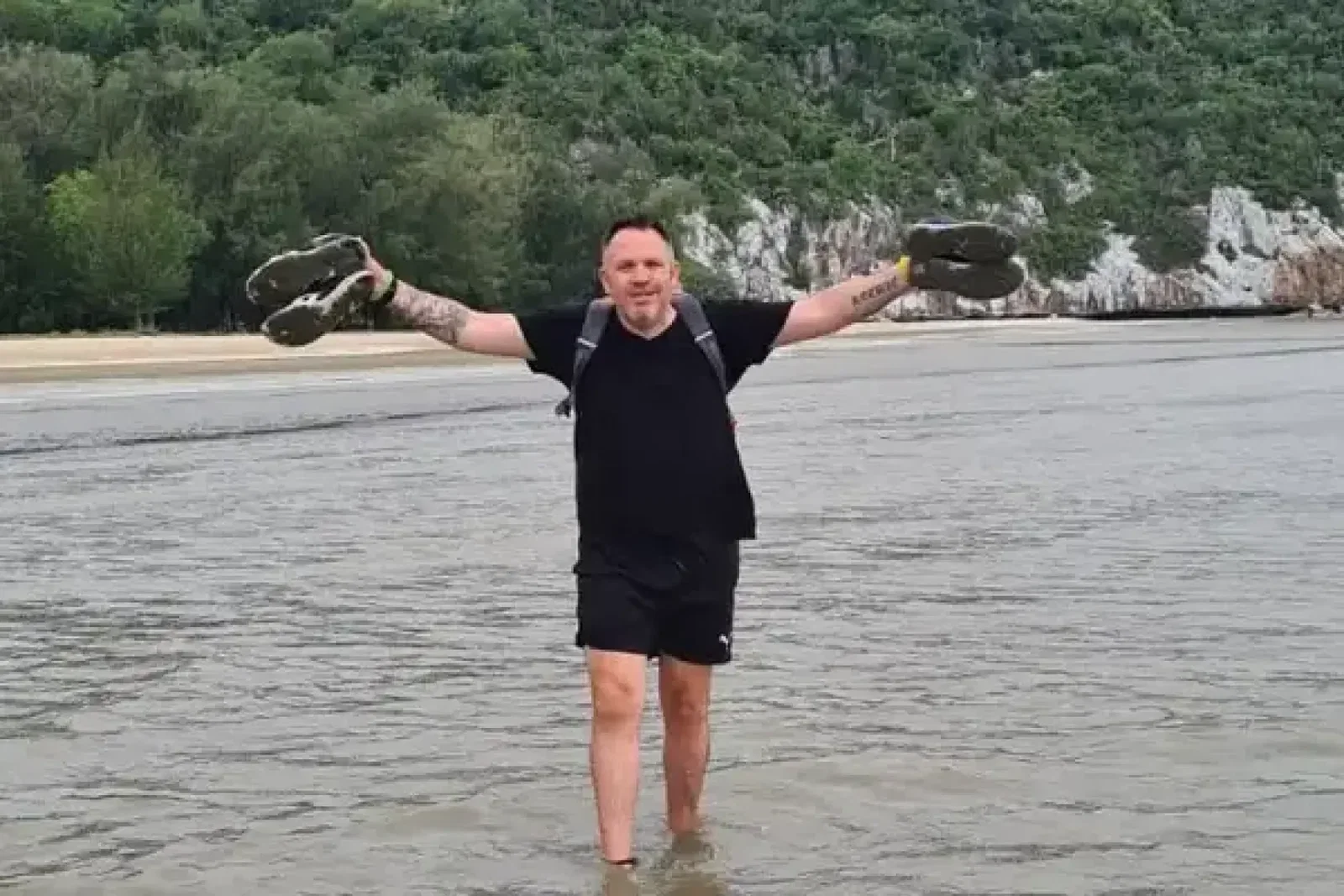
“I was in Thailand at the river Kwai, having a kickabout with a couple of local boys. I like to get on with people and immerse myself in the destinations. I didn’t realise but one of my fellow agents took a video of me, and when I watched it back, it made me quite teary, but in a happy way. I’ve finally started to believe I do deserve to have these moments.”
“I’ve also come to accept that there are probably still some people who don’t like me because of what I did 20 years ago, but I can’t control that. I can only control my happiness and my family’s to a certain extent.
“I’ve worked just as hard as anyone else to get where I am today, probably even harder, to beat the naysayers. There are people in my life who’ve been with me every step – like my mum and my sister Karli, and my dad, without whom I’d never have been able to launch my business. The Travel Counsellors’ community too, in particular Emma Whiteman and Karen Thornton. I hope they’re reading this now, and know how much I love and appreciate their unwavering support. And my wife and my girls. They’ve made me realise if everyone else is proud of me, then I can be proud of me too.”