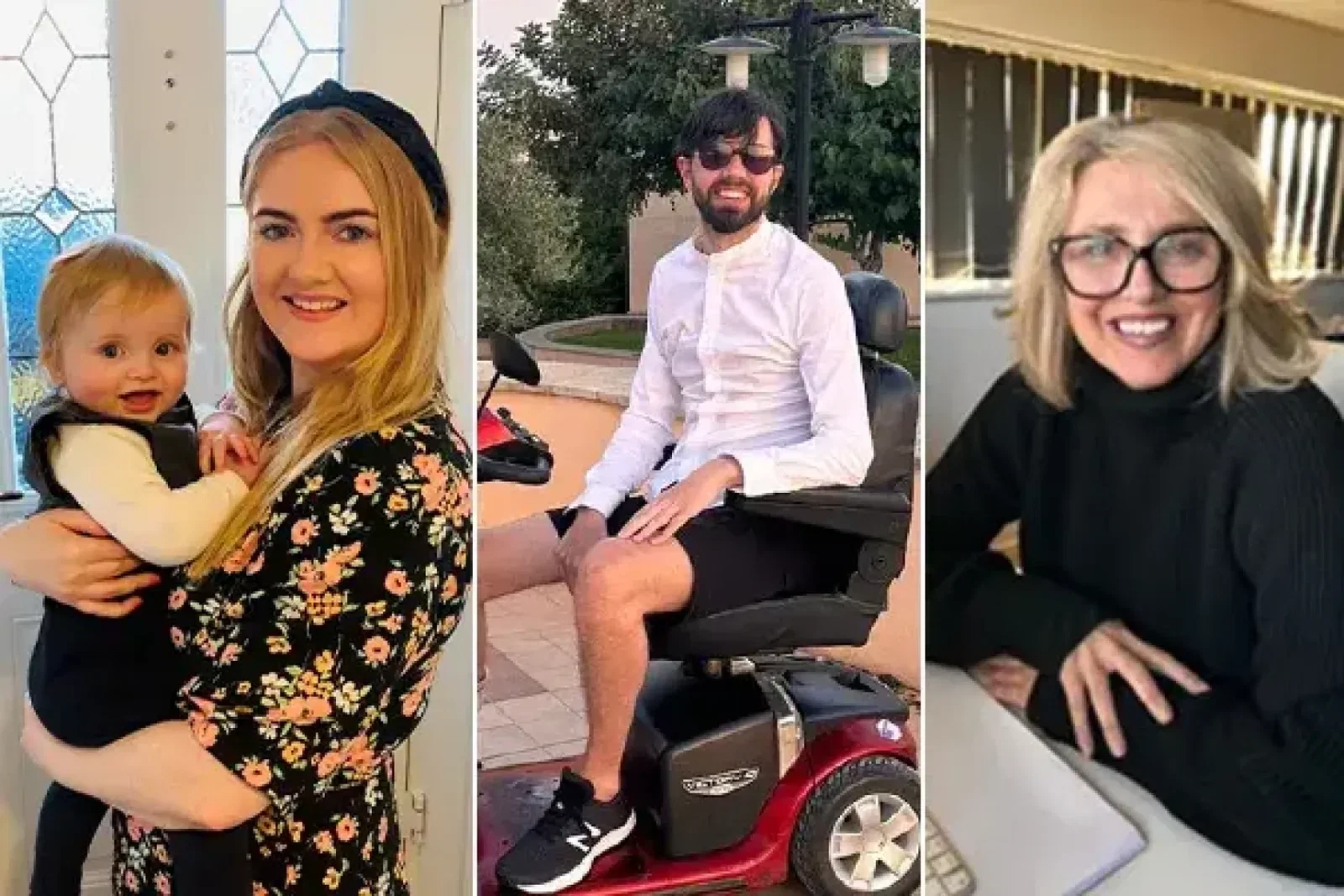
Multiple sclerosis is an unpredictable, life-long condition that causes damage to the brain and spinal cord. More than 150,00 people in the UK have MS and many people discover they have the neurological condition in their 30s and 40s, just at the time they are growing their careers and having families.
One of that number is Amanda Norey, executive recruitment consultant for the travel industry. Amanda has primary progressive multiple sclerosis, where symptoms gradually worsen from the start. The first thing she noticed was that she was struggling to balance in her high heels. She says: “It’s funny because looking back I can remember a spate of travel events whereby I stumbled into a chair upon arrival, already looking like I had a few too many. I ended the evenings with no shoes on and I even left one event, running through Trafalgar Square barefoot in the rain!”
Her symptoms progressed up until she started to drag her right leg and really struggled to walk. She adds: “Thankfully the role I held at the time had private health and I was able to see a neurologist in Cambridge. I had the full works, including MRI scans, and was told pretty quickly I had MS. At this stage I had no idea it was primary progressive.”
Carolyn Lewis is PR partner at Travel Counsellors and she was diagnosed with the most common type of MS, relapsing/remitting multiple sclerosis (RRMS), two-and-a-half years ago. “I was hospitalised with symptoms on maternity leave, when my little boy was just four months old,” she says. “The symptoms – extreme fatigue, brain fog, dizziness and nausea – I initially put down to the sleep deprivation we had with a newborn, but when I realised I couldn’t lift my left arm up, I was dragging my left leg a little and my balance was completely off, I went to the GP who sent me quickly to hospital.”
She adds: “An official diagnosis came a few months later, and though symptoms persist, every day is different, and I’ve learned to accept that – as anyone with or close to MS knows – it is a very different experience for all, and can change on a daily basis, so I celebrate the ‘good’ days whenever I can.”
TTG Media’s campaign marketing manager Jason Winter was diagnosed with rapidly evolving severe relapsing remitting MS (RES-RRMS) in 2022. He first suspected something wasn’t quite right when his eyesight deteriorated, and he went to the doctors after walking home one day feeling like he wasn’t going to make it. “I noticed my leg turning inward and I was short of breath,” he recalls. “The diagnosis process for me was complex because my symptoms started during the pandemic, but with faith and perseverance I felt better equipped to get the answers I so desperately needed.”
He adds: “It is difficult to summarise what it is like living MS. You are essentially learning all over again and constantly adapting. My life is different now, but I believe as long as I’m giving my best, it becomes easier to process and deal with the troublesome times.”
MS doesn’t just affect the person with the diagnosis, it impacts those closest to them as well.
Samantha Deadman is senior marketing manager at Regent Seven Seas Cruises, and her husband Alex has MS. She explains: “I met my husband 13 years ago and around eight years before that he had been diagnosed with MS in his early 30s. I knew that living with him would be different. My life tends to run at 100 miles an hour with two children and a full-time job so I knew that living with Alex would mean I needed to slow down those gears a little and to consider him more. And slowing down so life isn’t so full-on is not a bad thing.”
Balancing MS with work
MS can cause a wide range of symptoms, which vary greatly from person to person. The most common include fatigue, numbness, tingling, vision problems, balance issues, and difficulty with movement. All this can make it difficult to lead a normal life, and continue working as you did before.
Norey says: “At first, I was worried about how the stigma of having a disability would be perceived. I left my job and told no one other than close friends and family. I then took some time out just to adjust to my ‘new normal’. Hospital appointments, MS nurses, rehabilitation consultants, physiotherapists, occupational therapists and, of course, my neurologist.”
“Once I felt ready to return to work, I still didn’t say anything, I was totally reliant on support from my laptop bag and flat shoes. Interviews were a whole new experience until I decided to come clean. I created a blog to reveal my condition and to get my name back out there. The wonderful Gail Kenny reached out to me and thus began my new career as a recruitment consultant as well as an independent consultant for sales and marketing contract work.”
The support of colleagues and travel industry friends has also helped Jason continue his career. “Working with the condition is made easier by people being willing to listen and take you seriously. I am fortunate to work with great people who I’m sure know I am doing my best. Working from home has been a blessing for me, as it allows me to conserve energy and not feel pressured to attend the office.
“I’ve been fortunate to connect with others in the industry living with the condition. And this has reinforced the feeling that nobody living MS should feel alone and that the industry has a wonderful feeling of humility.”
Alex, Sam’s husband, has been able to defy the odds, refusing to give up his job in retail when consultants told him he’d never work again and he’d never drive again. Sam says: “Somehow between us together we’ve enabled him to do both.”
Retail can be quite punishing, especially when weekend working or driving long distances is involved, says Sam. But with the help of a considerate employer, Alex is generally able to work around his diagnosis. She puts a lot of his achievements in the face of MS down to his amazing outlook on life: “He’s very much about living in the present and again this brings a really good influence to our relationship and how we live. He’s a really positive person to be around and I find him very inspiring to for that reason.
“He lives what seems a very normal and fulfilled life and is a key part of our family. Obviously at times, we have to consider his condition but he is quite determined and he doesn’t allow his MS to define him. He works hard at leading a healthy life, doesn’t drink, exercises four times a week and eats and sleeps well.”
Carolyn has found support within the Travel Counsellors community, with its TC Ability group, which meets monthly. “Being diagnosed with what will often seem like a ‘hidden disability’ has helped open doors to meet like-minded people who may be facing similar challenges too.
“We not only discuss and champion the theme of accessible travel, but shine a spotlight on all abilities and the real-life experiences within the group – from those with caring responsibilities to neurodiversity and people like me who have a diagnosed disability. Being part of a community that has your back means the world, and has truly helped me to ‘find myself’ again. Being diagnosed with a life-changing condition can be a lonely journey, so it’s important to find and lean on those who will support you along the way.”
Accessible travel
One of the passions shared by those working in the travel industry is, of course, a love of travel, and for Jason the question of ‘will I ever travel again?’ never entered his mind.
“‘There must be a way’ was the mindset I had,” he reveals. “Coincidentally, accessible travel has been a much more topical subject in recent years. This allowed me to embark on a fantastic trip to Sicily in 2024 with Limitless Travel. It showed me you can still experience wonderful parts of the world, learn new things and still have the same magnificent feelings that perhaps only travel can provide. Where you’re treated differently and perhaps overlooked, I try and stay as calm and confident as possible to help navigate these situations. Being firm with people when required is also necessary!”
Outside of her home Amanda relies on a wheelchair and is no longer able to drive, which she says is the biggest hindrance. “My holidays have been UK-based for the last few years. I do wish to fly again, however I am so nervous about doing so, mainly because if my wheelchair was damaged, I would be in a serious pickle. My cousin wants me to travel to Majorca with her this September, so maybe!”
Carolyn admits the chaotic mix of MS and a baby has made her a very nervous traveller, especially surrounding the airport experience. She says: “This year will be the first I’m brave enough to take to the skies for a family holiday abroad – to Corfu – and to do that I really felt I needed to lean on an expert – in this instance working with a Travel Counsellor (Aisha Battersby), who I’ve known for some years and who also has a young family, so I knew she would understand the requirements and more.
“I think this Corfu trip will be very much a learning (yet enjoyable!) experience for all of us. My nerves are still there, but the thought of our little boy splashing about in the sunshine is getting me through!”
Alex and Sam have adapted their travelling. When she first met Alex, his medication was an injection every other day so – despite working for a luxury cruise line – she says they avoided travelling aboard. “We felt this was going to be difficult and Alex didn’t feel comfortable with it. He has travelled a lot in the past, before his diagnosis, so not having this freedom was quite frustrating for him.”
Now, however, his medication has changed to a weekly injection. “This was a game changer,” she says. “This has meant we’ve been able to cruise and take family camping holidays in Europe. We always take out travel insurance and declare his condition.”
Raising awareness, spreading hope
While the scientists continue their quest to find that elusive cure for MS, treatment is concentrated on managing symptoms, reducing relapses and slowing the progression of the disease. And those affected by the condition continue to raise awareness and provide support to all those living with MS, particularly in this MS Awareness Week.
One of the key messages is just how different MS experiences can vary from person to person.
Amanda says: “MS is a disease which has so many variables, for example, it is mainly my legs and balance that are the issue for me. I was diagnosed in 2018 and am now lucky if I can manage 20ft on my rollator.”
It’s a sentiment echoed by Jason, who says: “I would ask people not to assume anything. MS is different for anyone living with the condition, so the needs of each individual will be extremely varied.”
Another message the MS community wants to convey is one of hope. MS treatments have improved within the last 30 to 40 years, but the understanding of why some people develop MS is still in its infancy.
Sam says: “I would hope for anybody who might be working in the travel industry living with MS or had a recent diagnosis that they would be able to take some positivity from others already living this condition.”
Jason firmly believes that science and technology will play major roles in seeing brighter days ahead, finding quicker methods to diagnose people and seeing advancements in treatments to provide a better standard of living for those with the condition.
And Sam adds: “One of the major turning points for Alex was going to a seminar by the MS Society in London where expert and consultants talked about the medical progress being made. He met many people living with MS in many different ways and this was the point at which Alex embraced it. He’s always said it is life-limiting not life-ending. It’s about finding ways to live with it. Every MS journey is very individual and it’s about finding ways that work for you so that you can continue your life as you wish to.
“For the future I hope that there is more education and awareness around MS but particularly more funding. There is still much to learn about MS and my biggest hope is that we find ways to cure it or slow it down.”
In the meantime, the travel industry can help, by listening, learning and showing understanding, says Carolyn: “As with all hidden disabilities it’s a case of asking people to lead with empathy – you truly never know what battle a person is facing that day – so try to recognise that not all abilities are obvious and make concerted efforts to be accommodating across all steps of a journey, from booking to travel and back again.”
And beyond that, those living with MS hope the industry will become more inclusive and accessible for all. “I hope to see the world continue to become more accommodating for those living with accessibility needs,” says Jason. “This would provide more confidence for the disabled community to participate in and enjoy many life activities.”
TTG Media has chosen the MS Society as its charity partner for 2025. To make a contribution, click on this link