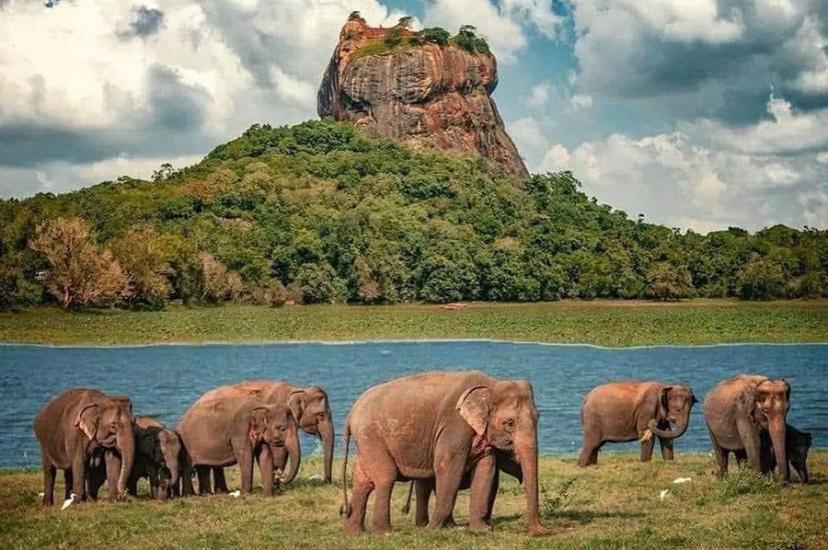
104… 105… “106!” I shout aloud in triumph. I’ve tallied up 106 Sri Lankan elephants in my eyeline. Some are bathing in the shallows of the Kaudulla National Park reservoir, some are grazing on the green grass and others are keeping a watchful eye on their calves who appear to be as young as three weeks old. One magical moment later we hear the trumpet of a mother to call her offspring closer, and the calf who can’t have been born more than a few months’ ago happily obliges, bounding clumsily across the plain.
Our Sri Lankan guide Demetrius Silva takes a few minutes’ break from bestowing his jaw-droppingly extensive knowledge upon our group of TTG Sustainable Travel Ambassadors, touring the destination with Travelsphere and Just You, to allow us to simply sit in our jeep. Parked up a respectful distance from the elephants, we soak in the moment and commit it to memory. It’s a serene scene I wish I could bottle up and take home with me.
BATTLE OF THE BEASTS
But human and elephant interactions in Sri Lanka aren’t always this harmonious. In 2023 more than 60 elephant deaths due to human interaction have been recorded between January and April alone. On the flipside, when Travelsphere and Just You’s Sri Lankan partner Walkers Tours teams up with Cinnamon Nature Trails to take us to the rural village of Bedi Wewa, resident Samit tells me more than 70 villagers had previously been killed in conflicts with these mammals.
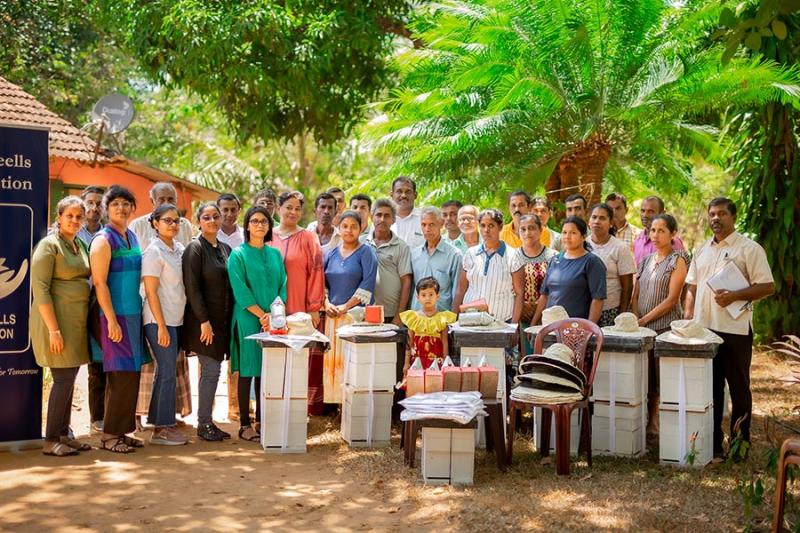
Since Bedi Wewa became the subject of a pilot conflict mitigation project supported by Tui Care Foundation and Sri Lankan-owned Cinnamon Hotels and Resorts late last year, he says there have been no deaths. How has the project successfully ended the conflict? It’s used funds from tourism to install a 5km-long electric fence around Bedi Wewa, which simultaneously stops elephants from pilfering crops in residents’ gardens and redirects them instead through “elephant corridors” to natural sources of food and water. The fence only emits a small electric charge, so not enough to hurt, but enough to deter, the elephants.
We’re only the third group to visit Bedi Wewa and learn about the human-elephant conflict mitigation project on this exclusive excursion, and while there are whispers of adding the community visit to tour itineraries, for now customers will have to stick to the national parks and instead rest assured the money they’ve paid for their holiday with Tui or for their stay at a Cinnamon hotel is helping the circa 108 families of Bedi Wewa and their big-eared friends peacefully co-exist.
I’m thinking about this renewed hope for our natural world as we turn a corner on our safari in Kaudulla National Park. The jeep stops sharply and every passenger gasps as a large elephant emerges from behind a tree with an older calf tucked snugly into her side – they’re twice as close to us than before. “108!” I say, grinning as I realise the numerical coincidence with the afore-mentioned families. But I soon realise I need to correct myself to 109; it won’t be long before this mother of one incredibly cute calf becomes a mother of two.