Comeback acts can be embarrassing or a real success but make no mistake, Pittsburgh’s is a big hit.
The Pennsylvania city is not an obvious destination even for US devotees; a former steel and industrial centre whose heyday was the early 1900s, until now overshadowed by Philadelphia, Washington and New York. The stats are grim; Pittsburgh’s population, around 300,000, has halved since 1950 and its airport, once a hub handling 21 million, now sees nine million and – despite a new direct British Airways flight – is downsizing its terminal.
It doesn’t sound promising, but I take the funicular to the Duquesne observation deck to get an overview and below, where the Allegheny and Monongahela meet to form the Ohio River, the pointed landmass of Downtown resembles a mini-Manhattan set in gorgeous autumn colours.
It’s a view that back in Pittsburgh’s heyday was obscured by steel mills that outstripped the allies’ combined Second World War production and belched black smoke. The industry’s location was due to the area’s vast mineral deposits, confirmed by my hotel, The Renaissance, whose stone exterior literally leaches copper. Metal production all but collapsed in the 1980s, but its legacy is everywhere, with a Manhattan and Brooklyn vibe in magnificent Downtown architecture and conversions of former rail yards and warehouses into hip bars and restaurants.
Pittsburgh’s opulence is exemplified by its grande dame, Omni’s 1916 William Penn Hotel, the city’s answer to New York’s Plaza and once its high society hub. Unlike New York, rooms here average around $280, while other five-star properties I visit with a delegation of UK operators quote around $250. The Omni’s frescoed, gold-leafed Palm Court beckons afternoon tea, but back in the day, the average Yinzer, as Pittsburghers are known, wanted heartier fare.
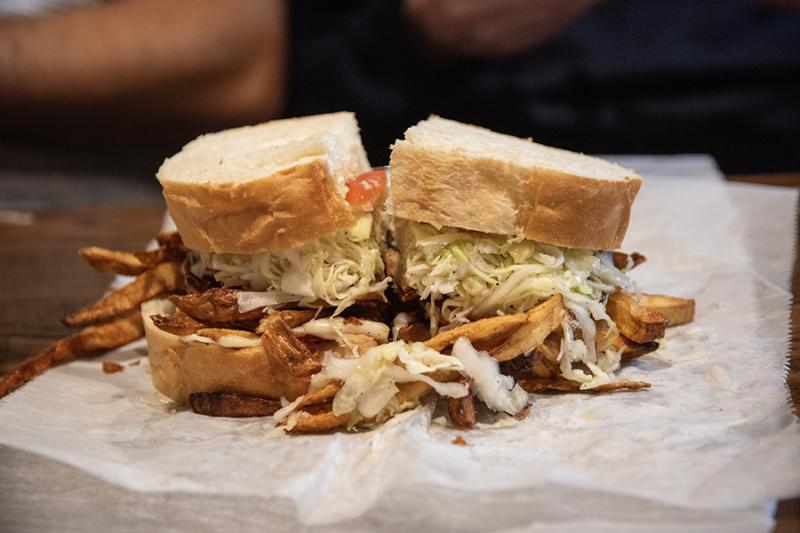
Many went to Primanti’s, which neatly encapsulates Pittsburgh’s former identity. Ninety years ago, it began feeding rail and steel workers and, in culinary terms, is far from Palm Court. The speciality is your choice of sandwich filling plus – whether you like it or not – chips, meat and coleslaw between doorstep white bread. The owner barks at us for daring not to queue and I sense the “Don’t you know who we are?” line won’t work, timidly stepping outside. Primanti’s proves that if Boston is twee, Pittsburgh is – in parts – gritty and, I think, better for it.
THIRST FOR CHANGE
To work off Primanti’s we tackle the 150-mile Great Allegheny Passage, a bike trail that ends near Washington, although wisely we stop at a microbrewery after two miles. I leave my table as a giant freight train thunders by, and returning five minutes later, it’s still going past. It’s literally a sobering thought as we resume our ride, take a wrong turn and end up on the tracks as another train barrels down us, honking and flashing its lights – suddenly I’m in a Buster Keaton film.
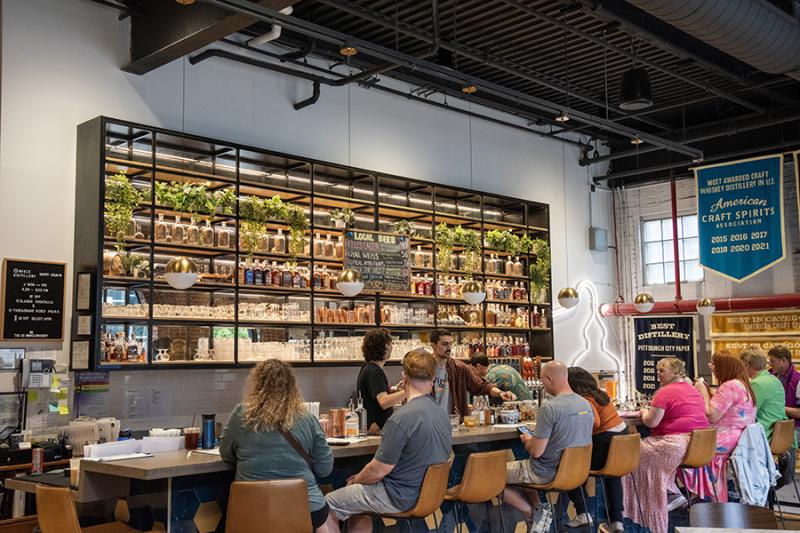
We abandon biking to take in more microbreweries; Pittsburgh has more than 40, many housed in old industrial units. The scene exploded after a 2019 law change allowed sales on the premises. Fruited IPAs and sour beers are specialities, while one I try is uncorked like champagne and bears a striking resemblance.
To just eat and drink would be to miss out, and there is much to see. A personal highlight is Bicycle Heaven, an obsessive’s collection of almost 6,000 cycles, including those from ET and Pee Wee’s Big Adventure, plus vintage 1970s Chopper bikes from the UK.
However, it’s Pittsburgh’s most famous son, Andy Warhol, who draws the crowds. He is celebrated in a museum charting his rise from commercial artist to pop art pioneer who, as the New York Post put it “turned a soup can into a museum treasure”. The museum marks its 30th birthday in 2024 with a display of never-before-seen items. The Pop District, springing up around it on the North Shore to nurture new talent, will be completed in 2025, including a music venue. “The idea is that we don’t want the next Warhol to have to leave to be successful,” says Alex Soller, Visit Pittsburgh’s communications manager. It’s perhaps an important initiative in a city better known for NFL, ice hockey and baseball, whose stadia dominate the skyline.
CULTURE CLUB
A little out of the centre, it’s culture that wins again. Pittsburgh steel magnate Andrew Carnegie may have given his name to Manhattan’s concert hall, but he was a home boy and built museums of art and natural history here. The Carnegie Museum of Natural History houses a familiar creature, Dippy the Dinosaur, whose replica stood in London’s Natural History Museum for over a century. London’s Dippy was a plaster cast, Pittsburgh’s is real. I marvel at the museum’s geological collection, a rainbow spectrum of elemental stones and minerals still set in their ores – Carnegie liked his bling natural.
Back Downtown, Pittsburgh’s Cultural District offers more evidence of old money well spent. The grand, 2,800-seat Benedum Center dates back to 1928 and stages touring Broadway shows, with ticket prices way below New York. The Benedum was latterly a rock venue (Bob Marley played his last gig there), with a $43 million restoration removing layers of paint to reveal palatial plasterwork and aluminium gilding that sparkles under 90 chandeliers.
The Carnegie Museums and the Benedum hammer home the extent of Pittsburgh’s former wealth. Thanks to a few philanthropists, we can all still enjoy its riches long after the smoke cleared. The comeback city is on the up, Warhol would be proud.
Book it: Discover North America offers three nights each in Pittsburgh, Washington DC and New York plus flights from £1,949pp. Price includes room-only hotel stays and Amtrak rail travel between the cities, based on a June 2024 departure; discovernorthamerica.co.uk
Discover more about how to sell the highlights of Pittsburgh in our video