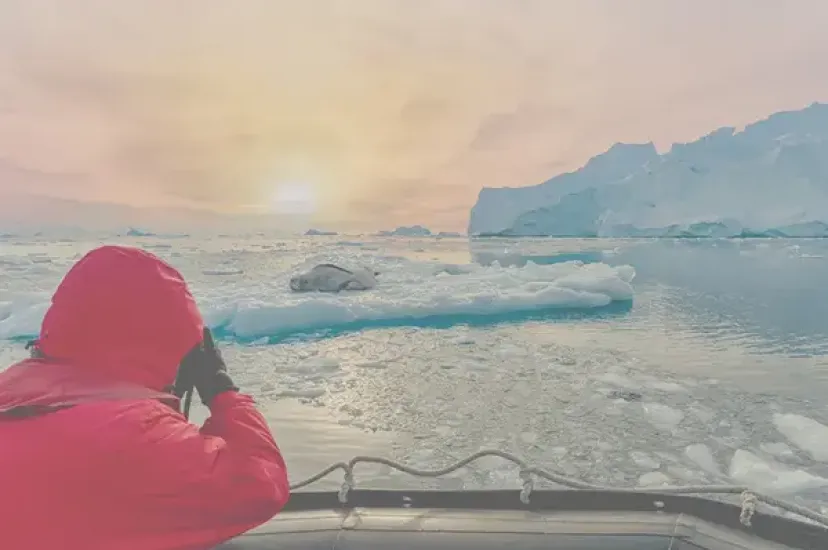
Antarctica is instead a pristine frozen wilderness, awash in blue and white and full of towering icebergs, calving glaciers, miles-long ice floes and snow-covered mountains. Not even home to a single land-based mammal, it’s ruled exclusively by marine and bird life – most famously its penguins, but multiple species of seals, whales and birds are all to be found here.
All Antarctic cruises have a high focus on expedition expertise, with specialist teams offering onboard lectures and education. All ships have Zodiac fleets used for landings and cruising, while most also offer activities like hiking, kayaking, camping, diving, snorkelling, snow-shoeing, helicopter tours, visiting scientific research stations and mountaineering.
When to go?
It’s only possible to travel to Antarctica during its summer, when the ice melts to unlock frozen seaways, there’s 24-hour sunlight and temperatures are more hospitable. Most cruises operate from November through to mid-March, with January to early-February being the high season. Every month provides different highlights in terms of wildlife and weather.
Where to go?
The vast majority of expedition cruising happens around the Antarctic Peninsula, thanks to its proximity to the tip of South America. Ships depart from both Chile and Argentina, with Ushuaia the main turnaround port. To reach the peninsula, ships have to cross the notoriously rough Drake Passage – which typically takes two days but is considered a ‘rite of passage’ – although some companies now offer a fly-cruise option, flying directly to King George Island. In addition to the Antarctic continent, most cruises also visit the surrounding islands, including the South Shetland Islands, South Orkney Islands, Falkland Islands and South Georgia.
Take a deeper dive into Antarctica and discover which operators offer the region