A quarter of a century after Qatar Airways first flew to the UK and began putting this tiny country on the map, Qatar will use the tournament – which starts in November 2022 – to gain global recognition for the dramatic change it has undergone.
But while the World Cup will be a springboard, Qatar’s tourism officials are playing the long game. They are looking ahead to 2030 when they hope to triple visitor numbers from 2019’s 2.1 million total.
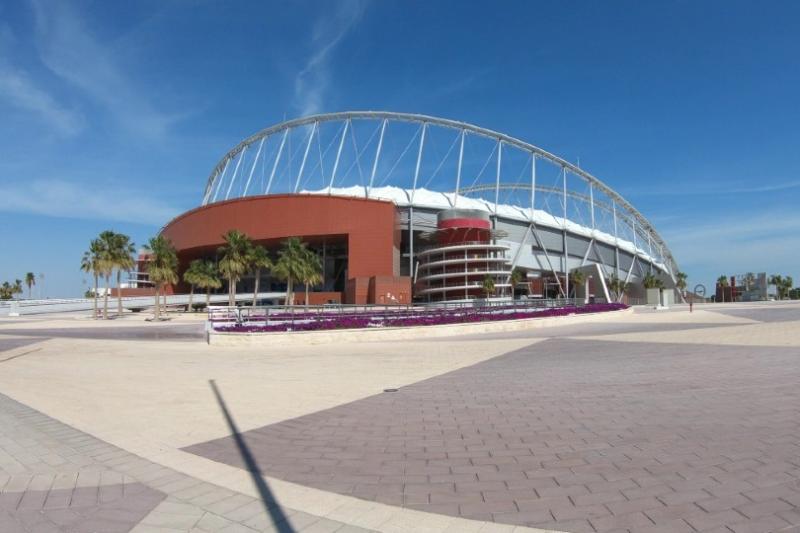
For Qatar Tourism chief operating officer Berthold Trenkel, the country’s World Cup infrastructure legacy – which will include new roads, stadia and hotels – will provide a basis for its tourism future.
"My job is not about what you do during the tournament, it’s about what you do before and after,” Trenkel tells TTG. His task is to fill the extra hotel rooms that are springing up rapidly in and around capital Doha where all but one of the World Cup venues are situated.
There are 110-plus hotels in the pipeline; about half will be ready by late 2022 and the remainder in 2023. Hotel room stock will move from 32,000 to 45,000 by the time the tournament kicks off, rising to 55,000 afterwards.
Either side of the football, though, there will be the traditional lull in visitor activity to cope with. “We have the additional challenge that we have much more hotel capacity we need to fill," Trenkel acknowledges. "2022 will be a tough year, we’ll have one hotel opening after another."
’Huge show’
Qatar is unusual in that its tourist board and national airline are headed by the same man, Akbar Al Baker. Trenkel claims that this “allows us to do things others can only dream about”, particularly in gaining cooperation from Qatar Airways.
The two have a plan to increase stopovers to help fill the new hotels. The potential market is undoubtedly already there, as 38 million passengers pass through Hamad International airport in a normal year.
Trenkel explains expanding stopovers was “a huge plank of our strategy”. “We are behind our competitors”, he admits, naming Iceland, Turkey and Dubai as examples. However, he believes Qatar Airways’ recently revamped website would help here, as would new product. “We’re working on itineraries," he reveals. "It’s a huge driver for us, we don’t want to be seen as just a stop in the desert.”
He is also excited about Doha’s new cruise terminal; its first berths will be two MSC Cruises ships, each set to house 4,000 fans during the tournament. However, it is hoped that after the World Cup, the terminal will provide a homeport for several vessels within walking distance of Doha’s souk.
Despite his focus on the periods either side of the World Cup, Trenkel is also excited about the event itself – and the opportunity to showcase Qatar to the world. "Qatar will put on a huge show," he says. "Maybe not in the 12 days when we have four matches a day, but during the knock-out phase. There will be concerts, DJs, public viewing areas, a gazillion things.”
He also confirms Qatar’s alcohol restrictions will be relaxed for the duration of the tournament.
Trenkel is keen for visitors to see the tiny country, and said one advantage was that they could drive to either end of it in 90 minutes, returning in time for an evening match.
There is, however, the question of how much all those new upscale hotel rooms will cost fans. The average daily room rate for five-star properties in the first six months of 2021 – during a pandemic - was £115. Trenkel acknowledges room rates during the World Cup will be higher, but said they would be “kind of controlled”.
“I’ve heard horror stories from Russia [where the last World Cup was staged] and other countries, so there is a huge desire to control the situation," he says, adding: “Before and after will be cheap.”
’Tradition meets modernity’
Qatar is now off the UK’s red list, and a “huge” marketing campaign is being prepared. Philip Dickinson, Qatar Tourism’s vice-president international markets, says the UK and Ireland was one of 16 core markets set to be targeted, with the UK providing around 120,000 visitors a year pre-pandemic. “We are looking at getting that above 300,000 a year, I don’t think that’s ambitious, because nearly 40 million transited in 2019,” he says.
Dickinson claims there will be a "very heavy" focus on the trade with operator and agency partnerships, educationals and a consumer marketing campaign. “We have some fairly heavyweight plans for later this year."
He does, though, admit the campaign is much-needed due to a lack of awareness about Qatar in the UK: “We know there’s a lot of myths – that you can’t drink, that you have to cover up. We have a job to do.”
As well as extended stopovers, the plan is to attract longer stays. “From markets like the UK, we are trying to get seven to 10-night stays and we are looking at bundling packages like half-board or drinks included,” Dickinson reveals.
Qatar Tourism plans partnerships with operators. “If they give us incremental visitors, we will pay on performance," says Dickinson. He describes Qatar as “definitely a sun and sand experience” but adds: “We’re putting an emphasis on activities like desert camps, quad biking and parasailing outside Doha.”
To this end, a new kitesurfing resort is being developed, aimed at a lower price point. On the country’s west coast, about 35 minutes from Doha, there is the new Hilton Salwa Beach Resort with a water and adventure park that is open to all. Doha Quest, a theme park featuring rollercoasters, is also open.