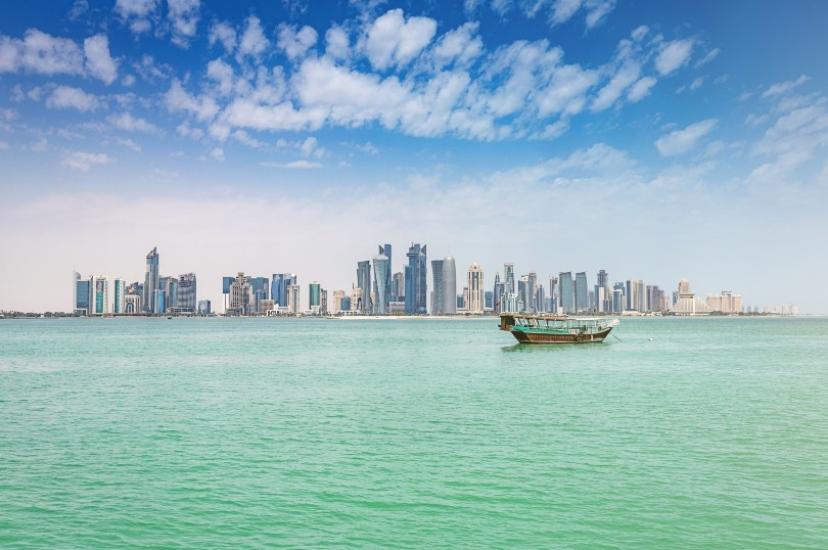
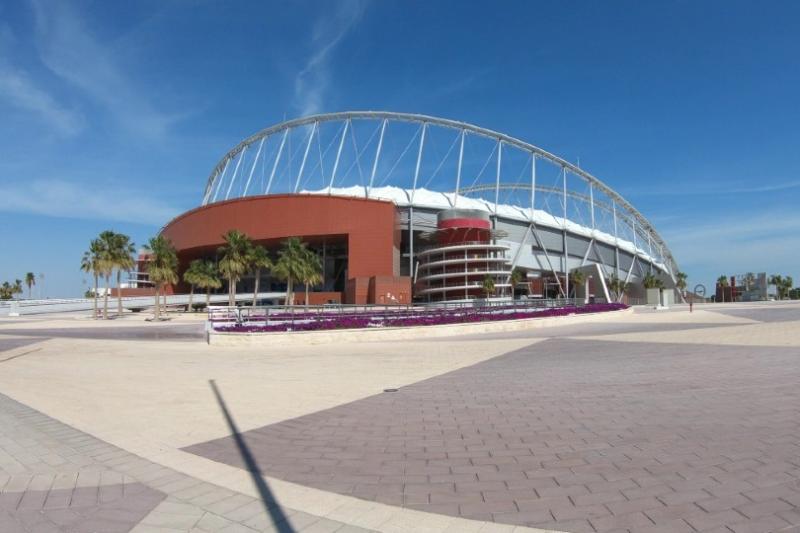
The country has no footballing heritage to speak of, and its bid to secure the 2022 tournament is steeped in controversy following allegations of bribery, not to mention the deaths of numerous construction workers building Qatar’s new stadia.
Nevertheless, many England fans will want to attend. Qatar, though, was put on the map by its airline, and is relatively unknown – so fans may well seek expert travel advice. But is there scope for the industry to benefit from some welcome additional business next winter?
Qualifying resumes in September this year and concludes in mid-November when there should be a spike in booking interest, should England – or any of the other home nations – qualify. However, the initial signs for the industry are not promising according to those with experience, and based on Qatar’s capacity to cater for the average fan.
As with most big tournaments, corporate schmoozing takes precedence over ordinary fans; Fifa has already put hospitality packages on sale via its UK agent Match Hospitality, with the most in-demand already sold out. Normal ticket sales do not start until early in 2022, and for the average operator or agent, putting packages together on an unofficial basis looks challenging.
Jamie Smith, managing director of upmarket sports operator Black Opal, said he had not offered World Cup packages since 2006. “Fifa and Uefa are really difficult to deal with,” he said. “They just tie everything up – tickets, accommodation, etc. Ideally, you need to be an England Fans member to be able to source tickets. I’m not prepared to put myself through the stress of working with them again.”
InsideJapan Tours offers an insight into how to do things without the organiser’s official blessing; it operated a successful programme during the 2019 Rugby World Cup in Japan, and had been due to send several hundred clients to Japan during the recent Olympic Games before the travel ban.
PR and partnerships manager, James Mundy, said InsideJapan had chosen to avoid the games itself “as it is very delicate grounds with regards to copyrights and sponsors”, but described how it was nevertheless possible to send clients.
“We created ’summer games’ itineraries, but we worked on the basis that we are – first and foremost – Japan travel specialists," said Mundy. “We made it clear we could not, and would not, organise tickets, but with our connections and the fact we are known well in Japan, we were able to secure room allocation during the games – many companies, if not official, could not do this.”
InsideJapan also banked on those attending the games wanting to tour the country and arranged itineraries accordingly. However, scope for this approach in Qatar is more limited; Qatar is only half the size of Wales, is mainly desert, and most of its sights are in or around Doha and can be seen during a brief stopover.
Floating hotels and desert camps?
If tickets can be secured, the next challenge is somewhere to stay. The bad news is that hotel capacity in Qatar, at the best of times, is comparatively limited and expensive.
Officially, there are five host cities and eight 40,000 to 80,000-seat stadia, but all but one location is in or around Doha. The furthest venue is at Al Bayt, about 15 miles north of the capital, although this does gives fans the chance to watch two games in a day.
Philip Dickinson, Qatar Tourism’s vice-president international markets, said there were around 38,000 hotel rooms available. By comparison, London was estimated to have 167,000 in 2020. Moscow, where the 2018 World Cup final was held, had only 18,813 international standard rooms available in 2019, but the tournament in Russia was spread throughout the country, unlike in Qatar.
Just 2,047 Qatari rooms were classed as three-star or less in 2020, a total that fell 5% compared with 2019. Nearly half of all Qatar’s hotel rooms, 13,248, are five-star, with another 5,715 classed four-star. The biggest accommodation category, “deluxe and standard hotel apartments”, make up a quarter of the inventory.
Another 105 hotels and serviced apartments are due to open before November 2022, adding to the current total of 184, but the brands flagged by Qatar Tourism include Pullman, Steigenberger and Marriott – not exactly budget. This is despite Qatar Tourism’s boast that: "These upcoming properties are part of our strategy to diversify our offering and broaden our appeal to visitors.”
Further figures make alarming reading for anyone trying to put reasonably priced packages together. As of 31 December, there were only 1,858 three-star hotel rooms in Qatar, 236 two-star and none in the one-star bracket some fans would choose. The 60,000 fans who watched England at Wembley last month could be accommodated with double occupancy, but only if there were no officials, players or fans from other countries.
Sydney-based World of Discoveries offers a seven-day final and semi-finals package in unspecified four-star accommodation from £2,700pp without flights or match tickets and warns “most of the hotels are already booked for World Cup participants and officials”.
Dickinson admitted there was an issue. “We are coming off a low base and Fifa locks down a lot of the inventory, but we are going to have various accommodation options.” These, he said, could include “floating hotels and desert camps”.
Until these are confirmed, options in Doha look limited. Airbnb currently offers fewer than 60 places to stay, with rooms in private homes from £37 a night during the tournament – bargain rates that will probably be unattainable very soon.
Moreover, Qatar has now resumed diplomatic relations with neighbouring Saudi Arabia, and Dickinson expects many to drive over the border during the tournament. “It’s our largest market, 900,000, right on the doorstep.”
Faced with this, other more extreme options for England fans with deep pockets include day trips from Abu Dhabi, Dubai or even Bahrain, but in any case, there may simply not be enough demand.
During the 2018 tournament in Russia, only 32,000 tickets were sold to England supporters, compared to almost 872,000 to home fans. Nearly 90,000 were bought by US residents and 37,000 by Chinese fans, despite neither being in the tournament.
’Work in progress’
Pre-2018, hopes for the England team’s success were not high. Qatar will be different after Euro 2020, but England fans will find themselves competing in a more global market than ever, with Middle East locals part of the mix.
“We’re still working out how the rest of the accommodation will be married with tickets,” said Dickinson, who said “a lot” of flight capacity would be allocated to ticket holders. Those travelling must, as in Russia, present official Fan ID to enter the country. “We don’t want to encourage people to come on spec because they may be disappointed,” he said.
For those fans that do make it, once they’ve consumed their duty free, drinking options are limited. Alcohol cannot be purchased in supermarkets and is generally restricted to hotels. In 2019, a 100% tax on alcohol was introduced – £9-10 pints of draught lager and £7 for bottles is far from unusual.
However, Dickinson said taxes had already been reduced, while beer and wine sales “at affordable prices” was being considered at “three or four” locations in tourist areas ahead of the tournament. “It is work in progress,” he said.