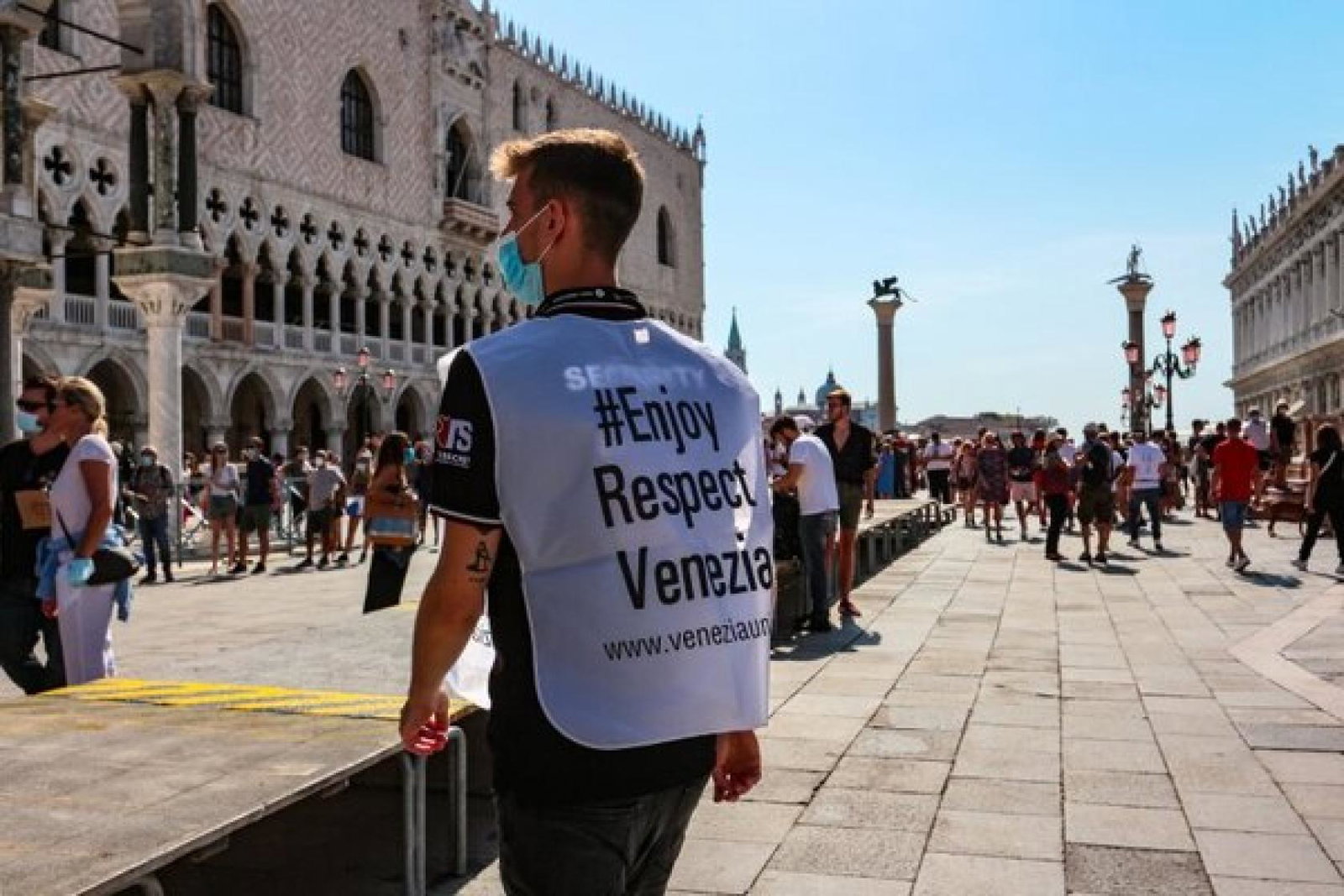
Venice – the world’s great lagoon city – has for the past 20 years been at the forefront of the fight against overtourism; arrival numbers have surged, growing from 3.5 million in 2006 to 5.5 million in 2019. The pandemic doesn’t seem to have dampened the appetite to visit either, with numbers recovering to 4.7 million in 2022.
Tackling overtourism in the city has been the subject of years of debate, which – in the past five years – has led to concrete policies to curb mass tourism. These include trialling a €5pp (£4.30pp) entry fee for day tourists this year, and capping the maximum size of tourist groups at 25 – around half the size of a typical tourist bus.
Venice’s city council has hailed the measures the best way to balance the needs of residents against the city’s desire to welcome tourists and capitalise on income from tourism. By contrast, several citizens’ associations argue neither of the headline measures will make a significant contribution to relieving pressures created by tourism on the city.
So what exactly what do the measures entail? What impact will they have on tourism? Are they really just a facade, or will they – as Venice’s authorities insist – make life better for tourists and residents alike?
Quality over quantity
Simone Venturini, Venice’s city counsellor for tourism, tells TTG the entry fee trial would help the city move away from a tourism model that is based on quantity to one based on quality. A booking system for the fee, which will come into effect in April, was launched on Thursday (18 January).
Initially put forward before the pandemic, plans for the fee were given the go ahead in September. The tax will be trialled from late April on 29 designated days and will apply to all day tourists – national and international – aged 14 and above visiting between 8.30am and 4pm. Overnight visitors to the city and the wider Veneto region, along with residents, will be exempted.
Flavio Zappacosta, head of UK and Ireland at the Italian National Tourist Board, believes the new fee will allow the city to improve facilities for both tourists and residents. "The income generated by this new fee will be used to improve facilities in the city and make it more liveable for residents and afford a better experience for those tourists that choose to overnight in Venice," he tells TTG.
Other measures include banning the use of speakers and microphones by tour groups from June, as well as tightening up the rules around opening and operating hours for bars, souvenir shops, restaurants and hotels. The council is also conducting a study into short-term lettings such as Airbnb, which many residents see as one of the main factors contributing to overtourism.
Venice’s soul at risk?
Despite the positive spin from Venice’s local authorities, residents say the measures are weak. Giovanni Andrea Martini, an opposition councillor with the civic group Tutta la Citta Insieme (the whole city together), brands the measures “absolutely insufficient and inadequate” as they are not "structural”.
“It isn’t a €5 ticket that will reduce tourist flows, especially daily ones,” Martini tells TTG. “The main point is that local authorities are not setting a limit to the number of daily tourists.”
Martini believes Venice should cap the number of tourists allowed into the city to between 40,000 and 50,000 a day so as not to exceed the number of residents, which currently stands at 49,000. This, he insists, will avoid the city effectively becoming a museum, and would allow tourists to experience a city vibrant with shops, commercial activity and people.
“People in Venice are witnessing the ‘desertification’ of social spaces, with whole areas becoming completely deserted apart from tourists,” Martini explains. “By not having a living city, we offer a stunning but soulless place.”
Jane Da Mosto, executive director at non-profit We Are Here Venice, agrees; she thinks the overcrowding in the city borders on dangerous at times. "People feel trapped in the same way you would feel in a crowded nightclub,” she says.
Da Mosto also stresses €5 is a “ridiculously small amount” to charge people, and risks giving visitors the impression they can do whatever they want in Venice. “Five euros is nothing compared to what it actually costs to live here or to the tangible value of experiencing Venice,” she warns.
Time for inaction over
Citizens groups, such as Venice Calls, would also like to know where the proceeds from the €5 will be invested. “As a non-profit, we are used to justifying every cent that we receive,” president Sebastiano Cognolato says. "I’d like to see the same transparency from the authorities.”
Councillor Venturini concedes the measures are neither “magic nor miraculous”, but insists they are better than inaction – the path, he says, that was taken by previous administrations.