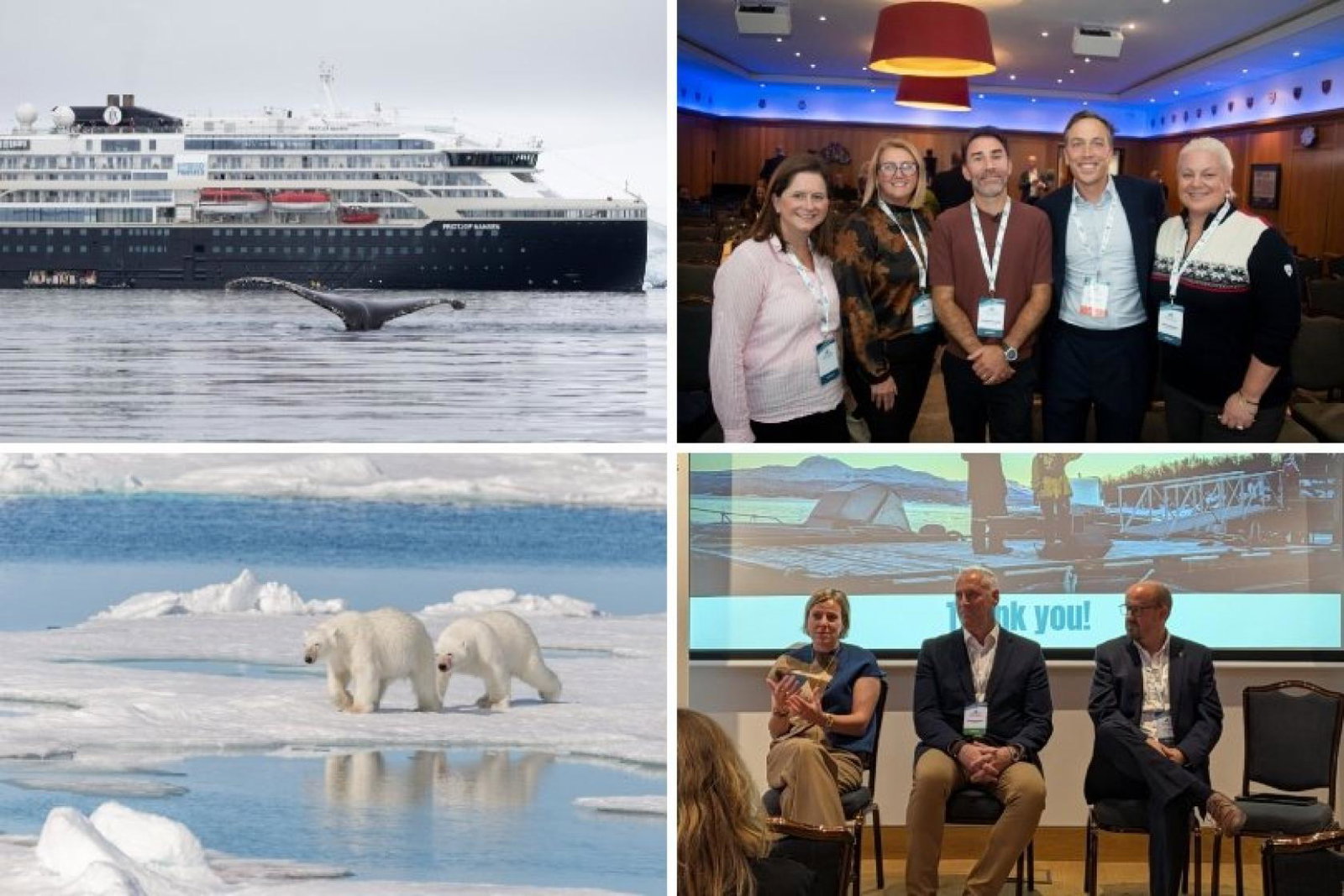
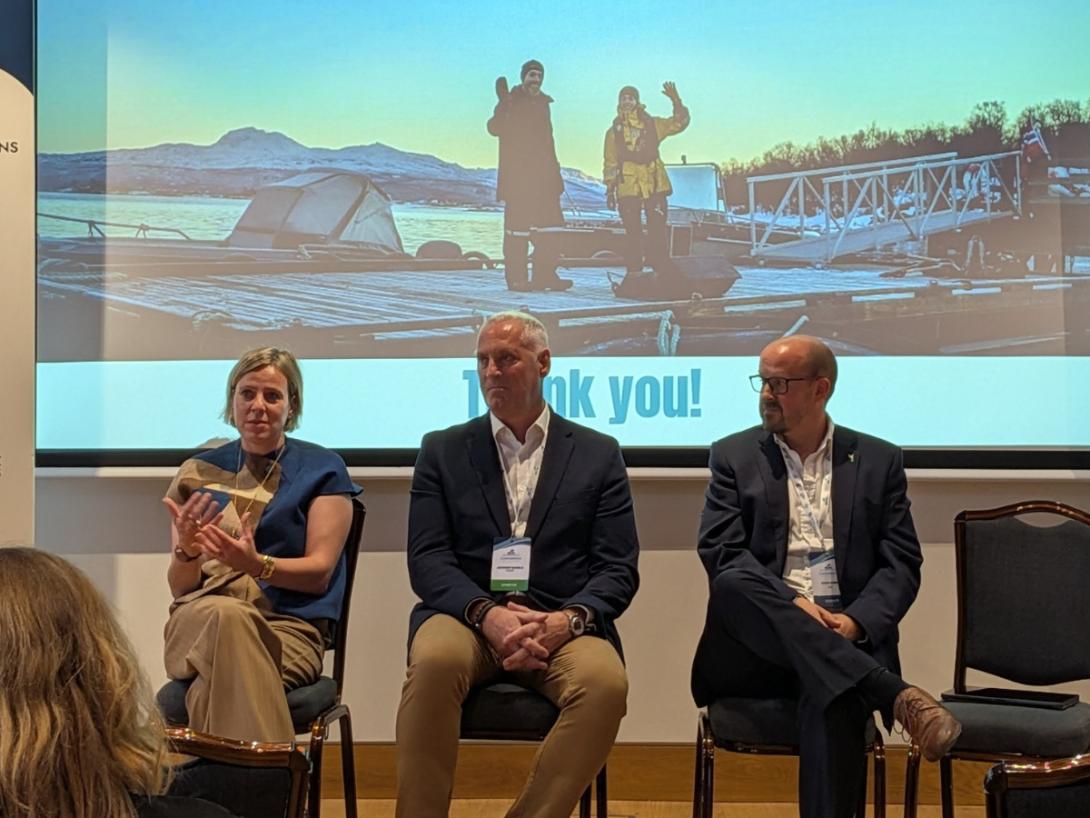
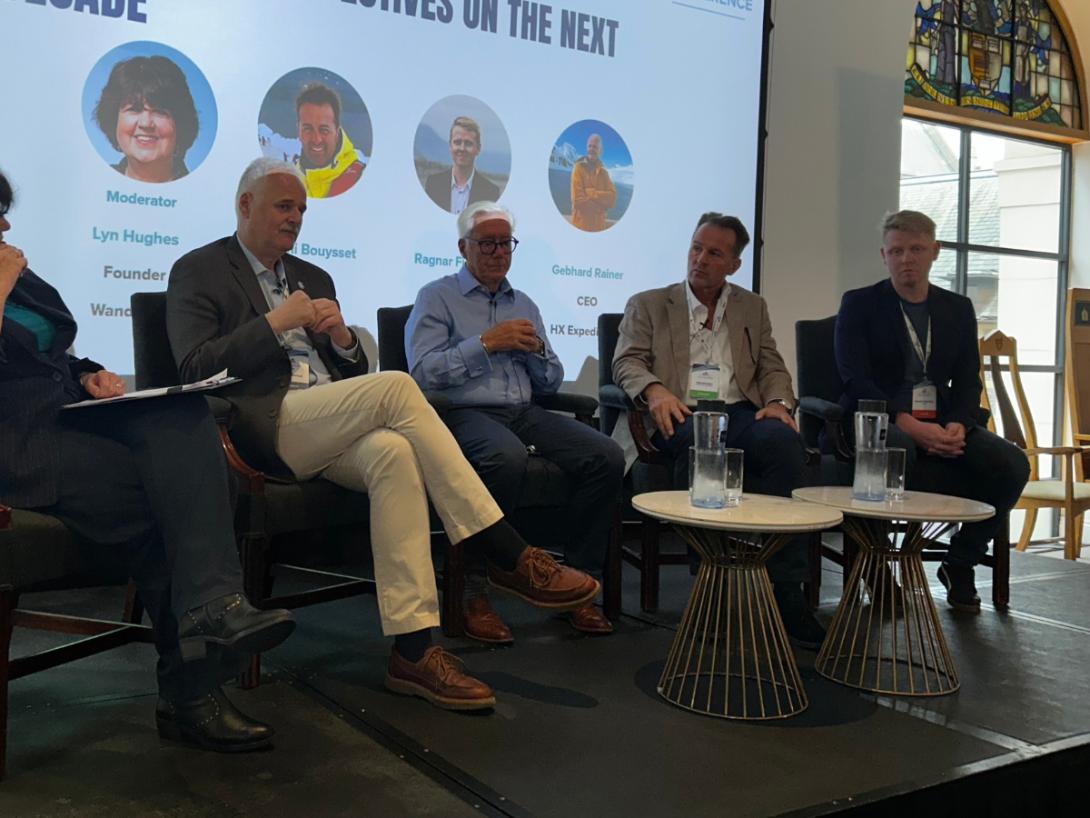
The conference took place over Tuesday and Wednesday (29-30 September) attracting more than 250 delegates, who debated subjects ranging from sustainability, AI in the workplace and how expedition companies can benefit, to onboard WiFi and the size of expedition cruise vessels.
Here are TTG's key takeaways from the two-day conference held at London's Glazier's Hall.
Expedition Cruise Network Responsible Framework
ECN Chief Executive Akvile Marozaite delivered the key update from ECN – the launch of the ECN Responsible Expedition Framework.
The initiative is designed to give agents a “clearer and more consistent way” of understanding and communicating the responsible tourism gains expedition cruise operators have made.
The framework has been created in response to research conducted among ECN’s agent membership, who highlighted difficulties interpreting cruise companies’ sustainability reports, which are often lengthy and detail-heavy.
The 11 participating operators – HX Expeditions, Ponant, Golden Galapagos, Poseidon Expeditions, 60 South, UnCruise Adventures, Australis Cruises, Scenic, Aranui Cruises, Oceanwide Expeditions and Aqua Expeditions – completed a 35-question self-assessment form examining six key areas.
From these evidence-supported answers in the survey, ECN certified each supplier. The five stages of progress are: Emerging, Developing, Integrated, Embedded and Contributing.
As things stand, Ponant have been awarded Contributing and HX Expeditions and Oceanwide Expeditions have Embedded. Marozaite said: “I sincerely hope the framework will become one of the reasons to join this organisation.”
‘The old mindset won’t work’
Generally speaking, expedition cruise firms don't have the biggest teams, especially when they’re compared to ocean cruise lines.
However, Ragnar Fjolnisson, Chief Innovation Officer at travel technology firm Kaptio, which he founded in 2014, boldly predicted AI technology could enable a 50-person expedition company to become “the best operator in the world” in the next couple of years.
Register your interest in the TTG Expedition Cruise Fest
Speaking on the Future of Expedition Cruising panel, Fjolnisson said with the right AI tools, a small company could thrive. “I think a 50-person operator will be the best operator in the world thanks to AI, in terms of customer experience, back office and operations,” he explained.
“That would have been impossible two years ago. Back then, you would have had to invest a tremendous amount of money in talent and brain time to build a customer experience to compete with the larger players. A 50-person operator will be the best. You just need to equip them with the right strategy and tooling.”
He added there would inevitably be “a big shuffle” in IT departments across travel. “The old mindset won’t work,” he added.
Expedition cruise booking conversion
Citing recent research carried out by Kaptio, Fjolnisson stressed the importance of agents getting the “second and third” drafts of quotes out to clients quickly. He explained: “We found out in travel in general the time to get the first quote out is not the most important factor for conversion.
“One of the most important factors is how quickly you can get the second and the third version out [to the client]. The win rates go up the faster you do the second and third.”
But he added: “The leading factor is the confidence from the seller to generate that second and third version really fast.”
Sustainability or responsibility?
Fellow panellist John McKeon, a Co-Founder of Polar Latitudes, questioned whether an expedition cruise operator could be viewed as sustainable if they “burn 12 tons of fuel every day”. “I tend to be a contrarian in the room when people start talking about sustainability because I think that’s the wrong term,” he said.
“I think we need to be talking about responsibility. It’s hard to make people believe you’re sustainable when you’re burning 12 tons of fuel every day. Let’s be honest, we’re not sustainable at this point. We will be in a decade or two, but we’re not there yet. We have to move forward responsibly.”
‘We’re not a cruise company’
Gebhard Rainer, Chief Executive of HX Expeditions, told delegates HX calls itself “an experience company” rather than a cruise company.
“We provide emotional experiences backed through science and education,” he said. “Coming back to what John [McKeon] said earlier, we carry a huge responsibility, making sure that we minimise our foot print and eventually try and leave a positive footprint in the areas that we go to.”
McKeon added operators should worry so much about disassociating themselves with the word “cruise”.
However, he argued that as the expedition cruise demographic starts to shift, the definition of expedition also begins to evolve. “I think we have to be aware that an expedition is whatever a consumer wants it to be,” he added.
The growing importance of onboard WiFi
McKeon also stressed having strong onboard WiFi was a pre-requisite for some cruise passengers who previously were put off from booking an expedition sailing.
“Those people in the past who couldn’t get away can now come away with us because they can send a few emails and do a few things online," he said. "Those folks were excluded a decade ago.”
Rainer said having onboard WiFi was helping drive down the average age of expedition cruise customers. “Expedition is typically known for having an age demographic of 55 and above, but that is changing as well.
“We’re seeing younger demographics going into expedition. They know exactly what they want and they’re very clear about that.”
‘No disadvantage to operating a larger ship in Antarctica’
Rainer highlighted how passengers want different sized ships and how, in his view, there was no disadvantage for Antarctica operators with vessels carrying close to 500 passengers, which is the upper limit there.
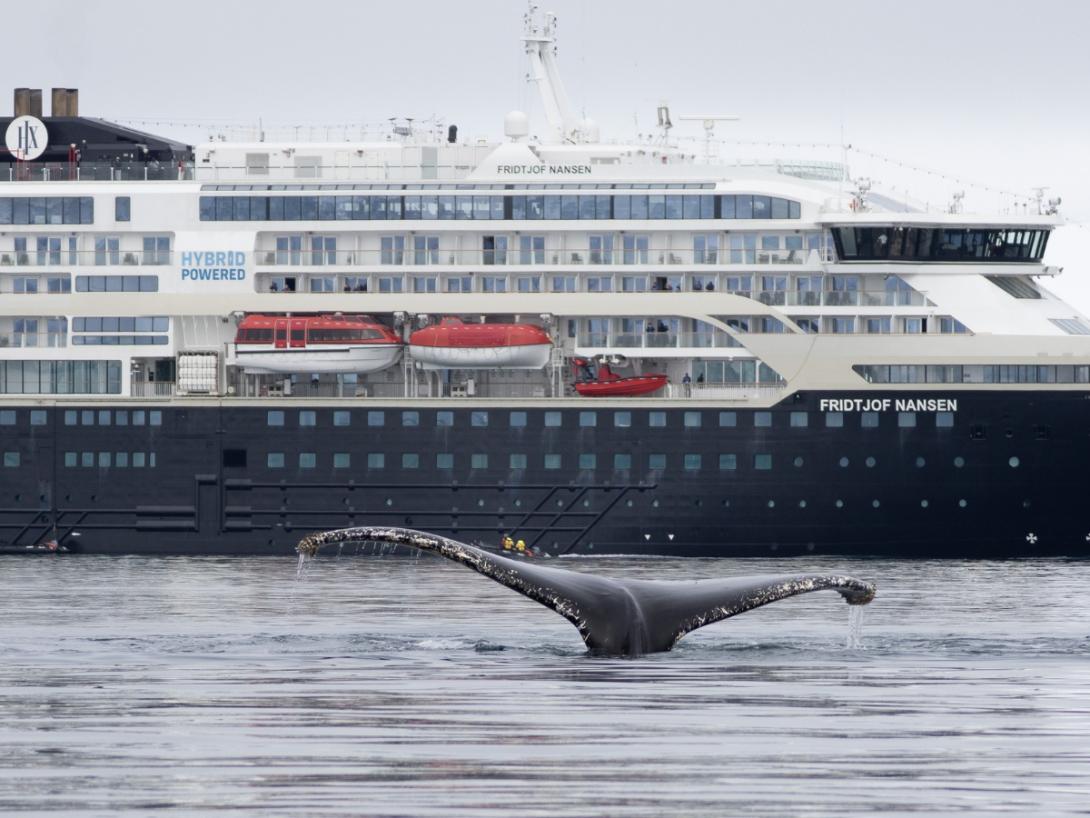
HX’s five-ship fleet includes two with capacity for 490 passengers – Fridtjof Nansen and Roald Amundsen.
“People choose different experiences depending on what they want,” he explained. “There are people who feel safer if the ship is a little larger, and there are others who say they prefer roughing it out on a five-cabin yacht going through the Drake Passage. There’s no disadvantage of having a larger ship.
“You can’t go beyond 500 passengers because then you cannot land and then you go up and down the coast with binoculars watching the coastline. You’re not really experiencing the place you go to. We call it Alaska Syndrome.”
TTG Expedition Cruise Selling Guide
Find out a whole lot more about the sector with TTG's Expedition Cruise Selling Guide, created in partnership with the Expedition Cruise Network and featuring FAQs, destination guides and travel agent discounts, as well as selling tips, guides to specific expedition lines and all the latest news.