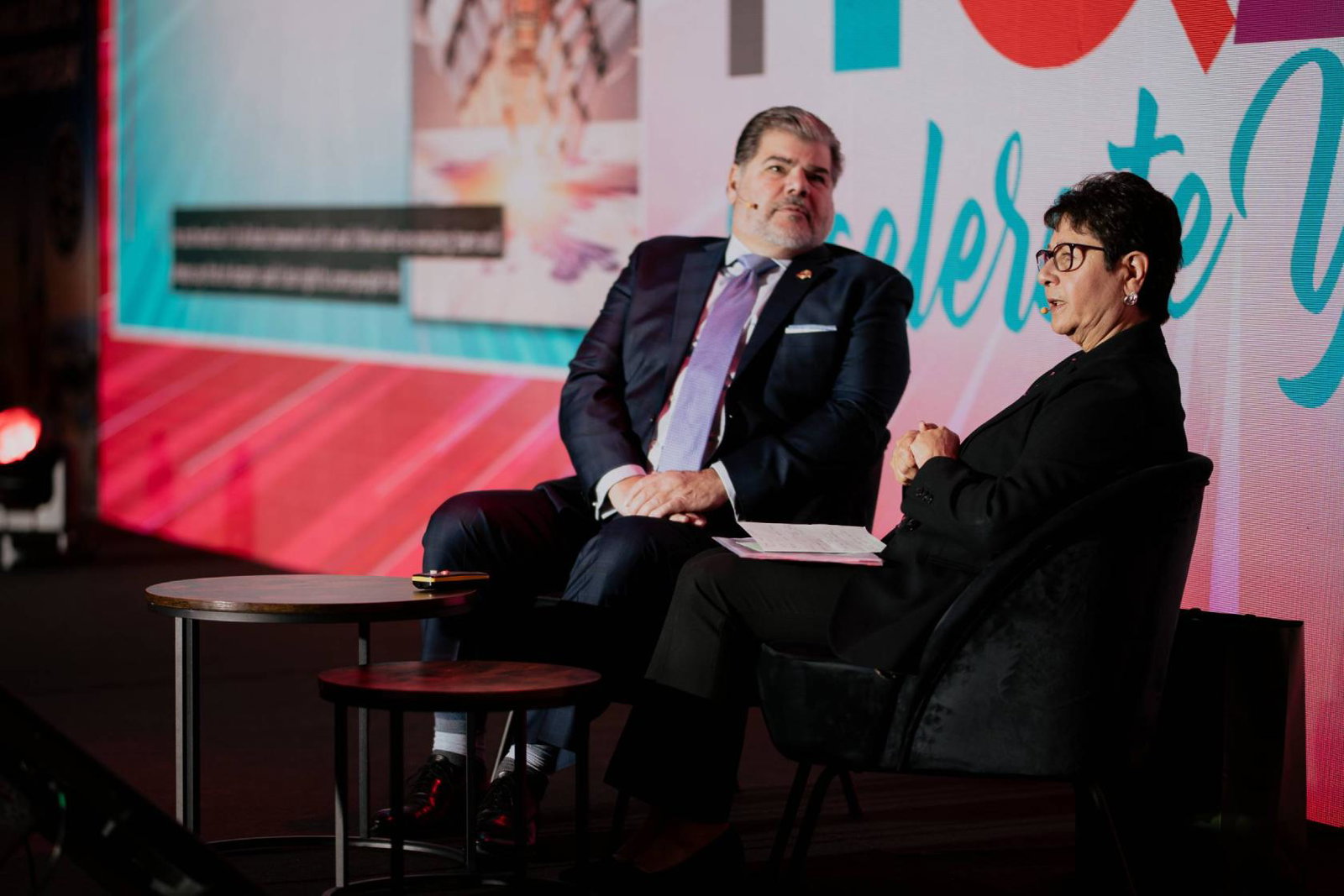
InteleTravel brought together 500 of its agents, as well as industry partners, in Krakow at the weekend for the biggest InteleTravelQuest conference to date, revealing it is on track to deliver £325 million in turnover this year – and has set itself an ambitious target of topping £400 million in 2027.
Speakers explored how agents could build on that momentum, with sessions covering everything from destination trends versus fads to social media tips and how to gain a competitive edge by using AI.
TTG was at the conference to help agents and the wider travel industry make sense of the key topics and discussion points – and how to apply the content to help build stronger businesses.
The booking curve is getting flatter – so specialise
Kelly Cookes, InteleTravel's UK & Ireland Commercial Director, told delegates the traditional travel booking cycle is becoming less seasonal as consumers embrace new ways to travel, and as more agents carve out specialist niches.
"We are definitely seeing the typical booking curve is flattening out," said Cookes, although she stressed the traditional peaks period in January and February, the lates market, and ski booking windows all remained.
She urged agents to continue to look beyond short-lived fads and seek to identify the longer-term changes in consumer behaviour that could create sustained demand.
"A trend is a shift in mindset, [in] behaviour, and the way that we spend our money," she told delegates, contrasting this with the viral moments that "create headlines" but disappear just as quickly.
"Your job isn't to chase everything," she said. "It's to choose wisely and commit fully," pointing to cruise, adventure, touring and luxury as "exciting" examples.
AI could make customer data the new competitive edge
AI could make knowing the customer's habits more valuable than understanding a destination, according to InteleTravel Chief Executive James Ferrara. He predicted a future in which AI handles research and itinerary-building, freeing agents to "listen", "interpret" and "empathise" with their clients.
Ferrara suggested AI could eventually draw on customers' previous bookings and preferences to create personalised recommendations "in seconds" and manage much of the resulting transaction. The result, he said, would be "lighter work", "more sales and more money" – making customer data, judgement and relationships the competitive advantage going forward.
"The important distinction is that any AI output should be served to the agent, not the customer," he added. "You should get to edit, improve and have the final say."
You might be posting too many discounts on social media
Agents should stop treating social media as a noticeboard for offers and start using it to build a personal brand, Andy Headington, Chief Executive of digital marketing agency Adido, told delegates.
Citing his client Tates Travel as a case study, he highlighted how the Sunderland-based agency was seeing engagement and enquiries fall despite continuing to post deals to their more than 100,000 Facebook followers. "They were posting some great offers," he said. "But I'd seen that offer somewhere else before – and their audience probably had too."
Headington revealed the business went on to find greater success posting about charter flights around local football matches, which Headington described as "relevant and unique" content.
"Share your expertise, knowledge, and yourself," he said, encouraging agents to only deliver content customers cannot get elsewhere. "I wouldn't push the deals too often, unless your niche is being the cheapest travel agent in the UK," he added.
If you don't respond to clients quickly, they'll go somewhere else
"Your customer chasing you is an example of bad service," Trainer Debbee Dale told delegates at the conference – a warning backed by internal InteleTravel figures showing 82% of clients expect a response within an hour.
Dale, Managing Director of Debbee Dale Development, advised agents to set clear expectations, communicate proactively and "listen for more than just the words a customer uses". "If you receive an email and you don't reply to it within a day, guess what? They will have gone to someone else," she said.
This came with the caveat that agents shouldn't necessarily have to be available 24/7. "A good response time is up to you and your customer," she said. "It's about setting expectations – something like, 'I'll have this quote to you by Tuesday'. Setting deadlines and meeting them builds trust."
Dale also encouraged agents to listen for how customers are feeling, not just what they are asking for. "You don't just listen to the words. You take in the music," she said, pointing to the importance of recognising when a customer is nervous, excited or uncertain.
"They want to feel understood, and travel is all about that human touch and connection," Dale added.
Accessible travel starts before the client leaves the house
Agents should think beyond airports, hotels and mobility needs when selling accessible travel, Abta's Director of Industry Relations Susan Deer told delegates, urging them to consider the customer experience from inspiration through to returning home.
"Think about the whole journey," she said, pointing to everything from marketing that features individuals with disabilities to how easily customers can find information and make a booking to transport, accommodation, excursions and experiences when they actually arrive.
"If you're only thinking about transport to the hotel, you're really missing out on all those experiences which we love which make holidays so great," she added.
Deer also encouraged agents to use post-trip feedback to build their knowledge, particularly when it comes to customers with lived experience of accessibility needs. What seems insignificant to one traveller can be a major barrier to another, she said, sharing the example of an autistic child who experienced severe distress because of a strong scent used in a hotel reception.
"You wouldn't think twice about it, but having that curiosity is core to selling accessible travel," she explained.