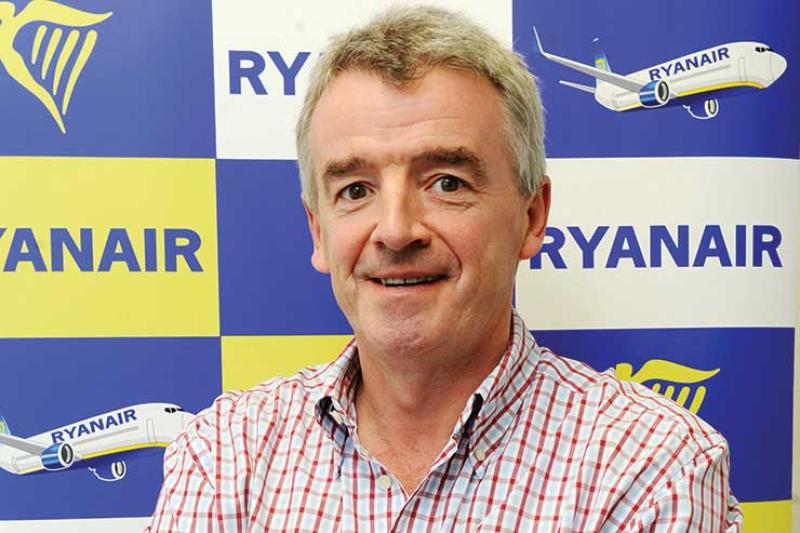
Despite his many publicity stunts, Ryanair’s boss Michael O’Leary has so far resisted brandishing a cutlass to repel OTA “pirates” in his battle against screen scrapers.
O’Leary’s hunt for pirate marauders instead came to a head in an obscure US courtroom in July, when he took on the might of Booking.com – accusing it of attempts to defraud by taking Ryanair’s flights and ancillaries and selling them at a mark-up without the airline’s authorisation.
Screen scrapers, in the airline’s words, use intermediate software providers to scrape Ryanair’s website, and then "overcharge" consumers for the air fares and/or ancillary services.
Ryanair said screen scrapers “mask these anti-consumer practices by making bookings using fake customer emails and fake customer payment cards”.
In the past six months or so, the airline’s numerous shouty press releases have presented copious examples of OTA websites inflating fares and adding a mark-up to seat reservations, baggage and other ancillaries.
It all got legal when a jury at Delaware District Court unanimously ruled in favour of Ryanair’s claims that Booking.com had violated the US Computer Fraud and Abuse Act with “intent to defraud”. Jurors also decided Ryanair had suffered economic harm because of screen scraping by the OTA.
The jury also dismissed all Booking.com’s counterclaims against Ryanair, including defamation, unfair competition and deceptive trade practices. It was a hefty defeat for the OTA and a warning to others to back off or seek a formal partnership with the airline, with OTAs then on the back foot when negotiations begin.
A battle Ryanair planned for?
Travlaw senior partner Matt Gatenby said: “Ryanair have a long history of litigation all around the world, and presumably with an overall plan as to what they are trying to achieve.
"Their litigation and PR strategy with UK OTAs has resulted in a set of agreements that, according to most industry experts, are preferential to Ryanair – was this planned from the start?”
Gatenby added there were sound reasons for the court case taking place in the US.
“It is an easy assumption to say that if they were going to go after Booking.com for any reason then the core US entity makes sense,” he said.
"If they can win there, which they have – although my understanding is that Booking.com have openly stated they are appealing – then it suggests the various other entities around the world have to pay attention to that.”
Days later came another verdict, this time in Berlin, where Ryanair defeated Spanish OTA eDreams – whose brands include Opodo – labelling it “the last significant OTA pirate in Europe”. Among other things, Ryanair said the court found OTA’s service fee of €3.88 was excessive and unlawful.
O’Leary said: “We hope these rulings will now see an end to OTA pirates... and will force consumer agencies across the UK and Europe to finally take action to outlaw this illegal screen scraping and over-charging of consumers for flights and ancillary services.”
Ryanair declined to comment further to TTG.
’A change of heart’
The court cases were a culmination of Ryanair’s irritation with OTAs. It came amid a dramatic change of course for the budget airline, which decided it was better to have its enemies closer where it could control them.
In a quest to broaden its distribution, it has, since the start of this year, signed up numerous OTA partners about which it had previously been scathing. Ryanair couldn’t beat them, so asked them to join.
OAG chief analyst John Grant said: “Any airline, even one as large as Ryanair, needs to maximise their distribution, especially when there is either a softening of demand – which appears to the case now – or too much capacity, while at the same time ensuring their own direct sales represent the most effective channel of distribution.
"Ryanair is going through that process, legitimising the sale of seats through agents and distributors they want to work with. It is a change of heart in their thinking but as much an evolution of relationship between the airline, distributors and travellers.”
The list began with Loveholidays in January and went on to include Expedia, Lastminute.com and On the Beach.
All have signed Ryanair’s approved OTA agreement that guarantees package or flight-only customers access to a myRyanair account and to receive flight information directly without needing to complete Ryanair’s verification process, which unauthorised OTA customers must continue to do.
Ryanair’s OTA list is expanding; a recent addition in the Nordics is Stockholm-based Braganza, which includes Ticket and tour operator Escapeaway. Another is Etraveli Group, also based in Sweden. It includes the OTAs Mytrip, Gotogate and Flightnetwork and operates in 75 countries.
In 2019, Etraveli bought TripStack, a B2B brand which could be an important Ryanair partner. Etraveli said TripStack “is actively working to integrate every low-cost carrier in the world and make them available to travellers through a simple and cost effective API”.
TripStack builds “virtual interline itineraries” combining those of full-service airlines and low cost carriers “that have no relationship with each other”. It claimed: “Only a few providers in the world are capable of this.”