Key themes at the Delivering Sustainable Travel Conference on Wednesday 15 May included the options – and challenges – for tackling overtourism, the need for collaboration across the industry and the consumer “say do” gap which touched on talk over action when it comes to travelling sustainably – with the responsibility for ensuring responsible travel firmly held at the industry’s door.
Put aside the quest for perfection
In her keynote address Hotelplan director of sustainability Prue Stone urged delegates to put aside the “quest” for perfection and acknowledge the travel industry’s role as one of “problem solving”.

“In this industry we’re nothing but problem solvers. We deal with operational changes, passenger demand shifts, geopolitical shifts, environmental catastrophes – I think between us we’ve probably done it all. And how have we always done it? By working together.”
Stone pointed out that the industry often having to be reactionary, with tight deadlines, means solutions are probably not perfect. “As humans we are always going to make mistakes, so it’s that opportunity to put aside the quest for perfection and a fear of failure, as I think that hampers your progress.”
“I would urge people to reimagine travel – reimagine an alternative collectively and implement it imperfectly,” Stone said.
Regulation can’t lead to greenhushing
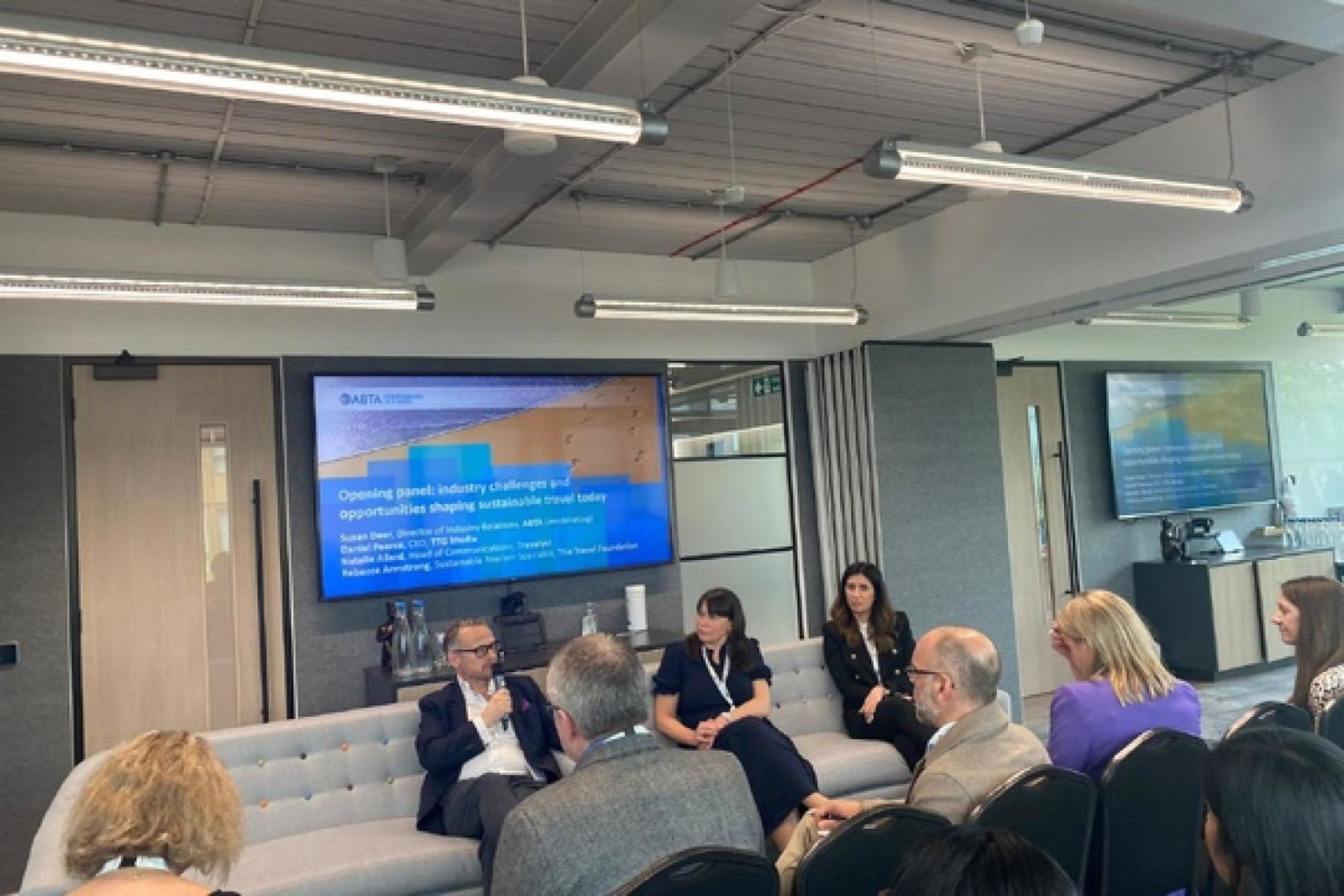
In the opening panel, Travalyst head of communications Natalie Allard highlighted regulation as a key focus for the coalition, but insisted the scrutiny that comes with regulation cannot lead to “greenhushing” within travel.
“Sustainability used to be niche but now everyone is talking about it and that’s a really good thing, but it means a lot of noise and with noise comes scrutiny,” Allard noted.
“You can’t just say something is sustainable or green or eco-friendly; you have to really back it up. That’s a good thing because consumers are going to be armed with really credible information, but we don’t want regulation that’s [intended to] combat greenwashing to lead to greenhushing."
Allard stressed: “We don’t want to be in the space where people are too scared to talk about the good things they are doing, because that will lead to a vacuum of information, and if information isn’t there, how will consumers make better choices?”
Should we talking about ‘travelling sustainably’ to consumers?
TTG Media CEO Daniel Pearce posed the question of whether the travel industry should be talking about ’travelling sustainably’ to would-be holidaymakers.
Pearce said: “There’s a challenge to get consumers more excited about travelling sustainably – and we probably shouldn’t call it ‘travelling sustainably’ because for many that’s a switch off and we need to recognise that."
He added: “Travel agents tell us they very rarely see people that have any interest in sustainable travel or ask those questions at the point of purchase. There’s a gap between what the industry is telling themselves and what consumers are responding to, and I think there’s a massive marketing challenge to get consumers more excited and onboard.”
The panel was questioned on how to make carbon reporting, emissions figures and other sustainably metrics that the industry holds itself up to more relevant to consumers.
Allard responded: “We need to make our messages land so they make more sense to the average person that might not live and breathe sustainability every day.”
She cited Travalyst partner Google as an example of good practice. “When you see the emissions information there, they compare it to how many hamburgers that is or how many cars are taken off the road.”
It’s all about collaboration
Allard called for more collaboration as part of her wish list for the next year. “There’s no point in weaponising sustainability – it’s then just a race to the bottom. We’re on this journey together: how can we help each other?”
Stone also firmly stated one person alone in a business can’t be the driver for change.“It’s not any one person’s job to envisage that change and drive it through a business…it’s exhausting.
“To get from where we are today to where we need to get to requires change from the top down, bottom up, every corner of all of our networks, finding solutions together. For people to be onboard with change, they need to be part of the process.”
One size does not fit all
Addressing the question of water scarcity in destinations, The Travel Foundation sustainable tourism specialist Rebecca Armstrong highlighted the issue as becoming “more acute with the climate impact, and peak demand in destinations often being at the hottest, driest times of the year”.
“It results in that perfect storm of impacts at destination level, and residents are understandably responding to that – water is a basic human right. I think it’s essential for tour operators to work with destinations and collaborate at that level to understand those challenges. It’s not a one-size-fits-all approach – those challenges will be local and very specific.”
The “one size does not fit all” message was a recurring recognition across the conference, which regularly returned to the enormity of the task within the travel industry to keep moving forward with responsible travel initiatives.