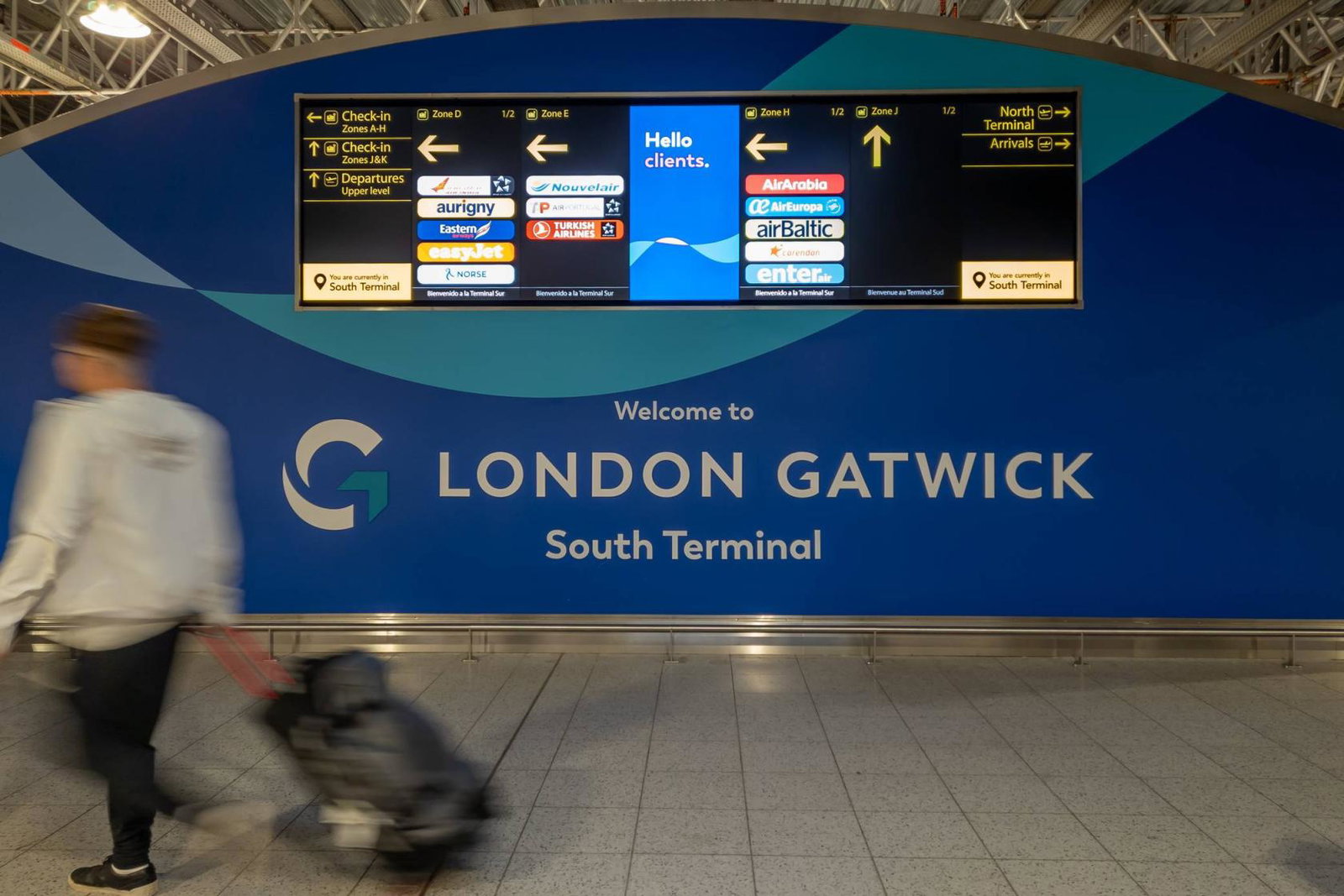
It’s not often you expand and lose record-breaking status at the same time, but Gatwick airport is set to do just that.
For decades London’s second airport, which serves 43 million passengers, has boasted it is the world’s busiest single-runway airport. That will change from 2030, when its standby Northern Runway is brought into permanent use following the collapse of a legal challenge by opponents.

The Court of Appeal this week blocked challenges based on carbon reduction targets and that questioned the need for expansion given Gatwick’s proximity to Heathrow. The Court said: “Neither appeal has a real prospect of success.”
The ruling means the standby runway will be used for short-haul take-offs, while the existing runway will handle landings and long-haul departures. The immediate effect will be an additional 100,000 flights and 13 million passengers, although future plans envisage 80 million passengers, putting Gatwick hard on the tail of Heathrow’s 84 million. However, a Gatwick spokesperson told TTG the prediction was for 75 million passengers “by the late 2030s”.
Perhaps one positive the airport and opponents of expansion can agree on is that it will cut emissions from wasted fuel as aircraft circle waiting to land or queue for take-off at peak times. But that benefit may be lost if Gatwick presses ahead with a massive increase in passenger numbers, in which case congestion and pollution issues will likely return.
An odds-on bet
This aside, the decision is good news for the travel industry, with Gatwick being the UK’s biggest bucket and spade departure airport, but one constrained by slot availability – Jet2 only managed to gain a foothold there in March, with space for six aircraft. Jet2 chief executive Steve Heapy said Gatwick had been an ambition “for many years” and a small slot portfolio becoming available provided a “once in a generation opportunity”.
Jet2 remained tight-lipped about its plans for the future, but told TTG that next summer, it would have more than 1.1 million seats on sale at Gatwick, 27% more than summer 2026. Expansion comes after slots were found for a seventh aircraft, so expect more once the Northern Runway is in operation.
It’s odds-on easyJet, the biggest operator, and British Airways, will also schedule more short-haul flights. Both declined to comment, as did Wizz Air, which may also have a change of heart about Gatwick: Last November it blamed an inferior slot portfolio for cutting routes there and reduced its fleet from eight to seven aircraft, but may now embrace an opportunity to upgrade.
A major coup?
Gatwick, however, will continue with its drive to get more long-haul destinations – bigger aircraft mean more passengers per flight, which is good for airport profitability. Notable recent successes have been attracting Singapore Airlines, Ethiopian Airlines and, from next year, Air Asia X. Top of the list may well be securing the return of Virgin Atlantic, which moved to Heathrow in 2020. Virgin will retain its business routes at Heathrow, but Orlando, Phuket and some Caribbean services may return with lower landing fees.
The return of a big US airline would be a major coup, while Etihad is the missing Middle East link and Air New Zealand, which has secured slots at Gatwick, could fly to the UK for the first time since 2020.
Gatwick’s expansion is nicely timed for BA, which will upgrade its ageing long-haul Boeing 777-200 fleet from 2028 with new 787-10 aircraft. This is a major boost for the airport, in particular for premium customers to routes like the Caribbean.
Many travel industry businesses are based around Gatwick, and while staff and residents won’t welcome the extra noise and fumes, expansion surely means jobs are assured, while agents can look forward to a raft of new destinations to sell.