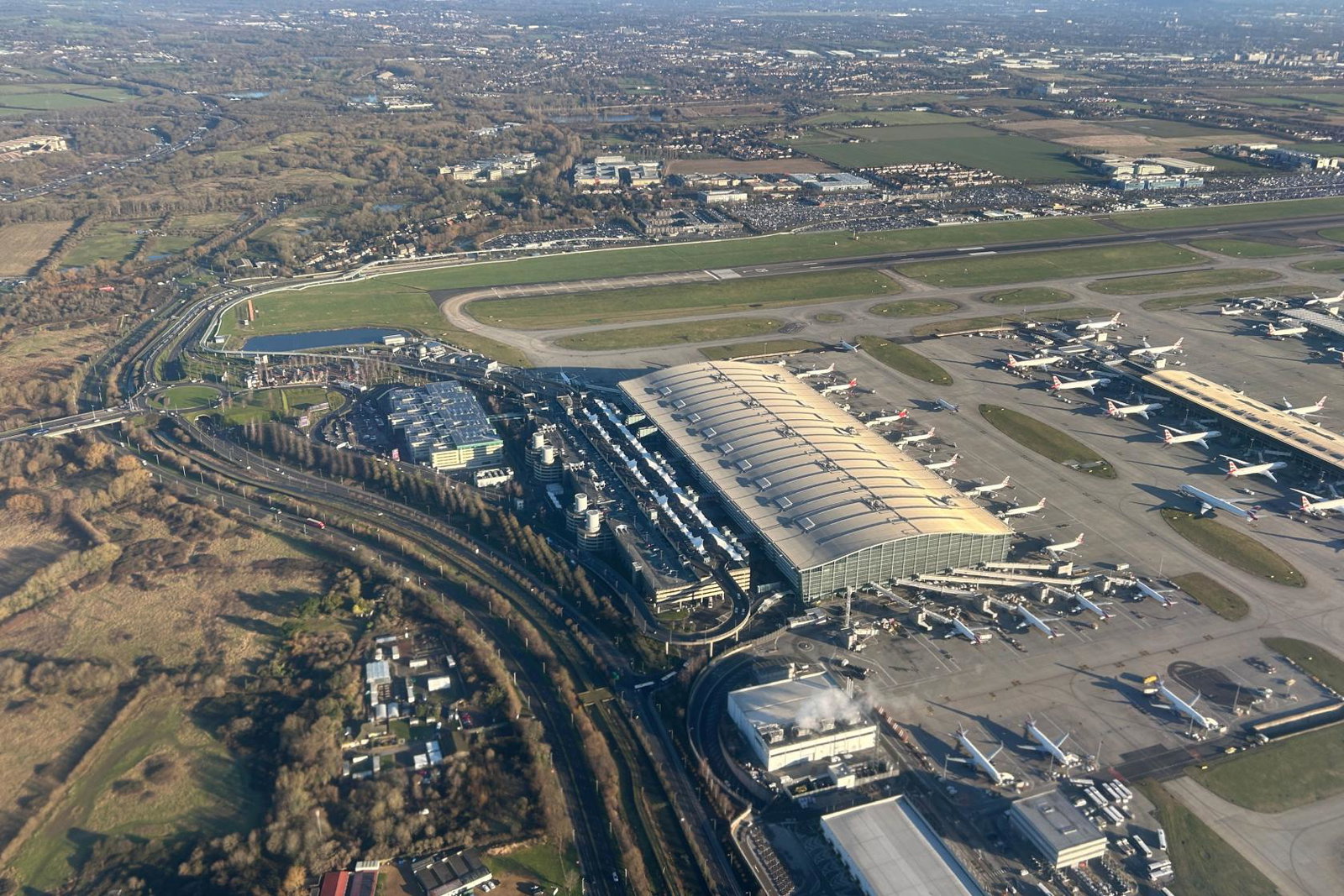
The Climate Change Committee (CCC) on Wednesday (16 September) said there is "no credible pathway" for Heathrow to expand under the UK's current climate commitments.
“Our advice today is clear – Heathrow expansion is not currently compatible with the UK’s net zero target," said CCC Chair Nigel Topping. "Government needs to ensure the aviation industry takes responsibility for the emissions it creates and bears the costs of decarbonisation. Those conditions do not exist today."
While the CC has no power to block ministers from approving Heathrow's third runway – a vote in the House of Commons is expected later this year – it can advocate for the government to firm up the rules governing the speed at which aviation pursues decarbonisation.
The CC said the only way expansion could be achieved in a way that is consistent with the UK's current environmental targets would be for government to implement "a robust set of policies" requiring the aviation to achieve zero emissions by 2050.
It said this could yet be achieved through a combination of direct reductions in emissions, such as by reducing flying, and paying for carbon reduction technologies, although it also warns only 1% of engineered removals in its sixth carbon budget (2033 to 2037) are "supported by credible plans".
What is a carbon budget? And what does the latest one mean for travel?
The CC's report advocates for a net zero aviation pathway based on a "polluter pays" principle, which would see engineered removals account for reducing emissions by more than a third (36%) and lower demand growth by nearly a quarter (24%).
Efficiency improvements would account for another 20% and the rollout of sustainable aviation fuel (SAF) for the final 20%. Under the CC's proposals, the aviation industry would pay for engineered removals and SAF.
However, it warns under this route, ticket prices for a return trip to Alicante could increase by around £150 by 2050 and a return New York trip by £400.
The CC's key asks of government include:
- Requiring the aviation industry to fund the full cost of decarbonisation "no later than 2050", adding these measures need to be phased in "starting soon";
- Factoring in contingencies should it prove more difficult than first thought to engineer emission removals and deploy SAF at scale;
- Ensuring, if expansion is permitted, any commercial risks associated with future aviation demand sits with investors, not consumers; and
- Ensuring too that the burden doesn't fall on taxpayers; "those who do not fly should not face these costs" it said in its latest Carbon Budget (2038 to 2042)
According to the CC, emissions from aviation have more than doubled since 1990, during which time emissions across the UK economy as a whole have halved.
'Work with us' plea to government
Karen Dee, Chief Executive of AirportsUK, said the aviation sector was well aware of the decarbonisation work still needing to be done if it is to expand.
"It is essential that this is delivered in a way which protects UK competitiveness and that the considerable sums consumers are already being asked to pay are better used to support decarbonisation," said Dee.
“Industry has a credible plan to decarbonise by 2050 taking into account growth through expansion, through sustainable aviation fuel, airspace modernisation, more efficient aircraft and other measures. The government’s focus should be to work with the sector to ensure its policy framework supports this plan.”
Tim Alderslade, Chief Executive of Airlines UK, said airlines were supportive of net zero by 2050 but stressed the transition had to be affordable. "Airlines are already investing billions in new aircraft, SAF and airspace upgrades and we have a plan to deliver it.
"The CCC's approach would add £600 to a family's trip to Europe and £1,600 to New York by 2050, putting holidays out of reach for millions and turning the clock back to a time when flying was the preserve of the rich. You can't solve the climate crisis by pricing Britain out of the skies.
"The answer is affordable SAF – already cutting emissions since the mandate began – airspace reform by 2035 for more direct routes and scaled-up carbon removals. Both SAF and GGRs [greenhouse gas removals] are proven technically viable, as the CCC itself admits. We should focus on delivering them, not pricing ordinary people out of the joys of travel."
Duncan McCourt, Chief Executive of Sustainable Aviation, said the UK's aviation sector was making "real progress" on decarbonisation, claiming per passenger emissions have gone down by 22% since 2005 amid a near-30% increase in passenger numbers.
"Behind the headline of the CCC report, there is much we agree on: UK aviation can continue to grow and still reach net zero by 2050. To do that, stronger policies and international cooperation are needed.
"We strongly disagree with the CCC conclusion that aviation should not be able to expand until the full framework of policies to decarbonise are in place. That is like saying we shouldn’t build any new homes or cars or produce any steel, cement or chemicals until decarbonisation policies are finished.
"Expansion of an industry can, and should, go hand-in-hand with the development and implementation of policy to decarbonise.”