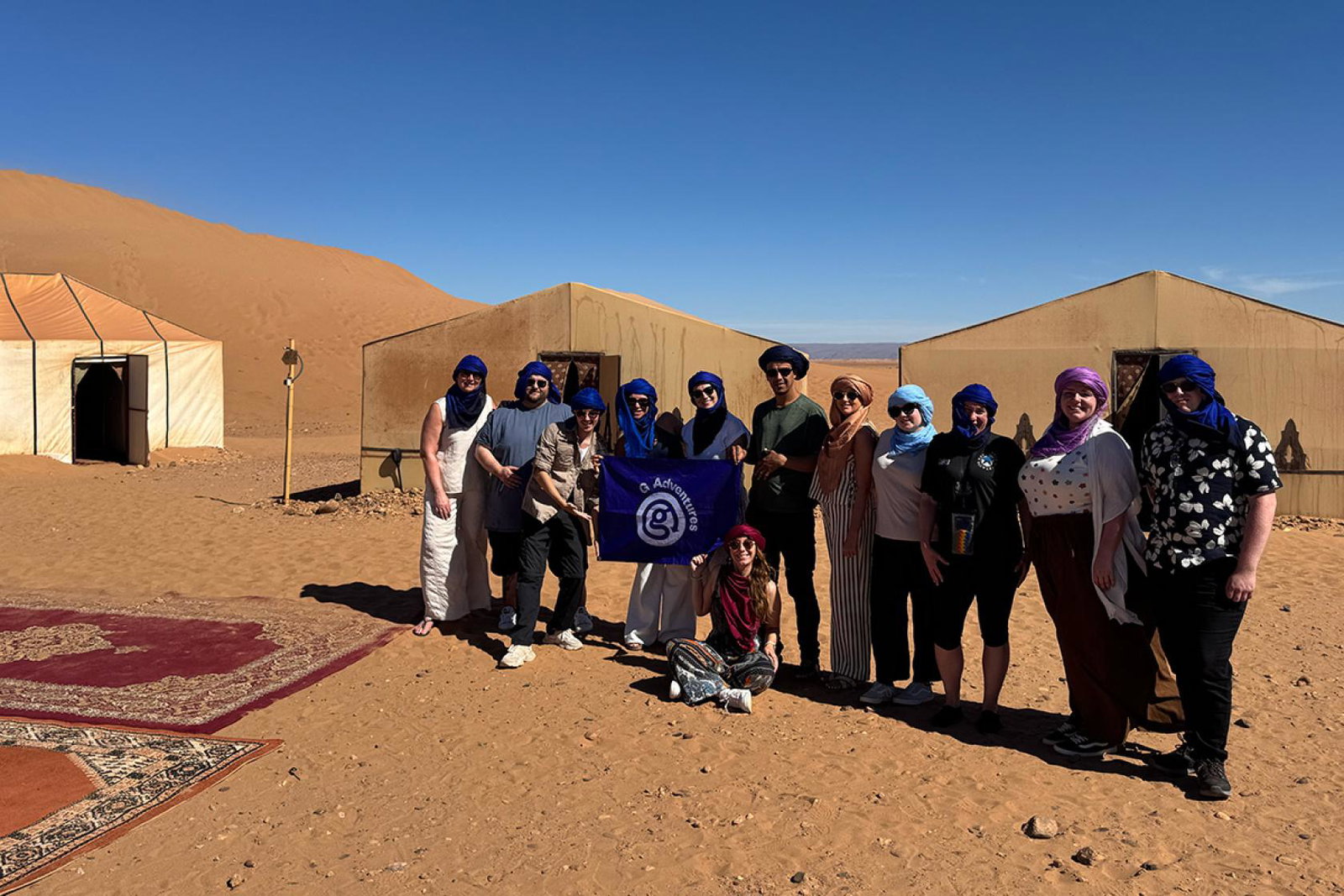
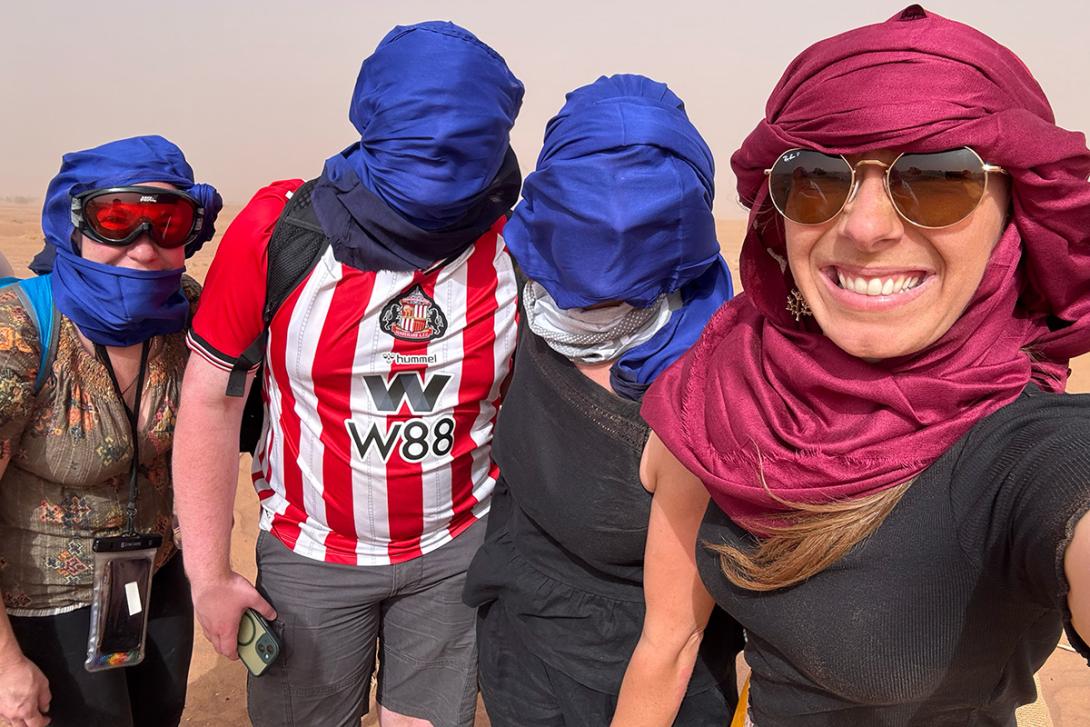
We had been warned. Winds of 30mph paired with a two-hour hike over the Sahara’s Erg Lihoudi sand dunes was going to be a challenge. Why then, am I joining a group of Hays Travel agents on this trek organised by G Adventures? We’re on a Moroccan tour itinerary and our Berber CEO (chief experience officer) Ridouane, who has been a guide for the tour operator for the past 13 years, says it’s 50/50 whether visitors are met in Zagora with blue skies or blizzards. So, it’s a risk we must take if we wish to spend a night in the heart of the largest hot desert in the world.
Kitted out with protective “tagelmust” head-wraps, we push forward against gusts of red sand and past grazing camels we now know must be used to this kind of weather. G Adventures is of course prepared for all eventualities, so a 4x4 follows us closely in case of emergencies, and Ridoune is armed with medical essentials and expert navigation skills. Luckily for me, the biggest emergency I encounter is collecting an unholy amount of sand in every possible orifice.
Desert nights
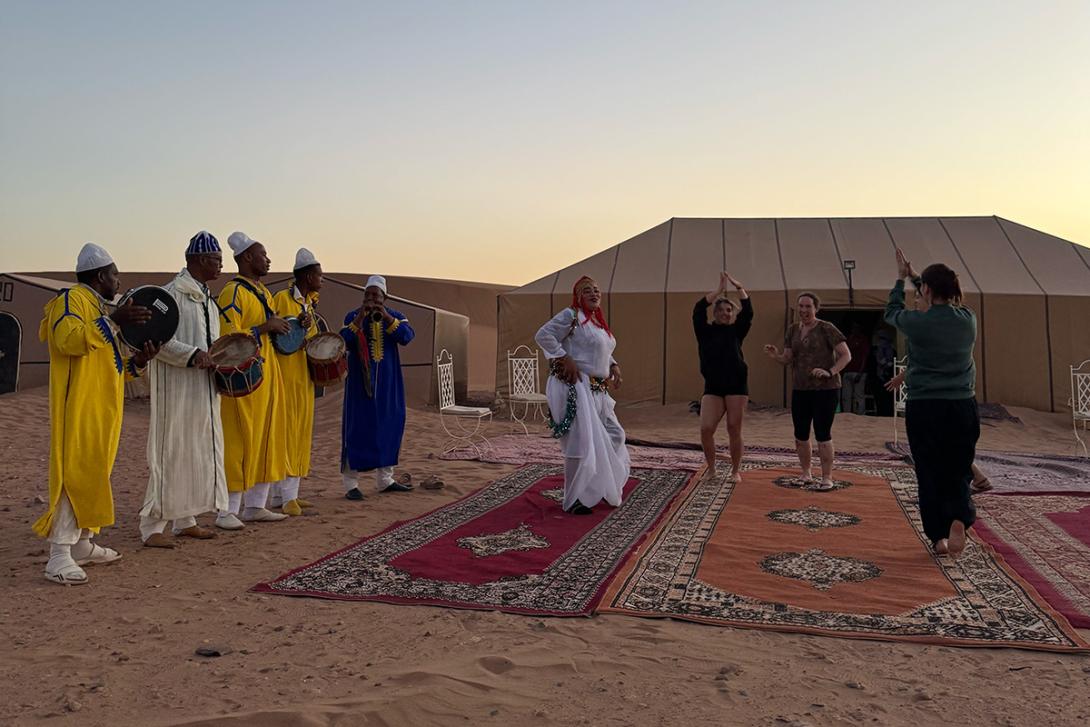
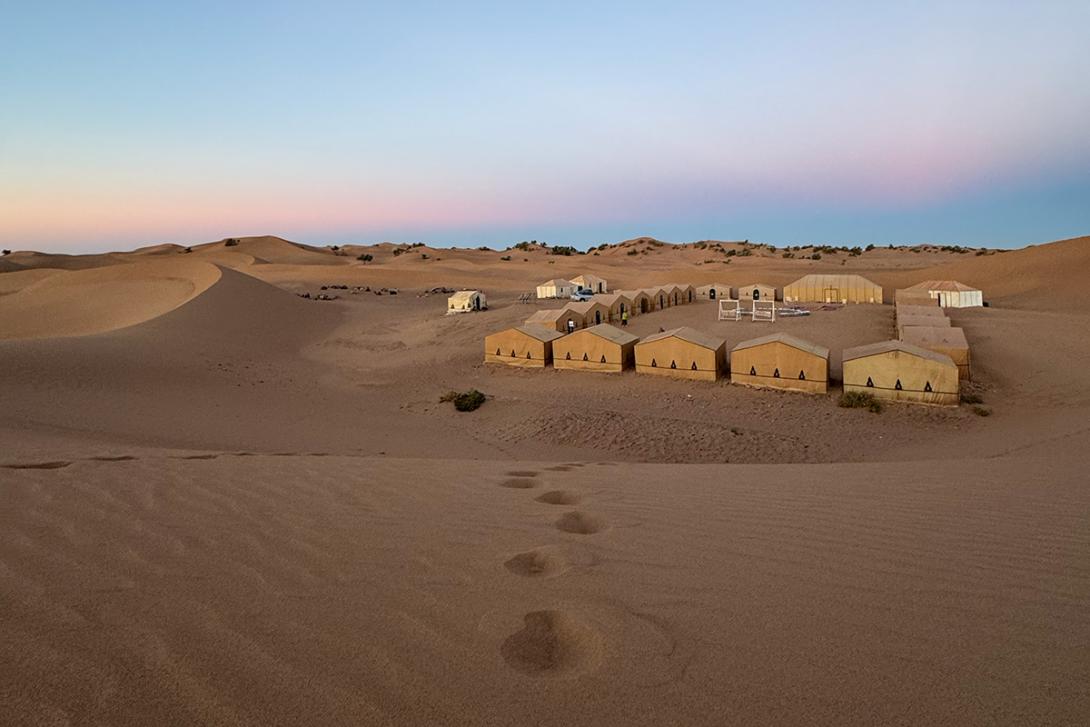
Our desert camp destination is worth every pesky grain. Chez Belhou is made up of 21 sleeping tents, one larger tent for dining and another medium-sized tent housing six toilets and two sinks. Centred in the middle of the camp are swing seats, metal stools and a roaring campfire. On our arrival, locals in traditional attire greet us with Moroccan tunes on the drums, a tambourine and a trumpet, while some of the agents feel emboldened enough to join in with the dancing. With the sun slowly setting on the horizon behind them and the air turning crisper by the minute, the atmosphere is hypnotic – I feel so disconnected from my chaotic London life it’s the reset I never knew I needed.
This lodging is classed as a “luxury camp”, but as Ridouane explains: “Tourism is [comparatively] new in Africa, so a four-star here is going to feel like a one-star in Europe.” We eat barbecued meat and vegetables, sleep under patchwork blankets (yes, there are beds with mattresses) and navigate around at night with no more than our phone torches and the starry night sky to guide us.
The following day an unwelcome 6am alarm means I am able to witness the most magical sunrise. I’m the first of our group to clamber up to the precipice of a camp-side dune, where I’m rewarded with nothing but silence, distant insect calls and a view I’m not likely to forget in a hurry.
Hump day
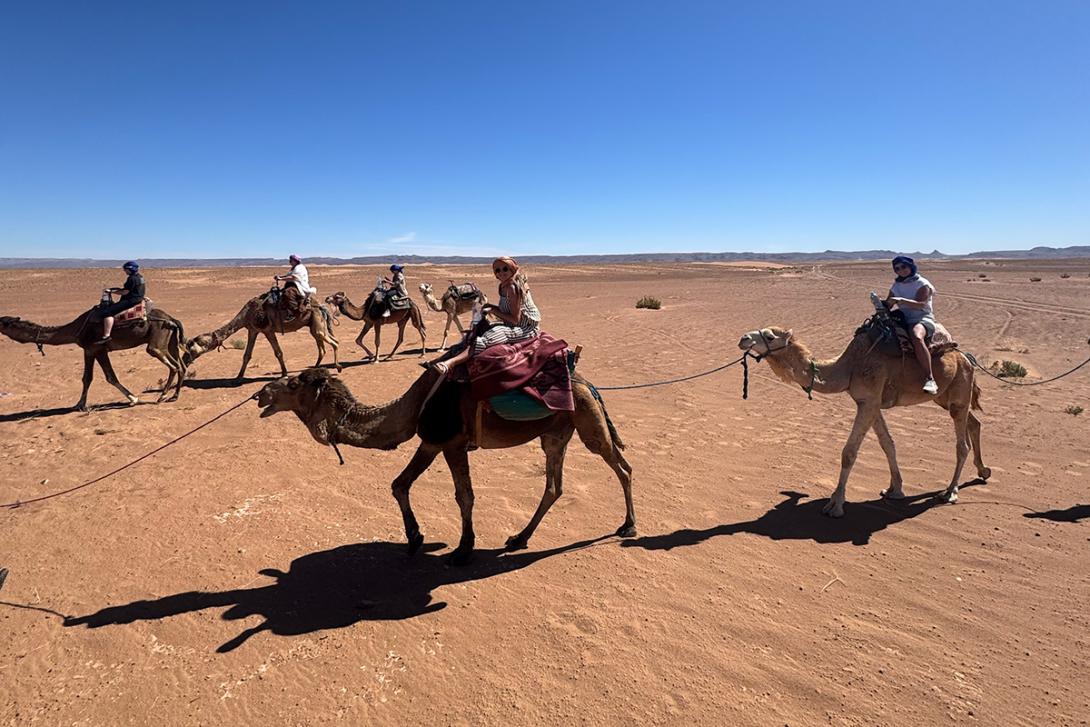
To one side of the camp there’s a caravan of resting camels awaiting their riders – we learn they were filed in the night before to make the most of the cooler temperatures. This is the first sign G Adventures has chosen a responsible operator for its camel riding activity, which features on many of its Sahara itineraries.
The steeds are bound to a maximum of one 1.5-hour trip per day, spending the rest of their time roaming the desert as they please. I proceed to ask Ridouane a stream of questions about the welfare of the animals to ensure it’s an experience I feel comfortable saying ‘yes’ to – where have the camels come from? What are the rider weight restrictions? What can you tell me about the animals’ day-to-day conditions that proves they’re well cared for?
Satisfied with the answers, agents and I mount our camels for the journey back towards civilisation (though those who prefer can go by foot or car). During the ride, which turns out to be surprisingly physically demanding, we affectionately name our camels and chit chat safe in the knowledge our local guides know the terrain and the life residing in it like the back of their hands.
G For Good
It’s not just the animals in its destinations that G Adventures looks after through tourism, it’s the people and environment too. The agents and I see this first-hand in Akrich and Achbarou, two small villages a five-minute drive apart on the outskirts of Marrakech. They’re home to a Trees for Days project developed in partnership with Planeterra, and the High Atlas Foundation’s Zarbiat Achbarou women’s cooperative.
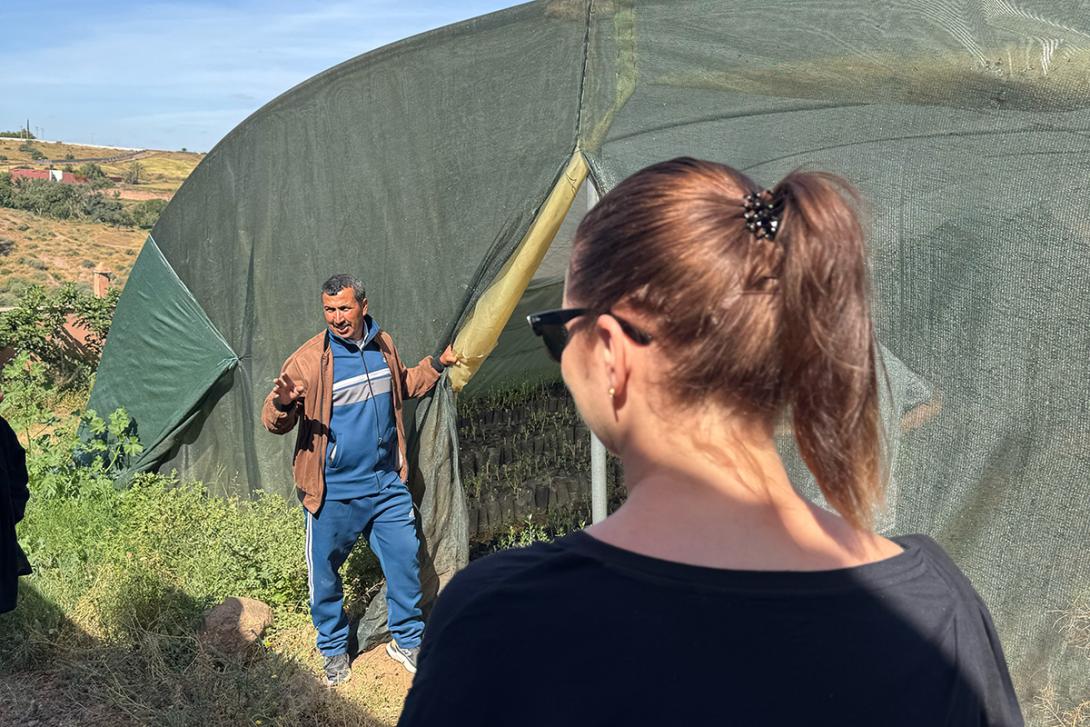
We arrive at a tree nursery set in the foreground of the snow-capped Atlas Mountains that’s on the site of a 56-grave Jewish cemetery designed to celebrate interfaith solidarity between Muslim and Jewish communities. Pomegranates, figs, olives and medicinal herbs are all grown here, with third-generation arborist Ibrahim telling us his team planted 54,000 trees here in 2025 alone.
“How many trees do you think are in here?” he asks us as we huddle into one of five tarpaulin greenhouses filled to the brim with saplings. Guessing games are not my forte so I stay quiet but the agents agree on 600 as the likely number. “There are 7,000,” Ibrahim grins. He goes on to explain they call this kind of nursery “a house of life”; I like that.
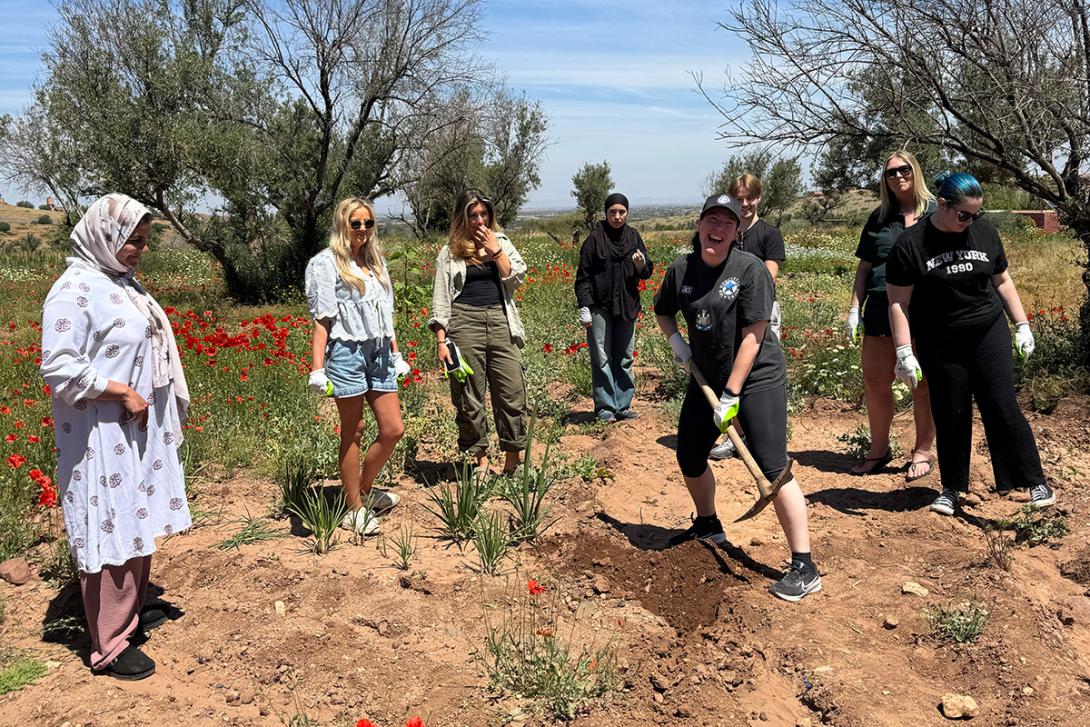
Once the saplings are ready to leave the nursery, they’re sold to local farmers for no more than 2 dirhams, which is equivalent to just 16p – a subsidised price to ensure the local agricultural community can thrive. We’re no skilled farmers, but we do enjoy getting our hands dirty during a hands-on tree planting session around the corner in Achbarou, led by the High Atlas Foundation women’s cooperative.
Between us we plant around 10 saplings in a sun-trapped area bordered by bright-red poppies, then settle down for an even more colourful tagine-based lunch in the cooperative’s headquarters and creative hub, which is a well-maintained rural farmhouse. The experience is a grounding one, but not because we’re mucking about in the dirt.
Female power
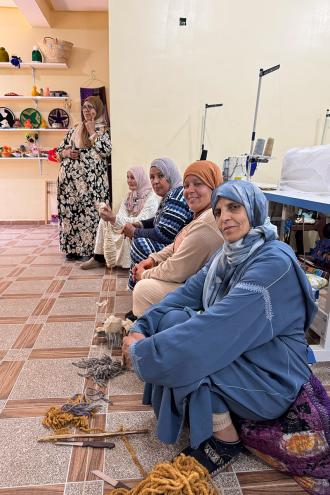
Made up of 19 individuals, the women’s cooperative is designed to empower local artisans by giving them a platform to host visitors from all around the world, teach their traditional carpet weaving methods, and sell wares. The first G Adventures group came to the Achbarou HQ in April 2025, and since then a further 260 groups have stepped over the threshold; the operator is making a real difference here.
We learn how the women extract natural dyes from spices such as turmeric and weave vivid threads into patterns and shapes inspired by their emotions and life experiences. As a result, each textile is unique to the creative who made it. For example, we learn how a wavy design in the showroom mimics one woman’s depiction of her unborn baby kicking inside her.
Together the tree nursery and women’s cooperative visit make up one of G Adventures’ G For Good moments, which are community-based experiences run in partnership with the likes of Planeterra and designed to support disadvantaged groups around the world.
We’re lucky to hear more about the intricacies of finding genuine experiences that give back to the local community when we join the Marrakech-based G Adventures team for dinner at Al Fassia, which is an entirely female-owned and run fine-dining restaurant in the city’s modern Gueliz neighbourhood.
Meal highlights – aside from the thought-provoking conversation – include a beef tagine with sweet prunes and almonds that inspires one agent to squirrel the recipe back to Scotland. Of course, she has to acquire a ceramic tagine from one of the local vendors we encounter on our travels to cook the dish in, too.
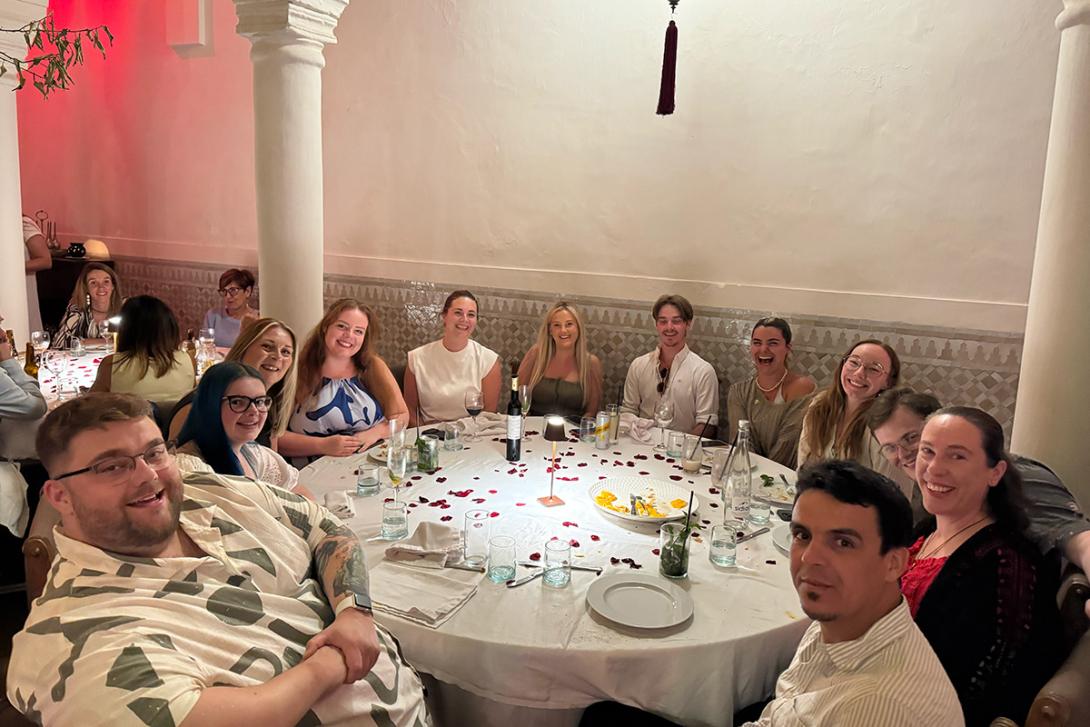
Good food is not in short supply on G Adventures’ Morocco itineraries. Our final evening meal is spent at Dar Zellij, located to the north of Jemaa el-Fnaa. Housed in the open-air courtyard of a restored 17th-century riad, this restaurant is one of the country’s finest. I lose count of the plates of vegetable, couscous and meat dishes that arrive for our starters before one last iconic tagine is served to share.
This meal is so far removed from some of the others we’ve experienced on the trip – an informal but unforgettable pastilla dinner at a homestay on the edge of the Sahara being one of them – and yet they’re all just as special as each other. Sharing stories about previous travels, educating one another on everything we’ve learnt during our adventures, all the while indulging in unique and moreish cuisine is something I thoroughly enjoy, and I can see the agents do too. We’re leaving Morocco having gained so much in the way of knowledge, new friendships and an abundance of cherished memories, along with thousands of grains of sand in places they shouldn’t be – our own little mementos of Morocco.
Book it: G Adventures’ 12-day roundtrip from Marrakech Southern Morocco: The Sahara, The Coast & Marrakech (trip code: DCSC) costing from £839pp features a two-night stay at Chez Belhou with camel ride. Alternatively, the operator’s 12-day itinerary from Casablanca to Marrakech, Morocco: Historic Cities & Sand Dunes of the Sahara (trip code: DCBM), visits the Zarbiat Achbarou Cooperative and Trees for Days project, with prices starting from £944pp.