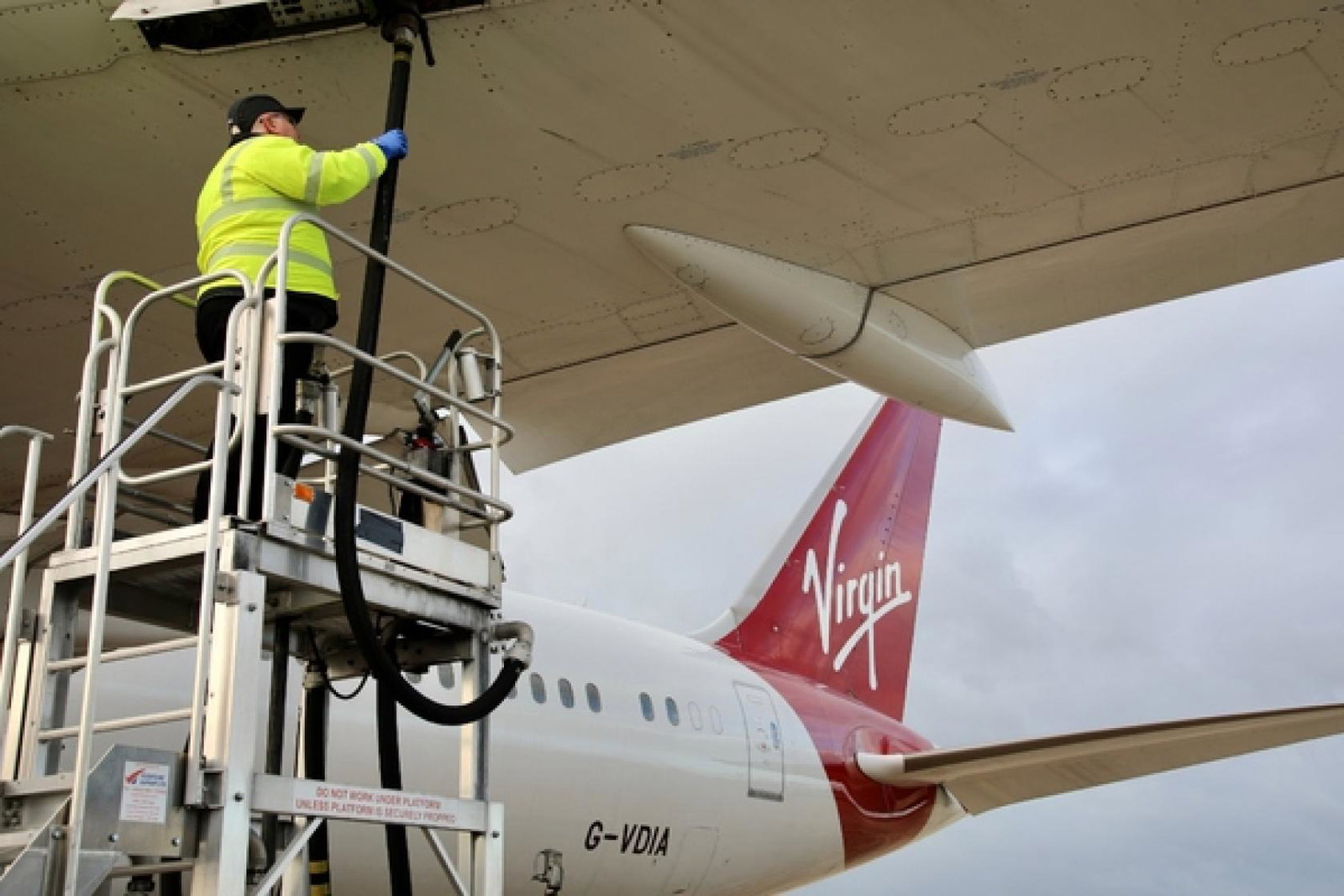
The fuel, made from waste products, performs like traditional jet fuel but offers CO2 lifecycle emission savings of up to 70% – although SAF represents less than 0.1% of global jet fuel volumes and current fuel standards allow for a 50% SAF blend in commercial jet engines.
Virgin Atlantic says its Flight100 will “prove that the challenge of scaling up production is one of policy and investment, and industry and government must move quickly to create a thriving UK SAF industry”.
The SAF used on Flight100 is a dual blend; 88% hydroprocessed esters and fatty acids and 12% synthetic aromatic kerosene.