More information
Under the new format, it adds: “There is a high threat from terrorism in Egypt. Terrorists continue to plan and conduct attacks. Further attacks are likely. Most terrorist attacks target the security forces, but it’s likely that foreigners, including tourists, will also be targeted.”
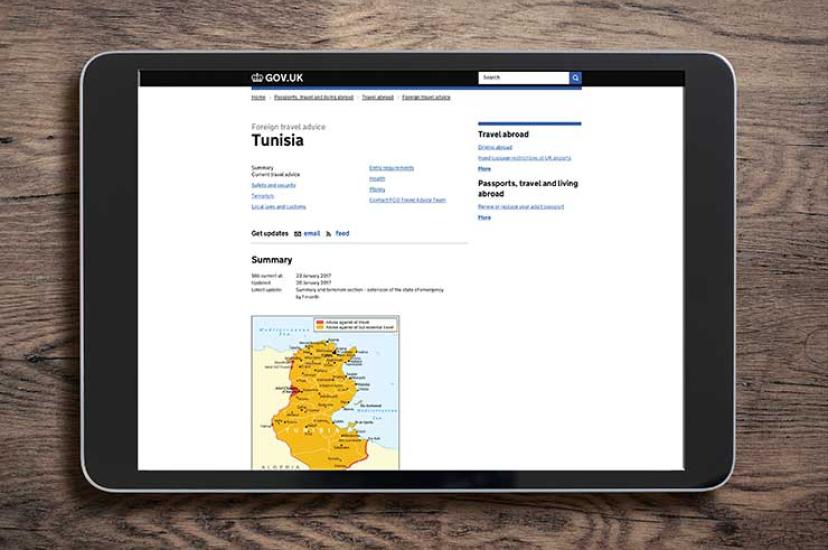
Similarly, Tunisia’s advice now includes a list of terrorist incidents dating back to 2013, including failed attacks on tourists.
Some would say such clarification is overdue given that the information’s main audience is likely to be holidaymakers and travel organisers.
Matt Gatenby, a partner at solicitors Travlaw, said: “Generally the FCO does a very good job. While it would be easy to go too far [and risk alienating potential travellers completely], consumers want something simple to understand.
“I think they have found a balance between the two. I’m not critical of the previous way they did it because it is an evolving process, but it’s easier now with the additional information. It’s hard to be anything other than positive about it.”
He added that the advice is now “far superior” than it was at the time of the Sars outbreak for example.
“Everyone is looking for certainty, which is understandable, so any effort to increase that is to be lauded. It’s a very difficult standard to meet, as recent events have shown,” Gatenby added.
Abta contributed to the FCO’s consultation process and had called for “detailed and specific factual information for travellers”.
It said it welcomed the FCO’s decision to provide “a more detailed level of information”.
Perhaps surprisingly though, Antor (the Association of National Tourist Office Representatives), was not involved in the process.
Its chair, Tracey Poggio, stated however: “From Antor members’ perspective, any additional advice and even more accurate information which facilitates the consumer’s decision to travel abroad and does not affect their insurance policies can only be welcomed.”
Had it not opted for this approach, the FCO’s other option was to employ a four-tier system, as used by countries such as France, Canada and Australia. The UK had proposed adding a level between the green and amber tiers “to indicate a country where we do not advise against travel but where extra caution and vigilance is recommended”.
However, the FCO concluded that feedback on this suggestion “was not overwhelmingly positive”, with 54% of respondents stating that this would be helpful but 33% neutral on the suggestion and 13% believing it would be “less helpful”.
The survey found that the public was generally positive about the FCO’s travel advice. It found that more than 90% followed the advice given all, or most of, the time and that 89% of respondents accessed advice to decide whether it was safe to travel.
A total of 88% of respondents considered it the government’s responsibility to provide safety and security information.