It's perhaps hard to reflect on 2026 without considering the wide-reaching impact of the war in the Middle East, which saw demand quickly shift from east to west with the UAE and Qatar off-limits and with travellers concerned about going to Turkey and Cyprus.
Spain was a beneficiary of this shift, but there are worries now about overcapacity. So where is some of this capacity going to go if and when things get back to normal? One industry leader has an idea.
Meanwhile, it's no secret travellers are typically quite price conscious. But there's another consideration they're more and more frequently factoring into their decision-making – and it is often eclipsing price.
In addition, discussions touched on travel's efforts to adopt AI effectively and reap the benefits, ways to ensure more travellers buy into the industry's efforts to become most sustainable – and the importance of getting ahead of the next crisis before it arrives.
Here's a round-up of some of the key takeaways from the annual get-together.
Spain may wane, but 'coolcations' aren't yet a major thing
Abta’s latest Holiday Habits report confirmed Spain remained the UK's top overseas destination last year, but easyJet holidays' Chief Executive Garry Wilson told delegates he foresaw some softening in the UK market owing to how much capacity there is to the country.
"I think Spain is a bit overheated in terms of capacity at the moment, and we will see that slow down a little bit," he said, adding North Africa is likely to increase in popularity thanks to the value for money it offers.
However, Wilson said he hadn't seen much evidence of a real trend for cooler destinations during the summer months. "It would make a neat story, but for us, it isn't reality at the moment," he said, speaking as part of a panel.
"We launched Tromso and Malmo, and they’re very nice to launch, but sometimes as an industry we turn our back on the places customers really want to go in favour of these shiny new destinations – people still really want to go to Majorca."
Price remains customers' top concern... or does it?
On the Beach Chief Executive Shaun Morton, speaking as part of the same panel as Wilson, told delegates that so far as his customers are concerned, price remains their number one priority.
"Customers are very price sensitive," he said. "It amazes me just how closely the price correlates to volume – even on an average holiday of £2,000-£2,500 – if you change the price by £25. If it was possible to put prices up without affecting demand, everyone would keep doing it because it's the easiest way to make money."
Wilson warned rising costs are likely to push fares up even higher in the next year, but added maximising load factor might be one way airlines can mitigate that. "It's just a case of understanding what customers are willing to pay, being competitive and looking at load factor."
However, speaking during a session exploring what is influencing customers, trend strategist Robbie Hodges said safety has now overtaken cost as Brits' number one priority, citing research by Mintel published in May this year.
"A new deciding factor is entering the equation in their travel plans, and that is safety," said Hodges. "This is reshaping the norms of service delivery, and raising consumer expectations for predictive intelligence and rapid response in the face of crisis.
"It's essential brands move on this, because consumers are no longer waiting to be informed. Platforms like FlightRadar, Flighty, or even TrainTracker24, close the information gap between raw operational data and brand platforms, so they create this shadow information layer that often outpaces official announcements."
Leaders must swap 'decision avoidance culture' for 'episodic future thinking'
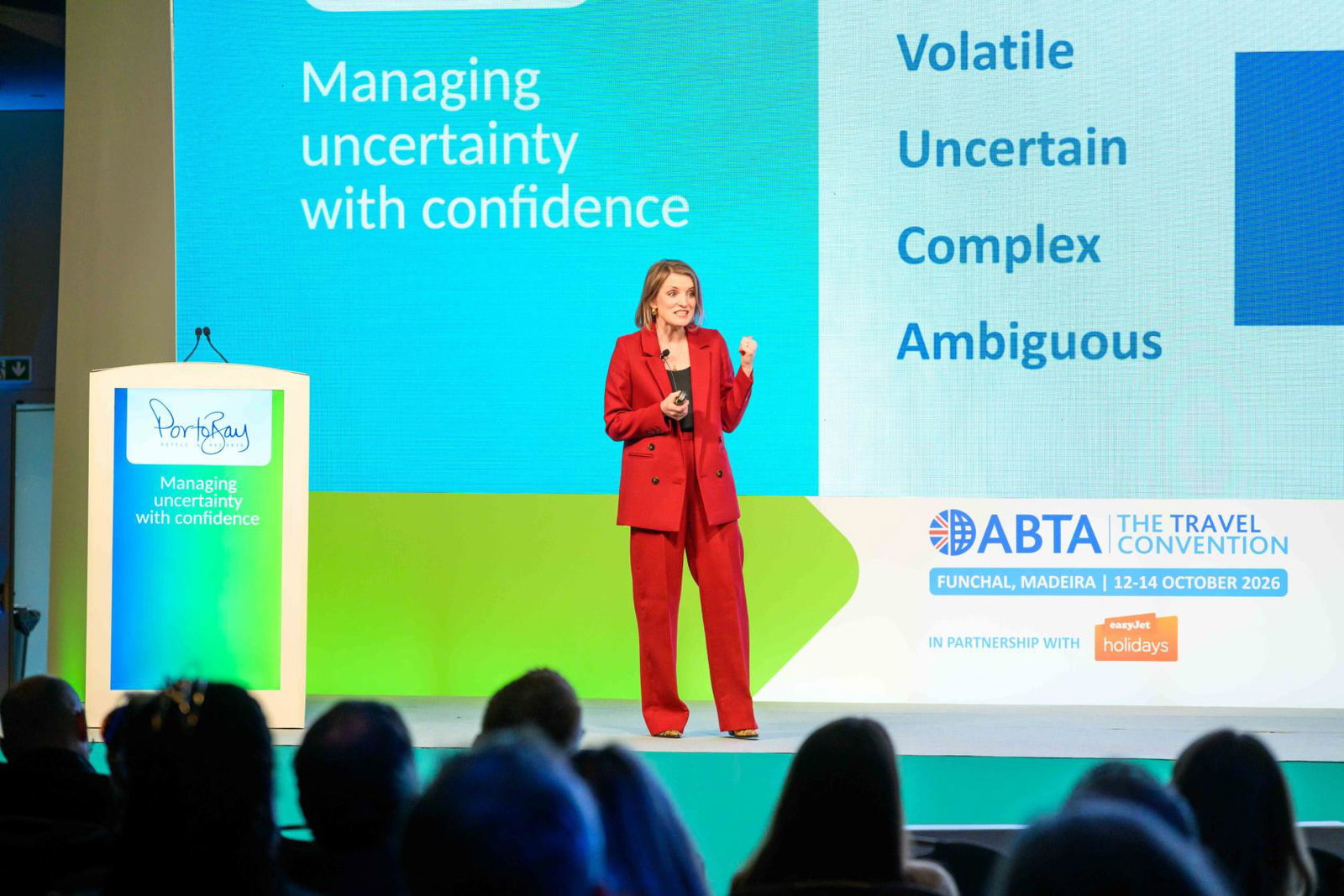
Foresight and innovation specialist Eleanor Winton warned Travel Convention delegates that leaders must get better at anticipating a broader range of potential outcomes to navigate a volatile travel landscape.
She observed this widespread anxiety is manifesting in a crippling "decision-avoidance culture" and deep risk aversion across leadership teams, which creates blind spots by discouraging challenging conversations and disrupting the traditional, linear link between decision-making and expected outcomes.
To combat this paralysis, she advised leaders to embrace "episodic future thinking," proactively dedicating time to predict long-term shifts and brainstorm new realities to build adaptable, forward-looking strategies.
Beware the 'productivity paradox' when implementing AI
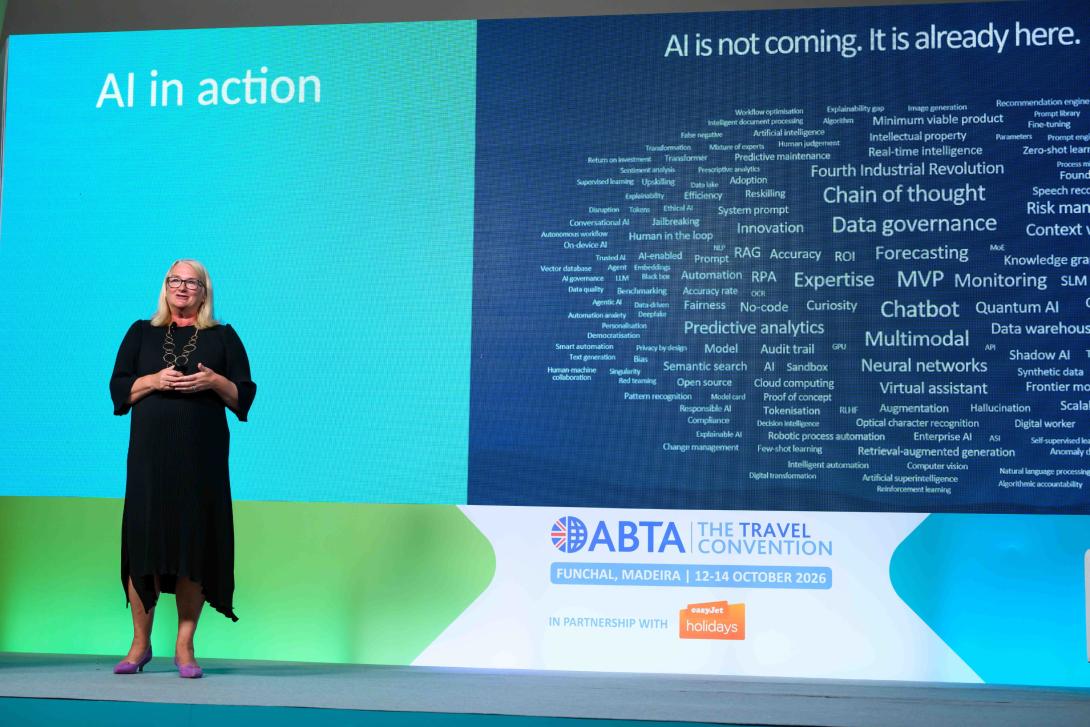
Several travel leaders spoke as part of another panel discussion exploring how they have been experimenting with and implementing AI in their businesses.
Lisa McAuley, World Travel Holdings UK's Managing Director, said that while her team had enjoyed real success with identifying specific business problems to be addressed by AI, and finding solutions, the business was yet to benefit from the new efficiencies.
"We've rolled out Copilot to our management group and there is no doubt the team are seeing time savings from adopting AI themselves," she said by way of an example. "But the next step for us is to make sure that those savings are turned into business benefits."
McAuley continued: "A lot has been written about the potential productivity paradox with AI, in that individuals are completing tasks faster, so they've got more time, yet the business isn't necessarily seeing the benefit of this."
She said her team is now carefully tracking the time saved across various tasks, after any reviews of or corrections to the AI's output have been undertaken, to be clear on the financial return of their investment.
"We know we've got positive adoption, but the stronger test is whether the work gets better, and whether people can use the time they've saved to even better use," she explained.
Customers need to see your carbon reduction strategy in action to come on the journey
Intrepid Travel Chief Executive James Thornton described how the tour operator has pivoted from spending $2 million a year offsetting carbon to instead offering its partners and suppliers the opportunity to fund customer-facing initiatives that help reduce carbon emissions across the business's local operations, while getting customers' buy-in on the brand's purpose.
The operator's Carbon Reduction Fund has funded electric vehicles for transfers in destinations including Nepal, and installing solar panels on the roof of accommodation owned by or used by Intrepid, for example.
"What we really want to ensure, though, is that customers get to see that first-hand and understand what we're doing, because if customers see and understand it, it doesn't half make it easier," he insisted.
"Otherwise, it's kind of hidden in the background, people don't appreciate what's going on."
Abta to break new ground with 2027 convention
Abta also revealed the Travel Convention will head to Montenegro for the first time next year, with the Bay of Kotor set to provide a stunning backdrop for the 2027 edition.
The convention will take place at the five-star Hyatt Regency Kotor Bay Resort from 4-6 October 2027, with delegates set to enjoy exclusive use of the hotel for the duration of the event.
Delegates will fly into Tivat International Airport, located around 13 kilometres from the hotel. The convention will be hosted by the National Tourism Organisation of Montenegro.