“It was kind of a big jump for us to decide to bring GX to Jordan,” says Bruce Poon Tip, the founder of G Adventures. “Because we didn't know what to expect.”
Stepping on the stage to open the third GX World Community Tourism Summit – G Adventures’ annual celebration of the power of tourism to change lives – he looks out, addressing the audience.
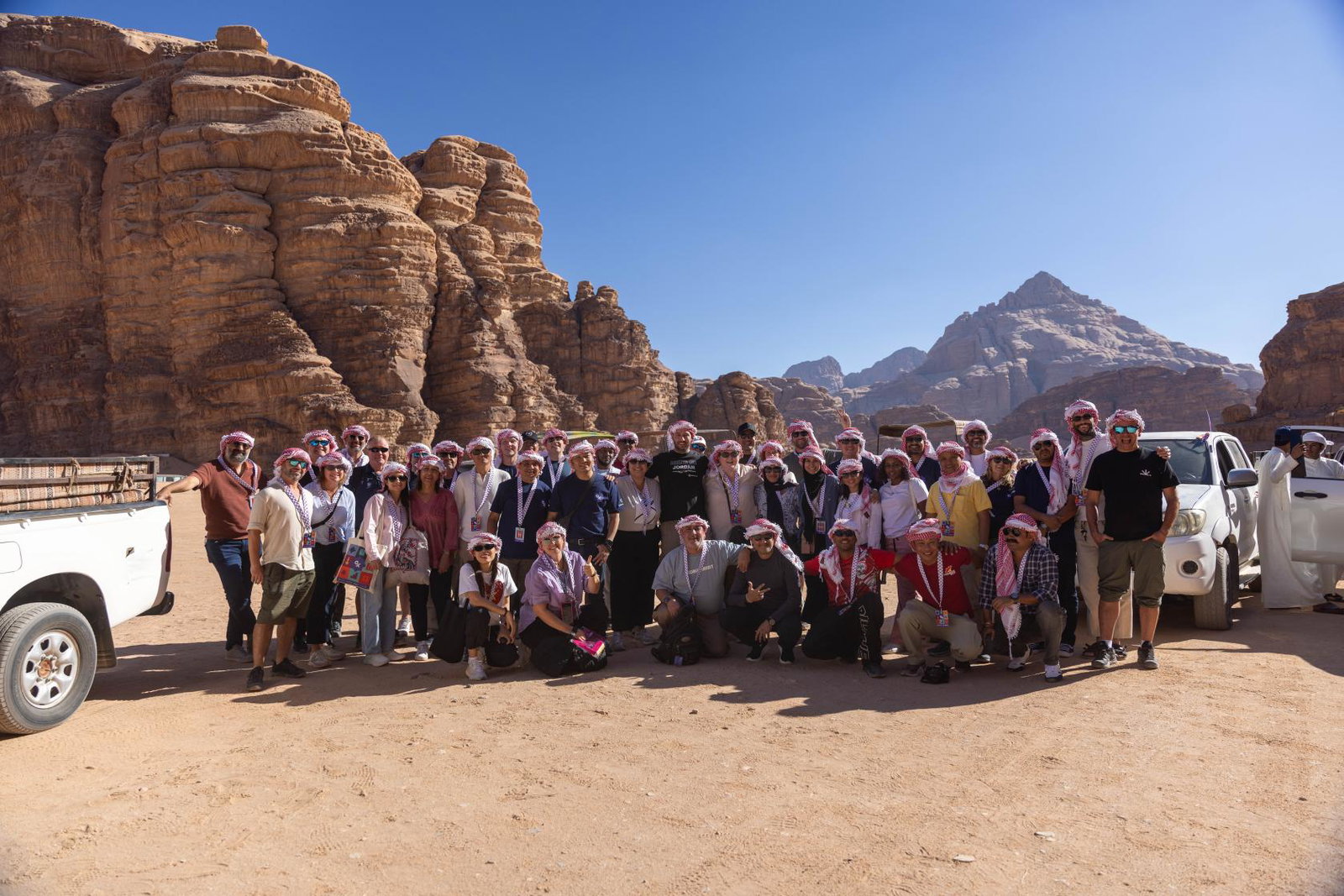
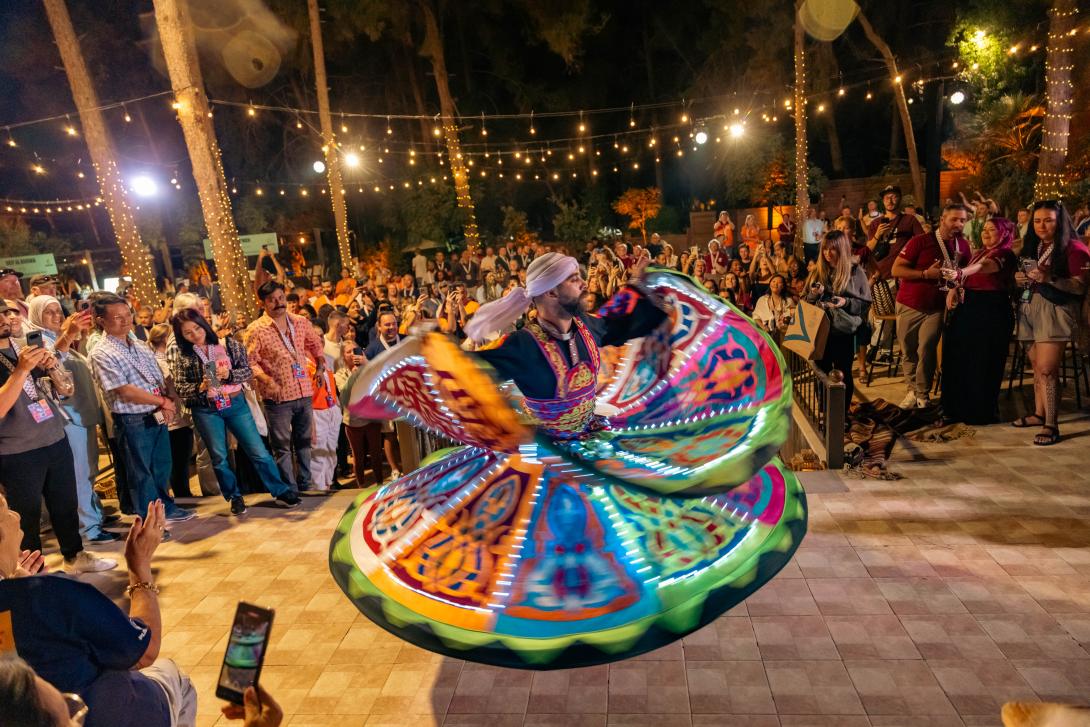
Over 700 ‘changemakers’ from across the globe are assembled here in Jordan’s capital Amman, from travel agents to partners, suppliers to media, and even G Adventures customers that have booked this as their holiday. It’s the event’s largest crowd yet, up from almost 500 the year before.
The mission is clear; to celebrate and highlight the power of community tourism to change lives, something the company has long committed to through its trips and non-profit partner, Planeterra.
On stage, we hear from young community activists and leaders of Planeterra-backed projects across the world; from Iván Mezeta saving cenotes in Mexico with Bejil Ha, to Kajal Singh who has gone from life as a child on the streets of Delhi to leading city tours for Salaam Baalak Trust, and now a G Adventures CEO (Chief Experience Officer, G’s term for its tour leaders).
We hear too from an all-female panel from Jordan, discussing how women-led projects across the country are creating empowerment and opportunity. It’s about doing tourism the right way, and in practice, what that actually means.
G Adventures' news
But this year feels a little different. For a start, the event is also a celebration of 35 years of G Adventures. A lot has changed since Bruce founded the company in 1990, setting out to transform the way people see the world. “The journey has been a long one,” he adds.
It’s clear that G isn’t a company to rest on its laurels. At the summit, the news comes thick and fast. First, it’s announced G Adventures and National Geographic Expeditions are to launch new high-end tours.
“We want to prove to the world that after 35 years, we still have a lot of gas in the tank,” adds Bruce. “We still do some crazy things, and be as innovative as we ever have been.”
Described as a ‘bold new travel style’ National Geographic Signature with G Adventures will include world-leading experts, a greater focus on socially-conscious, community-benefitting experiences and high-end, locally-owned accommodations. Bookings for the 29 trips will launch in January 2026, with the first departures in January 2027.
It is also expanding its Lando overland journeys to South America. Previously just operating in Africa, the new fleet over hardy overland vehicles will open-up roads less travelled in Colombia, Brazil, Argentina, Ecuador, Chile, Bolivia and Peru from late 2026. Bookings open early 2026.
Under its Trees for Days initiative announced at GX Peru in 2023 – which sees a tree planted for each day a traveller is on a G Adventures trip – over 5 million will have been grown by the end of 2025.
A new brand positioning, Travel Your Heart Out, was unveiled. Bruce has a new book, Communityship: Lessons from the Universe and the Business of Everyone. And it also announced its first Global Ambassadors. Pioneers that embody G’s values, they include Lonely Planet co-founder, Tony Wheeler, Delfin Pauchi Uhigua, an Indigenous leader from the Amazon, and appearing in a now poignant video interview with Bruce, the late Dr. Jane Goodall, world-renowned ethologist and conservationist.
“Every day you live, you make an impact,” she says. “You can choose what sort of impact you make.”
Jordan in crisis
G wants its impact to be bold. Because secondly, the choice to hold the event in Jordan is a significant one. Following conflict across the region – most notably in neighbouring Isreal and Gaza – tourism has suffered.
“Jordan has been an amazing opportunity for all of us to see community tourism in action,” adds Bruce. “It's been one of the best destinations.
“I came to Jordan a year ago, and saw how beautiful this country was, and how they need tourism back. They are caught in the crossfire of things going on in the world. I love that we can use GX to bring tourism here.”
Beyond the summit day itself, the event saw all 700 attendees spend three days exploring Jordan’s most famed sites. The depletion in visitor numbers is visible.
“The impact has been quite severe,” says Malia Asfour, representing the Jordan Tourist Board at GX, “Tourism is our number two foreign currency earner, and is 11% of our workforce.
“We saw a huge boom after Covid, and then, when the war started, it tanked. We are probably down 35% from 2023, and we were down further last year. It's been devastating, because we've had to close hotels in Petra. Lot of people lost their jobs. You can imagine the impact. And it’s only because we are victims of misperception.” In July and August 2025, she adds, Petra hotels were at 1% occupancy rate.
The good news is that figures from the Jordan Tourist Board for UK visitors show 2025 in recovery, with 30,041 visitors from Jan – July compared to 22,762 for 2024. Full year UK arrivals for 2023 by comparison were 57,032.
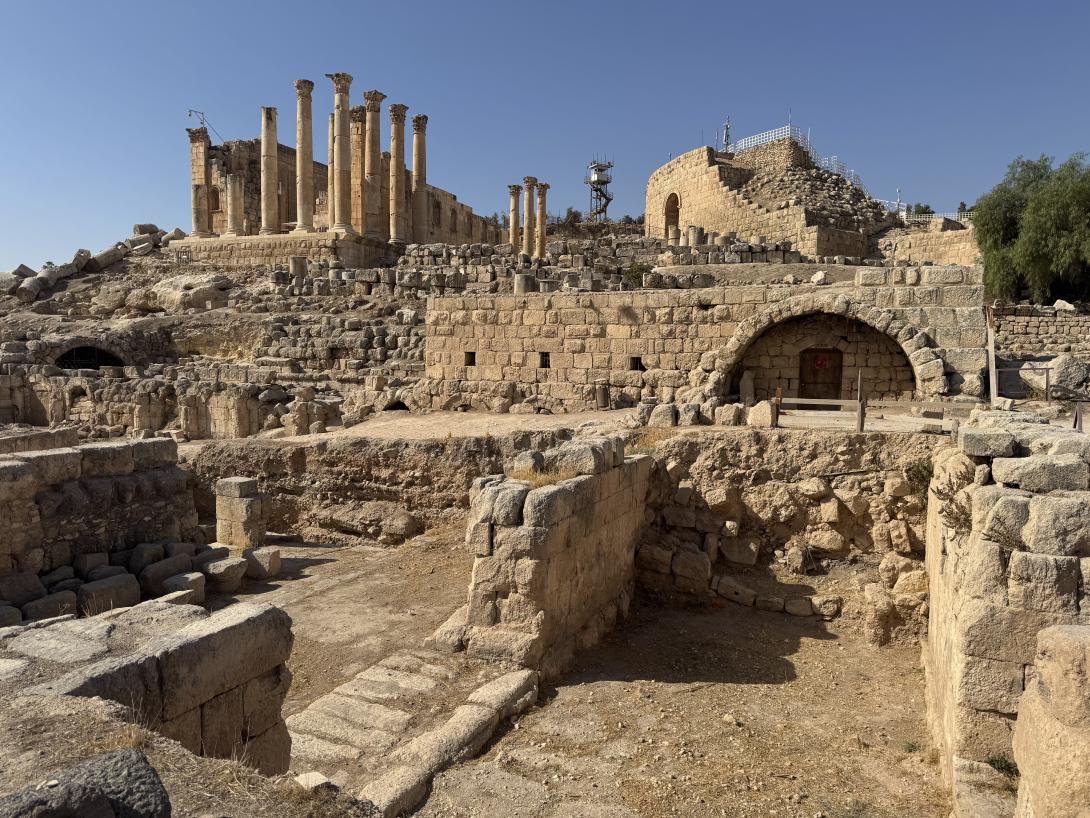
Yet some of Jordan’s biggest sites are still suffering. At Jerash, an incredibly well preserved 2,000 year-old Greco-Roman city just outside of Amman, aside from us, there’s a handful of other tourists. Walking its almost intact amphitheatre, our CEO, Zuhair Zuriqat tells us there’s been days where not a single visitor came. Usual visitor numbers are around 3,000 a day.
Taking the five-hour drive to Petra, and arriving at night, it’s notable to see the lights out and inactivity at many of the town’s hotels. We set off at 6am to the site itself, to beat the crowds. But in truth, there were none. Besides our group, there’s few other visitors.
Petra received 1.15 million visitors in 2023. That plunged to 457,215 in 2024. From January to August 2025, there’s been 291,169, suggesting a slight rebound, but nowhere near its peak.
A place to feel at peace
Taking those last steps along the Siq canyon – a long, twisting passage through rough rock – I look up. The red sandstone of the carved façade of the Treasury is suddenly right in front of me. It’s scale and detail are astonishing, no matter how many times you’ve seen it in pictures. It’s a bittersweet privilege to have it almost to ourselves. I snap a picture with no-one else in the background, easily.
I have to make it clear, from the cheery, sincere welcome I receive from the immigration officer stamping my passport at the airport, to the warmth of every Jordanian I meet, and the overwhelmingly convivial atmosphere, Jordan remains an incredible place to visit. I feel extremely safe. I see nothing that would make me feel otherwise.
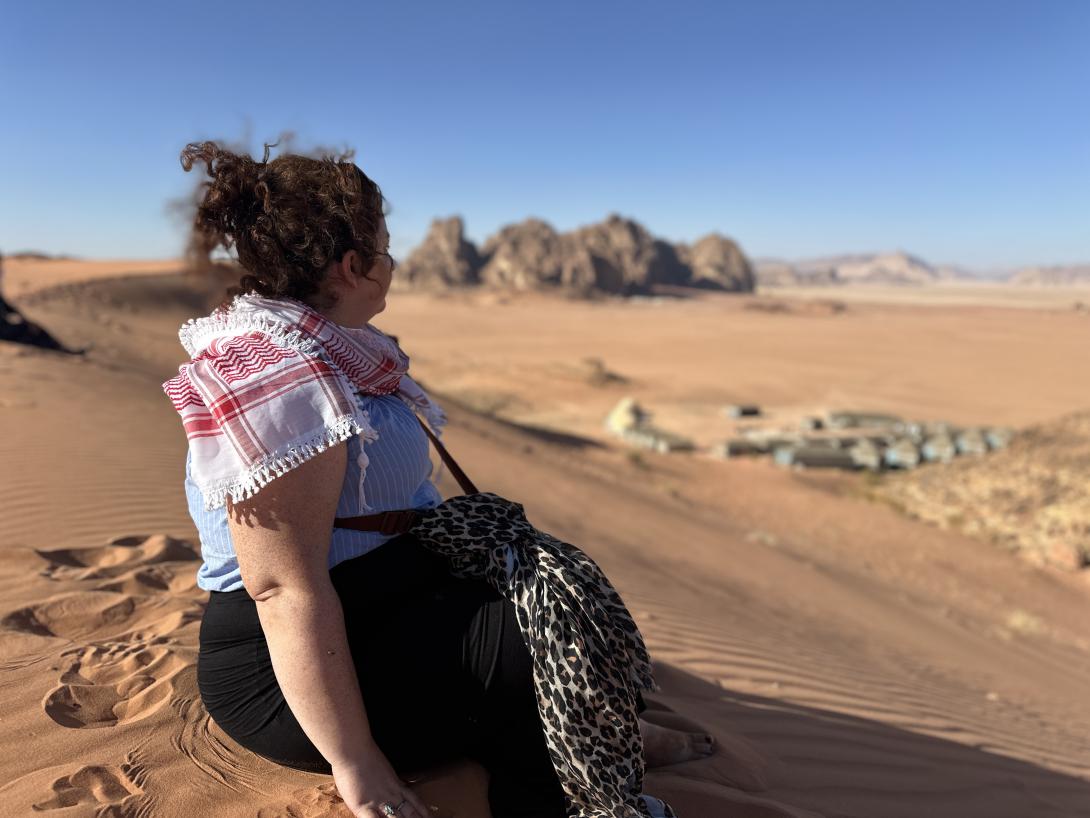
From floating in the Dead Sea – a serene activity until you try put your legs back down – to riding jeeps across the open desert of Wadi Rum, the experiences have been exhilarating. The sandstone and granite peaks rising out of the red sands of Wadi Rum qualify it as one of the most beautiful places I’ve ever travelled to.
G Adventures is working to actively expand tourism in Jordan, including directing visitors to lesser visited regions. It has launched 12 new trips in the past 12 months, including 3 new active itineraries and a new Solo-ish trip. I try a part of one of them, its 8-day Jordan Active Adventure.
The itinerary spans the big sites (Amman, the Dead Sea, Petra and Wadi Rum) and lesser-known ones. There’s hiking in the Dana Biosphere Reserve. Described as an adventurer’s hidden gem, this rural ‘epic’ canyon includes an eco-lodge.
I head to Umm Qais, the first stop on the tour. From the roof of the Beit Al Baraka guesthouse, I look across to Israel, Syria, and on a clear day, Lebanon. Run by sustainable tourism development company, Baraka, the homestay-style accommodation sees guests cook with locals in their houses, visit local beekeepers, stone carve, hike and more with locals to share and preserve authentic local life. Starting at the town’s sprawling Roman ruins, we hike the first part of the Jordan Trail, a 40-day, 675km trail running the length of the country.
Passing down gulleys, through ravines, along valley floors, and up to mountain ledges, we wave at shepherds watching their herds, meet Bedouin families farming the land, and eat a freshly cooked meal on the mountainside looking out to the Wadi Al-Arab Reservoir. Dotted with olive trees, in this quiet valley, I’ve seldom felt so at peace.
And I remember Malia’s plea to travel agents during our chat. “We're open for business,” she adds. “It's an incredible destination that your clients will love.”