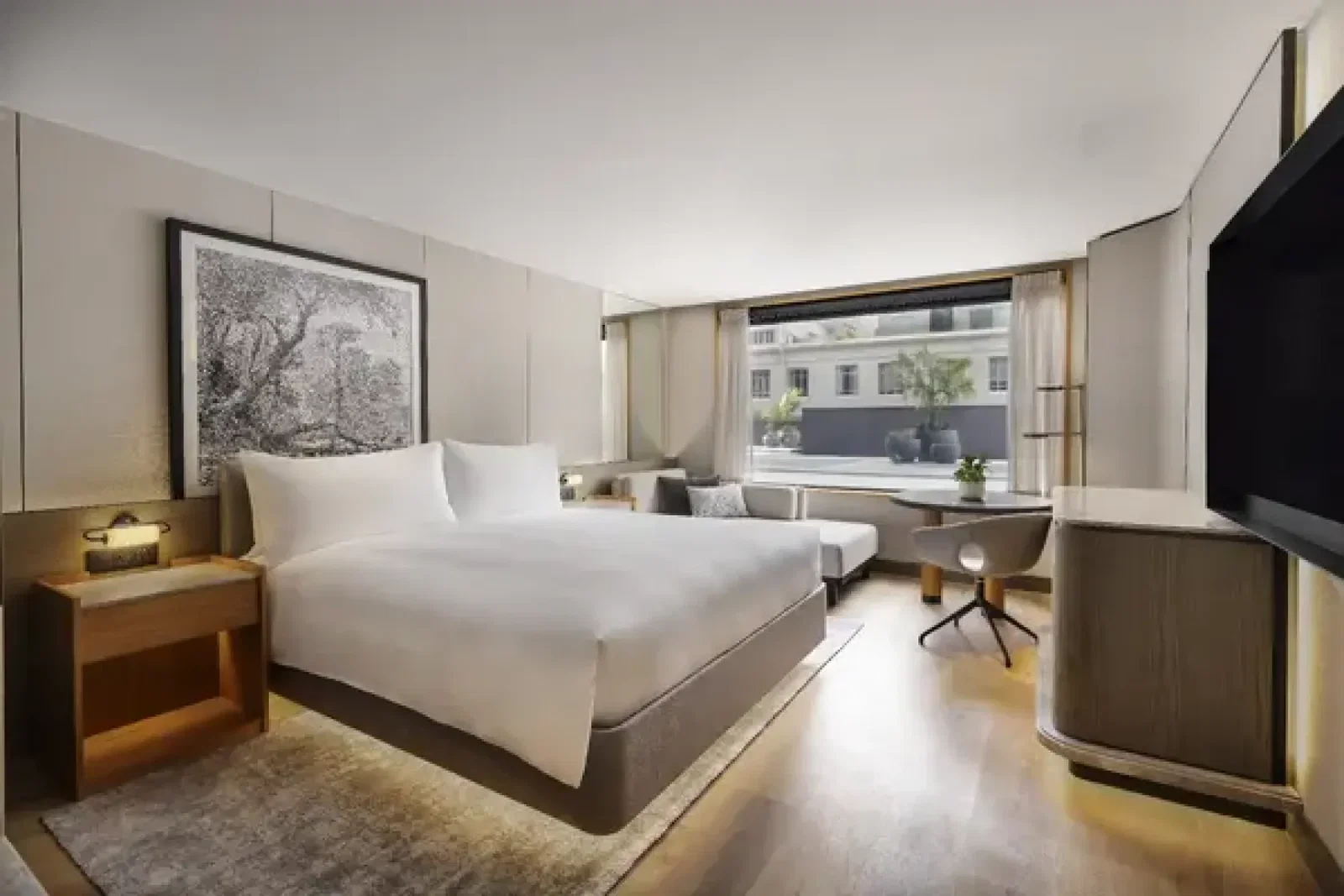
In recent months, Marriott has launched the long-awaited JW Marriott in the centre of Auckland. The multi-million-dollar transformation – of a hotel building that was formerly the Stamford Plaza – marks the debut of the Marriott brand in Aotearoa, New Zealand. Given the popularity of the country for luxury and adventure-seeking travellers, the question remains, why has it taken so long for the global mega-brand to open its doors in Aotearoa, and what does this say about the future of New Zealand tourism?
An industry in crisis
The key turning point here seems to be the Covid pandemic. As we all know, New Zealand had one of the most stringent lockdowns in the world. Despite the low death toll in the country, comparatively, the result was dire for the hospitality industry.
During the pandemic, of course, tourism was non-existent, and many hotel projects that were underway fell by the wayside due to budget and lockdown-related issues. It’s estimated that a third of hostels in the country have permanently closed.
Richard Crawford, vice-president of hotel development for Australia, NZ, and Pacific at Marriott International, said: “At a time when new hotel opportunities were scarce in New Zealand, in 2022, we signed JW Marriott Auckland. We officially launched the hotel in May 2025, after a whole-of-property renovation, which is a landmark luxury hotel opening for New Zealand.”
Representing the single largest hotel investment in New Zealand’s history, according to Crawford, JW Marriott Auckland has 271 rooms and 15 suites, including the top-tier 133 square-metre Presidential Suite. There’s also a cocktail bar, Forum, in the lobby and a wellness centre that includes a heated indoor pool with views towards Waitemata Harbour. Nature has been brought into the hotel with a living moss wall in the foyer, a plant wall behind reception and a herb garden and beehives on the rooftop.
It’s worth pointing out that the Marriott portfolio had a presence in Auckland in 2017 with the highly popular Four Points by Sheraton Auckland. However, this appears to be the result of the Marriott International acquisition of Starwood Hotels & Resorts Worldwide in late 2016, and the combining of the portfolios, rather than a discernible market choice.
The New Zealand hotel market is no stranger to international chains. Accor, Hyatt, and IHG brands all have considerable presences across the country. In fact, there are 70 hotel chains across New Zealand, and as of 2023, there are 261 properties with more than 27,000 hotel rooms. There are more independent hotels in New Zealand, at 401 properties; however, the capacity is much lower, with a total of 14,354 rooms.
While independent operators remain the majority, the financial strain and closures during the pandemic mean that there is space for international brands to move in and expand their hold in New Zealand. Given that New Zealand is still trying to bounce back from the damage to the tourism industry the pandemic caused, Tourism New Zealand is welcoming the investment and vote of confidence by the global brands.
Sarah Handley, regional director of Western markets for Tourism New Zealand, said: “It’s fantastic to have globally recognised brands, like JW Marriott, further strengthening our offering for travellers.
“We’re delighted by the reopening of the JW Marriott in Auckland this year, returning a premium accommodation establishment to the market in Aotearoa New Zealand’s largest and most popular city for international arrivals.”
Why now for Marriott?
So, with this being the case, why has it taken so long for Marriott to bring its brands to New Zealand?
Crawford says that it’s a matter of timing: “With the New Zealand tourism sector starting to recover post-pandemic and travel demand returning, we believe the timing is now right to introduce more of our well-loved global brands to tier-one and tier-two destinations across New Zealand.”
This inclusion of multi-tier hotel investment is something that’s been on the cards for the Marriott portfolio for a while. New Zealand is known as a bucket list backpacking destination, with thousands of solo travellers roaming the country on backpacker buses and along well-trodden tourist routes. Initially, there were deals signed in 2019 and 2020, respectively, for new Moxy hotels – Marriott’s affordable, social brand – in Queenstown and Auckland. Currently, Moxy Auckland is under development on Wakefield Street in Auckland’s CBD. Moxy Queenstown will follow (opening date still tbc), marking the first time that any of Marriott’s brands will have a presence in the dramatic South Island of New Zealand.
However, it seems as if this is only the beginning of a Marriott takeover of Aotearoa New Zealand.
Crawford continues, “We are in active negotiations regarding multiple opportunities across the country, with an exciting new hotel signing to be announced in the coming weeks. With more than 30 brands in our global portfolio, and 237 million loyal Marriott Bonvoy members wanting even more choice, we see strong potential to introduce a range of hotel experiences to suit different travel segments, and we are very confident about New Zealand’s prospects of long-term success as a destination of choice.”
Rising demand
Despite New Zealand’s tourism not quite back up at pre-pandemic levels, which peaked at 3.8 million in 2019, the country welcomed 3.3 million overseas visitors in 2024. It’s worth noting that 1.4 million of which came from Australia, where several Marriott brands already have an established presence.
However, as of 2024, New Zealand only has 50,000 hotel rooms, with a strong 70-75% occupancy rate for the year. With the budget-friendly backpacking draw of the country, there are also estimated to be around an additional 13,000 hostel beds, down from 27,800 pre-pandemic. It seems that the demand for hotels of all budget levels is definitely here, and rising.
Crawford recently spoke at the opening of the JW Marriott Auckland, saying, “‘We’re under-represented in New Zealand. Eight years ago, the phone wasn’t really ringing for New Zealand. It is now.”
Given the strength of loyalty travel among the major international brands, this marks a clear vote of confidence in the future of New Zealand tourism. However, it remains to be seen how this will affect the large independent hotel sector, and with it, the local, friendly vibe for which Aotearoa is so well-known.