In my early 20s a friend of mine, Ed, introduced me to an exciting young author called Bruce Chatwin who had written a book – part travelogue, part fiction, mainly a journey of self-discovery – called In Patagonia.
In the book (40 years old this year), the author heads to Patagonia (“the uttermost ends of the earth”) in search of a prehistoric creature called a milodon, the skin of which, ancient and yellowing, he comes across in a display cabinet at his grandmother’s house as a young boy.
He travels all across the region (part Chile, part Argentina), heading south to the town of Punta Arenas, the former home of his great uncle, Charles Millward, who discovered the milodon skeleton.
This is where I find myself, some 20 or so years after first reading his book. The town has little going for it, it’s a dusty, unprepossessing sort of place with a frontier-like feel. There’s an empty, almost washed out atmosphere, as if everyone’s waiting for something to happen – or to leave.
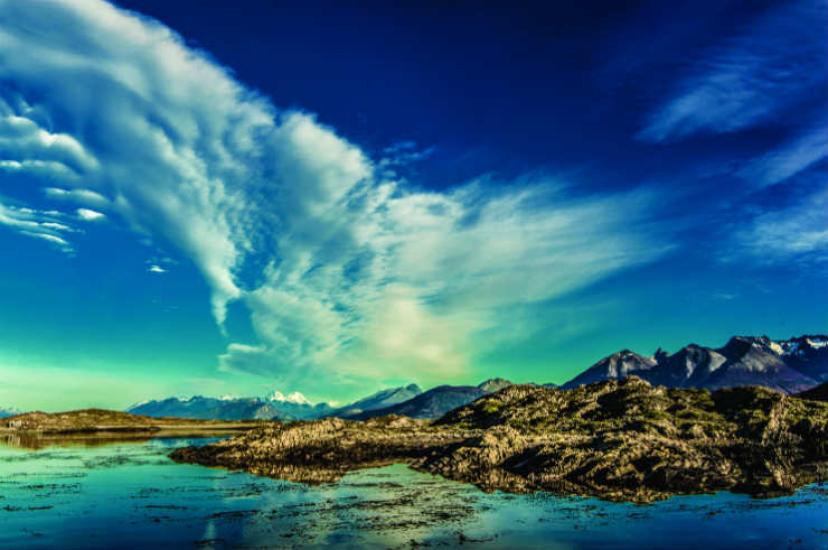
But it is the gateway to the Tierra del Fuego archipelago, a series of islands, bays, fjords and glaciers, which end at the legendary Cape Horn, site of countless shipwrecks, myths and legends. Punta Arenas is also where Australis Expedition Cruises departs from weekly on the line’s sole ship, Stella Australis (a second ship, Ventus Australis will launch in January next year), to discover this spectacular landscape.
The 200-passenger ship wends its way over four nights and days through this maze of waterways, offering the chance to see penguins, elephant seals, dolphins and whales, as well as the opportunity to step ashore at (almost) the most southerly point in the world – Cape Horn.