Have you ever had a creme brulee donut? No? Well, until you crunch into its crispy top (blowtorched before your very eyes) and absorb the contents of its soft belly, I’m not sure you’ll ever be complete.
My love affair with this sweet treat started at Exeter Hotel in Reykjavik, at its ground floor cafe and bakery called Deig, unmissable for those passing on Tryggvagata thanks to its stark black and white lettering and pop-art style.
But Deig’s donuts were not the only foodie experience that left me surprisingly speechless on my Iceland trip: I also found myself having one of the most unusual ‘shots’ I think I’ll ever have in my life – whey.

Long before refrigeration, Icelanders were onto the usefulness of something more familiar as a byproduct of making cheese or skyr, known as ‘mysa’.
This translucent, protein-rich whey has for years been one of the country’s most quietly essential ingredients, with its natural acidity seeing it used as a preservative that could keep meats edible through brutal Arctic winters. It was also drunk straight-down-the-hatch as a refreshing, nourishing – and free – drink.
Reykjavik’s chefs and food producers are now rediscovering what their ancestors always trusted too, and what was once a staple of survival is quietly becoming fashionable, and a mark of culinary sophistication, thanks to its depth of flavour and nutritional value. It could also best be sampled within the context of a ‘farm-to-table’ experience, as in my case: there are some places around the world that may claim to be farm-to-table restaurants – and then there is Efstidalur.
This is a place where the cows are literally on the other side of a glass wall, collecting in the stable while you start the meal with your whey shot, and finish with ice cream – all made from their milk (perhaps not the best stop-off for vegans).
Farm-to-table
This working farm is located along the Golden Circle, a 190-mile scenic tourist route in southwest Iceland. Efstidalur has been in the same family since the 1750s, making all their own skyr, cheese, cream, and of course beef. And they stick to what they know too, sourcing whatever else they need from neighbouring farms – including one where juicy tomatoes grow in greenhouses fuelled by geothermal power.
The tomatoes are not the only ones tapping into this. In fact, Iceland doesn’t just sit on geothermal magic, it is largely powered by its energy. The hot springs that warm your hotel room, the geothermal pool you might soak in at sunset, the skyr cooling in the dairy: all of it runs on the same volcanic heat that has been building beneath Iceland for millennia. The nation generates all of its electricity from renewable sources – around 72% from hydropower and 28% from geothermal energy.
Of course, nowhere is this more evident than at the country’s many geysers, hot springs that periodically erupt, shooting a column of boiling water and steam into the air through a narrow underground channel powered by pressure build-up.
The word ‘geyser’ comes from the Old Norse word ‘geysa’, meaning ‘to gush’, and perhaps Iceland’s most famous hot spring is in Geysir in the Haukadalur valley on the Golden Circle. A more regular one to spot is Strokkur, which erupts almost constantly, surrounded by awestruck tourists like me.
Natural wonder
Another essential stop on my Golden Circle day trip out of Reykjavik was to experience the raw and incredible beauty of Thingvellir, the national park and Unesco World Heritage Site, which sits in a rift valley where the North American and Eurasian tectonic plates meet.
To stand here is to perch on the seam of two continents, pulling apart so slowly, literally about 2cm per year, but in a thousand years this valley will be measurably wider. It is also the site of Althingi, the world’s oldest parliament, where Viking settlers gathered annually to trade, make laws and settle disputes. And of course, fans of Game of Thrones will also be in heaven here, with plenty of apt backdrops and filming locations they might recognise, such as the rocky canyon leading to the Bloody Gate in the Vale of Arryn.
Iceland has certainly never struggled to capture travellers’ imaginations thanks to such other-worldy wildness: even in the Icelandair lounge at Keflavik airport, there are panoramic views of the Reykjanes peninsula and Faxafloi bay to wave goodbye to.
The whopping waterfalls, photogenic glaciers, volatile volcanoes (we all know what they’re capable of…) and geothermal wonders have made this country one of the world’s most aspirational destinations, and for many clients, the Blue Lagoon will have become almost synonymous with it.
But Iceland has become increasingly adept at quietly, subtly creating more reasons for visitors to stay longer and travel deeper and at a slower pace – which is good news for Iceland, for clients and for luxury travel advisors. So, for travellers who think they have ‘done’ Iceland – here’s the next option for them, a magnetic plan B, if you will. Welcome to Laugaras Lagoon, a new geothermal wellness destination that transforms the Golden Circle from a whistle-stop excursion from Reykjavik into an experience worthy of an overnight stay.
Not far from Geysir, Laugaras Lagoon deserves a half or a whole day to itself, to absorb all it has to offer at a gentle pace, and it can also be slotted nicely into the highlights of the surrounding area, such as the nearby waterfalls of Bruarfoss, Faxi and Gullfoss, which feeds glacial meltwater into the cold plunge pool at Laugaras.
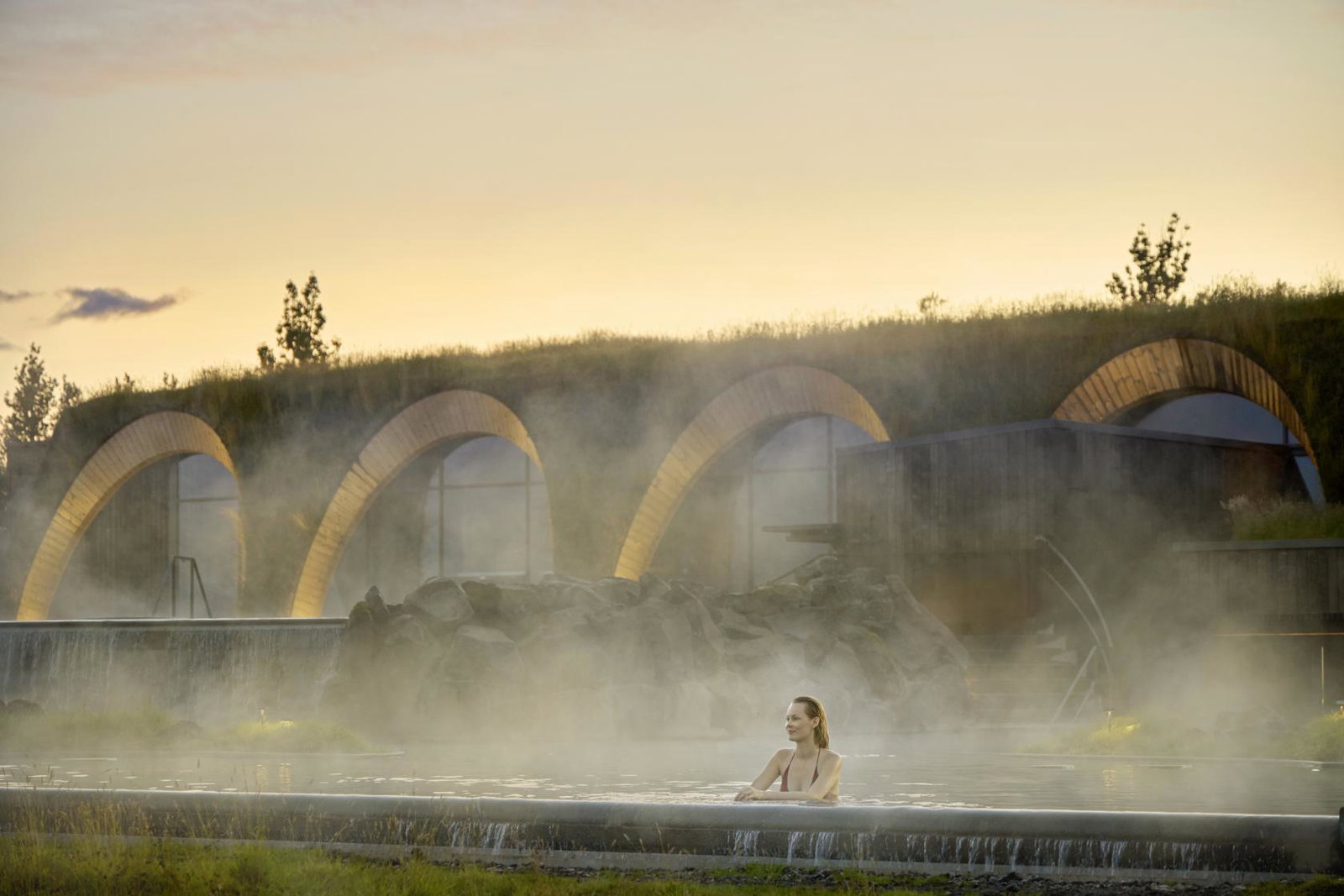
The rest of it is hot of course: with two tiers of 38-40°C geothermal water across its lagoon and cascading waterfall, and there’s also a forest sauna. This summer, there were other new arrivals too: Icelandic horses have taken up residence in a paddock directly below the baths, so guests can gaze at them grazing peacefully through the mists of geothermal pools.
Designed by T.ark Architects with a grass-covered roof inspired by ancient Icelandic lava caves, this approximately £17-18 million (3-billion ISK) project sits on the banks of the Hvita river as though it has always been there, carefully crafted into its environment.
This extension of the Icelandic landscape succeeds in making you want to linger, rather than merely tick a tourist box or grab a selfie: it’s what the Flintstones would build if they won the lottery and needed a luxury spa.
There’s plenty of space to bathe among its mists, bags of time to bob over to the bar to get a glass of fizz, and plenty of opportunity to indulge in some fabulous people-watching as you observe how normal this social activity is for locals. I mooched about in the water for almost two hours, just chatting away, marvelling at nature and soaking up a glorious sunset in this genuinely humbling setting until my skin wrinkled.
And – in typical unassuming Icelandic style, there is more to this than just having some bubbles among the bubbles.
Dinner at Ylja, the excellent restaurant at Laugaras is a must: it’s fine dining without the fuss, under the creative eye of executive chef Gisli Matt.
Ylja means “warmth” – but it’s not called that just to mirror the heat of the geothermal waters, it is also to describe the philosophy of Matt’s kitchen, creating reassuring food that draws on the surrounding landscape.
Think local greenhouse vegetables, sustainably-caught fish, Icelandic lamb, wild herbs and seaweed cooked on an open-fire. The chef also pays close attention to the mind and body replenishing factors of many ingredients, to complement the overall wellness benefits of hot-cold therapies at the lagoon.
He is a culinary icon now, having started with Slippurinn in Vestmannaeyjar, the small island town he hails from. In 2017, he co-founded Skal in Reykjavik, which received a Michelin Guide BIB-gourmand award two years later. Like many places in Iceland, an unassuming building hides glory inside, with the food at this restaurant telling a deliciously fantastical story.
The warm sourdough bread with buttermilk; raw scallops with raspberry granita and horseradish served in their shells; baked cod with summer cabbage, runner beans and mussel reduction; and strawberries with yoghurt, dried roses and tarragon will certainly stay with me for a while. I may have gone to Iceland for the new lagoon, but I came back a superfan of the whole shebang.
How to book it
One of the city’s most characterful addresses, 106-room Hotel Exeter is set in a beautifully restored 1904 harbour warehouse on Tryggvagata, the main road that passes by the picturesque Old Harbour, and is within easy walking distance of the best restaurants, galleries and shops.
There’s an industrial chic feel to the hotel, with the rooms warmed up by the original artwork by Hrafnkell Sigurdsson adorning the walls.
Guests are welcomed with Soley Organics amenities (a locally made range harnessing wild herbs) and can benefit from complimentary access to a traditional Icelandic sauna with cold shower and relaxation area, as well as a gym.
Le Kock & Tail serves casual food all day, the cocktails and live music attract external guests too – as does that donut-tastic Deig bakery, which is open from 7am and is one of Reykjavik’s most talked-about spots for pastries. Nightly rates from approximately €200 including breakfast.
Return flights with Icelandair currently range from around £600 in September and October, flying from Gatwick to Keflavik airport (around three hours). Given the country’s transatlantic location, Icelandair is also a great stopover option en route to North America and travellers can add a one to seven-night stopover in Iceland at no additional flight cost – giving all the more reason to sway clients into considering this beautiful, wild and fascinating country.
There are three packages to suggest at Laugaras Lagoon and I tried the top-of-the-range Osp Wellness Experience, which includes a two-course meal of the day menu (11:30-16:30) at Ylja Restaurant, from £121; unlimited access to the entire outdoor wellness areas; personal locker and vanity station; shampoo, conditioner and shower gel (they even have their own range of products, Rjodur, made with wild Icelandic flora); your towel; and one drink at the swim-up bar. The other options are the Birki package (£57), which gives unlimited access to the outdoor wellness area (towel not included) or Lerki (£73), which includes the towel, and one drink at the swim-up bar.
Agents can find more trade information and resources for Laugaras Lagoon online.