





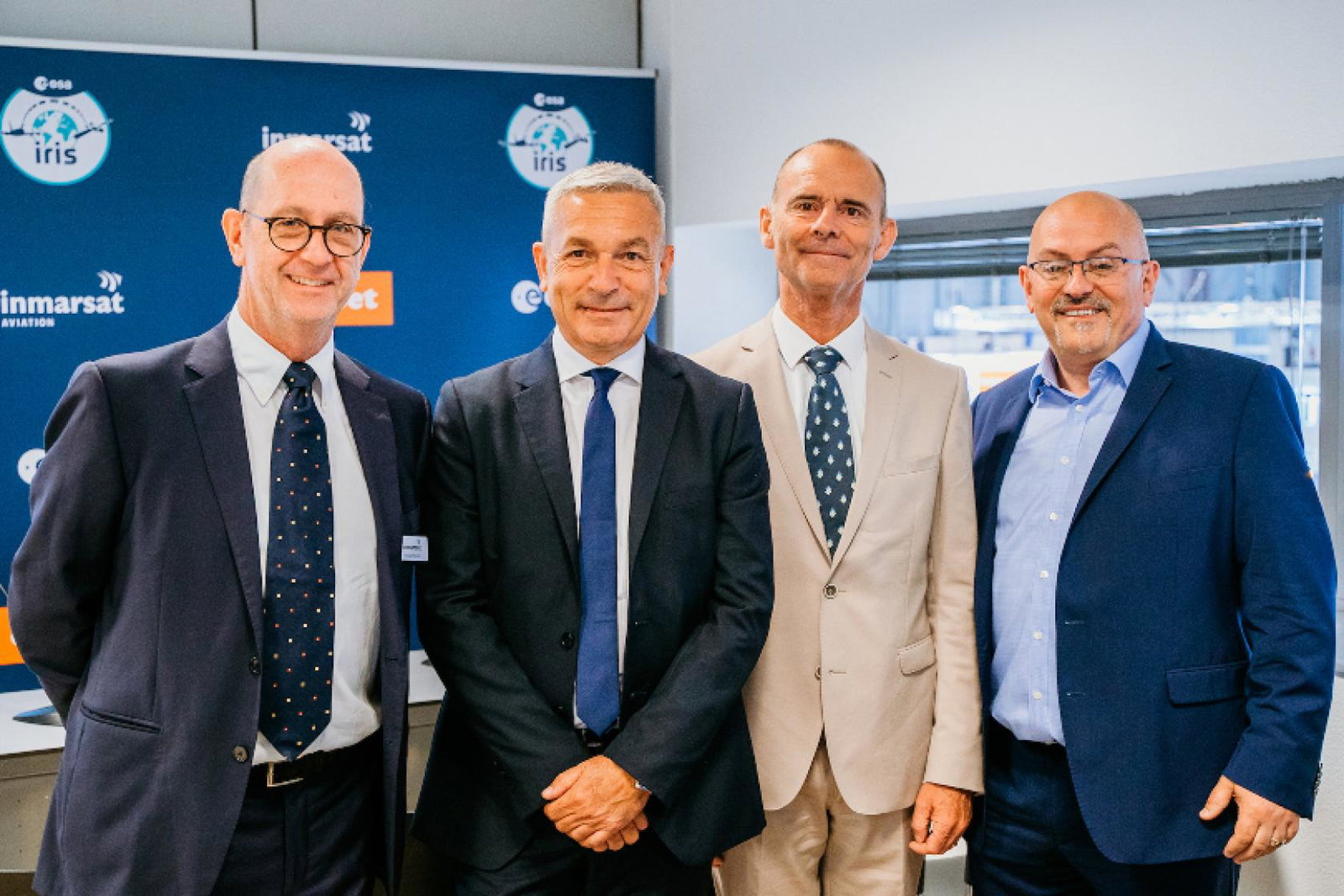
The programme is led by mobile satellite communications company Inmarsat in collaboration with the European Space Agency (ESA) and Airbus.
The partnership comes after easyJet launched its interim carbon reduction target, a 35% carbon emissions intensity improvement by 2035 on a 2020 baseline, as part of the airline’s Race to Zero commitment to achieve net-zero carbon emissions by 2050.
The airline hopes to achieve zero carbon emission flying, for example using hydrogen technology, and is working with partners across the industry, including Airbus, GKN Aerospace, Cranfield Aerospace Solutions and Wright Electric, on several projects to accelerate the development of this technology.
The partnership with Iris will help the airline to operate its aircraft as efficiently as possible as well as complement existing initiatives, such as adjusting single-engine taxiing on arrival.
Hugh McConnellogue, director of airport operations and navigation at easyJet, said Iris is "paving the way" for more efficient air traffic management, which is a "crucial step forward" for the aviation industry.
"The Iris programme brings multiple benefits, from helping us to achieve our environmental goals by further reducing our carbon emissions from flying, to providing a better experience for our passengers," he added.