Wouldn’t it be great if you could advertise a holiday at a bargain rate, minus things most clients would definitely pay extra for – like bedding or use of a shower? It might not be the smarter, better, fairer way of advertising a holiday but it would certainly hook the customer in – as many airlines know because that’s exactly the way they often market flights, especially when it comes to baggage.
EasyJet’s basic fare includes only a small bag (45x36x20cm) which must fit under the seat in front, while Wizz Air and Ryanair stipulate the same, with smaller dimensions. Often, fees for hold luggage or extra cabin bags can be almost as much as the original fare, particularly when dynamic pricing is applied to ancillary purchases made after the initial booking.
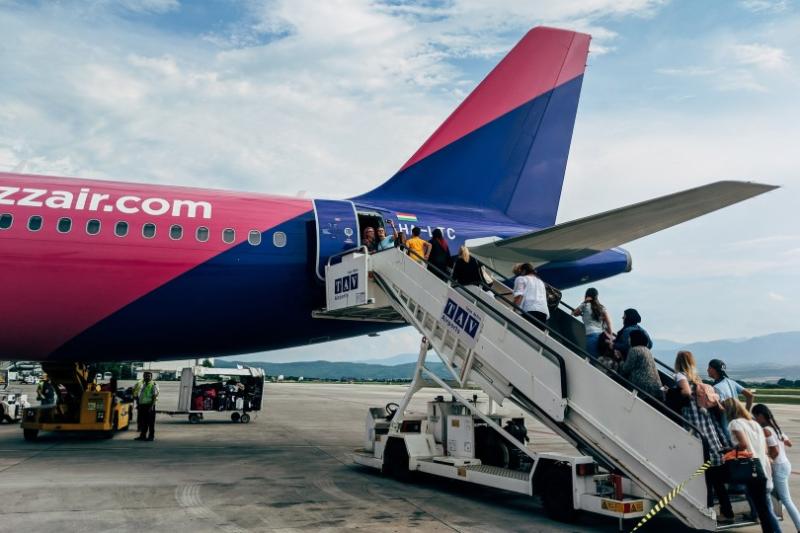
While Ryanair’s average fare last year was €40, average ancillary sale per passenger reached €22.50. EasyJet topped up its average £47.61 seat cost with another £15.12, but the ancillary king, is Wizz Air, with €931 million in ancillary sales in 2021/22, compared to €732 million in ticket sales.
Coining in 56% of total revenue from sales of extras like Wizz is an achievement but indicates budget airlines are hiding the real cost of the fare from consumers – given the basic bag allowance is barely sufficient for an overnight trip.
In the US, President Biden agrees. The US Department of Transportation (DoT) is proposing any fees for checked bags, carry-on bags, charges to seat a young child with an accompanying adult, plus those for flight changes, be disclosed in fare and schedule information.
Biden wants to show “the full cost” of flying and will begin legislating after a consultation period ends in late November.
The rules will apply to any flight touching down in the US, so will affect airlines like Norse Atlantic and even British Airways, which offer hand baggage-only fares as the headline price. BA, for example, adds around £100 to its advertised “from” return fare to check in a bag on a long-haul flight (and about £24 for short-haul).
Carriers are awaiting full details of Biden’s proposals, but a Norse spokesperson said: “All our prices are transparent during the booking process and we clearly state that advertised prices are “from” fares. Our lowest fare is Economy Light which includes an under-seat bag, which is clearly displayed on the website.” BA did not respond to TTG’s request for comment.
There is currently no move from the UK government towards anything like the proposals in the US, but consumer organisations have significant ammunition should they choose to use it. The CAA found passengers were spending £175 million unnecessarily reserving seats, as nine out of 10 passengers who did not pay to pre-select were automatically seated with travelling companions.
Despite its findings, the CAA says there are “already rules” to ensure prices can be compared “as the advertised price must include all essential elements of the booking”.
A CAA spokesperson said: “For discretionary add-ons, where the passenger may choose to upgrade, add items of luggage or pre-select a seat, we encourage transparency and publish a table of prices and charges as a reference point.”
This table, buried on the CAA’s website, is hard to find and arguably not a “go to” resource for most consumers. With only 14 airlines detailed, it is not comprehensive and despite good intentions, hardly a great aid for comparison shopping. There is similarly no appetite from the Competition and Markets Authority to tackle the issue.
Which? is calling for significant reforms, including a code of conduct for airlines and stronger powers for the CAA with heavier fines. It points out Wizz lists 51 separate fees on its website and, in June, found Wizz and Ryanair “make considerable profits from high fees not included in the initial ticket price that customers see on aggregators such as Skyscanner”.
However, if the UK does follow Biden’s threats, some fear a return to a one-size-fits-all approach where budget travellers pay for things they do not want to use – like a 23kg hold luggage allowance.
Alice Ferrari, founder of airline technology firm Kyte, fears a “re-bundling” of fares if regulation returns. She said: “That would restrict consumer choice and push up prices, taking us back to the non-competitive and stale aviation marketplace we saw until the advent of low-cost airlines in the 1990s – does anyone really want that?”