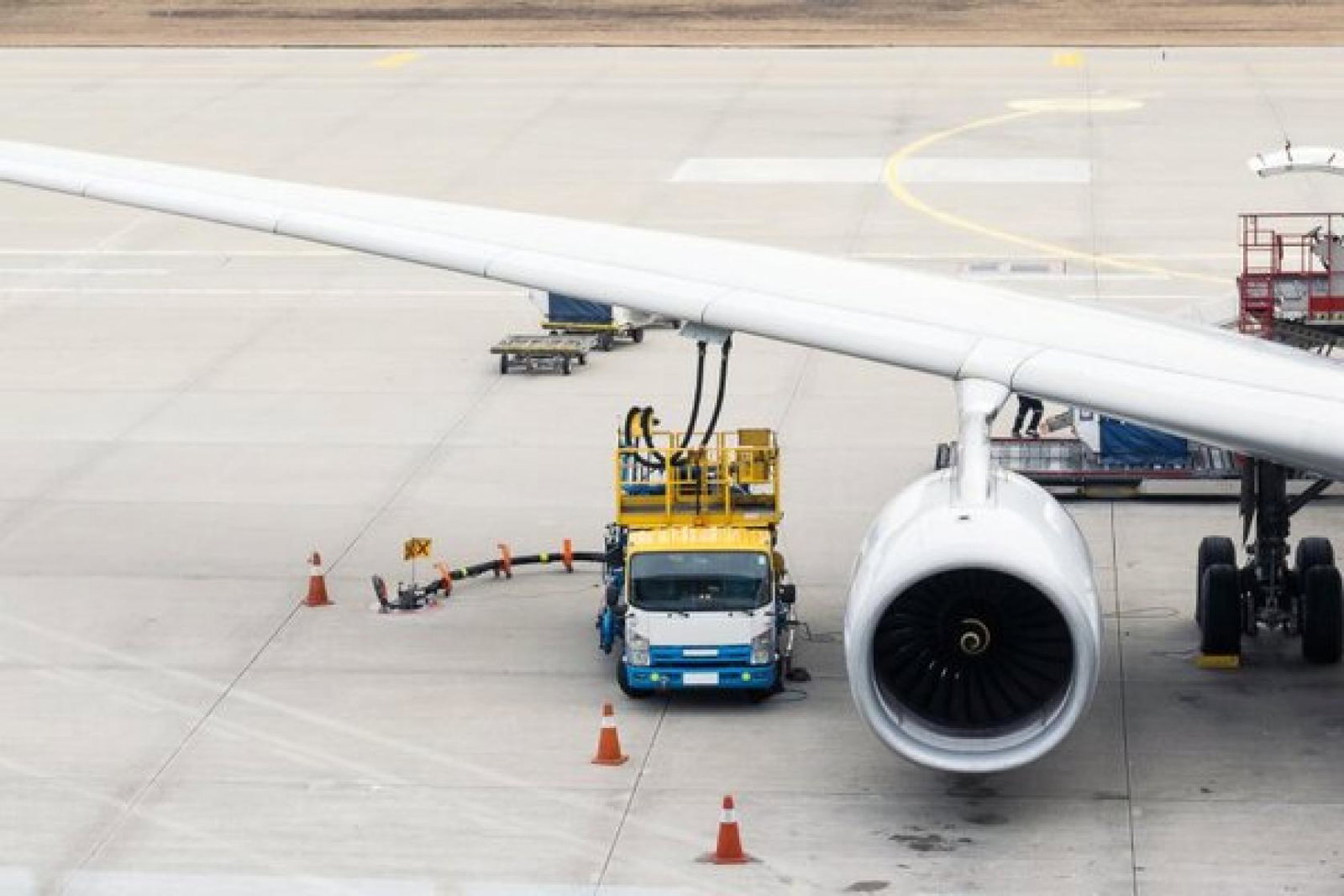
SAF is currently available in small volumes, and is far more expensive than conventional jet fuel. Many stakeholders are collaborating and advocating for scaling SAF.
We see this from airlines, including British Airways; airports like Heathrow; and corporations looking to reduce the carbon emissions associated with their business travel.
And since accelerating climate solutions like SAF can also present meaningful economic opportunities, we may soon see policymakers looking to support the industry’s development on their "home turf".
For example, the UK government recently announced £165 million in funding for projects to produce SAF over the next few years, with five of these proposed to be based across the UK.
Air travel is a significant source of global emissions today. According to the World Resources Institute, aviation could account for between 12-27% of emissions by 2050.
Depending on the feedstock, SAF has the potential to reduce the carbon intensity of flying by up to 80%, possibly more in the future. SAF acts as a "drop-in" fuel, which means it is compatible with existing jet engines. It can be mixed in with or replace traditional fuel without changes to existing equipment.
While frontier technologies like electric aircraft and hydrogen propulsion continue to mature, SAF presents a lower-carbon pathway to flight in the short- to medium-term.
There are many levers for accelerating decarbonisation solutions like SAF – consumer demand, corporate travel requirements, innovation, policy, and more. Many, if not all of these levers, require stakeholder collaboration.
For example, travel agents can do their bit to encourage the adoption of SAF. CAA research has revealed leisure travellers are increasingly concerned about the carbon impact of aviation. Individuals care about their carbon footprints and want to reduce them, but this has not necessarily translated into action to date.
The CAA survey of 2,000 adults in the UK in 2021 found that few “actively consider” the environment when researching or booking flights despite 55% identifying as being environmentally conscious, and nine in ten agreeing that flying negatively impacts the environment.
In short, there’s untapped potential for customers to move from “caring” about reducing their carbon footprint to actually taking action. And there are options out there.
Agents can look for tools that support travellers in better understanding and acting on the emissions associated with their travel. For example, our Chooose Climate App for US firm SAP Consur supports companies in understanding and acting on the carbon emissions associated with corporate travel booked within Concur.
Agents can also help clients identify airline programmes that offer visibility into carbon emissions across different flight options, and enable them to address those emissions through supporting high-quality carbon offsets and/or SAF. Air Canada, British Airways, Finnair and Latam all provide such options.
Given the urgency and scale of climate change, we need more people taking more action in more places through more solutions. This can be overwhelming, but there are solutions out there, like SAF, and there are simple pathways for all stakeholders – agents, individual travellers, corporate travellers, etc – to collaborate and to advance climate action today.
Nina Birger is vice-president of climate solutions at Chooose.