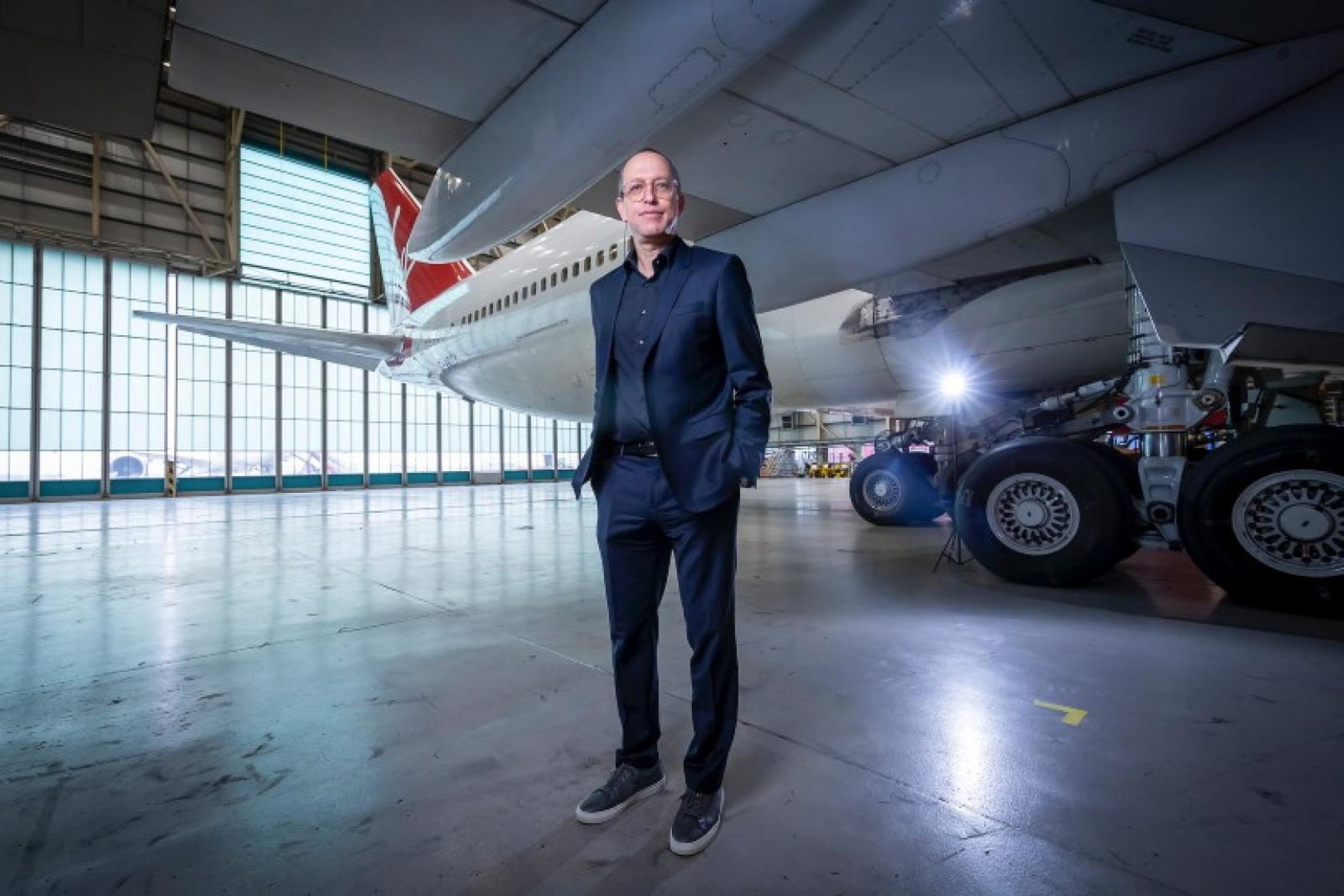
While chief executive Shai Weiss characterised 2022 as a "year of recovery and ramp up", the emergence of the Omicron strain of Covid-19 early last year, the effects of Russia’s invasion of Ukraine on fuel and energy prices and global supply chains, and a spiralling cost of living crisis, has stymied Virgin’s recovery.
Despite Weiss’s previous forecast of a return to profitability in 2023, Virgin is now viewing 2023 as a "year of delivery", with chief financial officer Oli Byers on Tuesday (10 May) insisting the brand was now "on track to return tom profitability in 2024".

Virgin Atlantic trimmed its losses in 2022 (year to 31 December 2022); its statutory loss shrunk by £144 million from £486 million in 2021 to £342 million, while its underlying loss – before tax and exceptional items – fell from £597 million to £206 million.
Full-year revenue came in at £2.9 billion, 98% of 2019 levels, and underlying earnings (before interest, tax, depreciation and amortisation) at £310 million, up from a loss in 2021. Underlying earnings before interest and tax, meanwhile, returned to 2019 levels at £71 million.
"The results reflect 2022 being a year of recovery and ramp up for Virgin Atlantic as the Covid-19 related challenges were overtaken by a surge in customer demand for travel," said the carrier, which stressed it had successfully "capitalised on the recovery in customer demand for air travel [and] holidays".
"With revenue tracking ahead of expectations and maintaining the benefit of £300 million annual cost saving achieved in response to the pandemic, statutory losses were significantly narrowed from a combined £1.4 billion incurred during the pandemic years of 2020 and 2021," said Virgin.
Virgin’s passenger capacity in available seat kilometres nearly doubled year-on-year in 2022 (+178%) while passenger numbers almost tripled (+297%), with both measures edging towards 2019 levels (81% and 75% of 2019 respectively).
Passenger revenue, meanwhile, returned to pre-pandemic levels in 2022, with total airline revenue exceeding 2019 levels in the third and fourth quarters of the year, which Virgin put down to "sustained demand" for travel post-pandemic.
Virgin Atlantic Holidays also benefited from the rebound, welcoming 250,000 passengers generating revenue of £487 million, 78% of 2019 levels. The group was also able to trim total airline costs, excluding fuel, to £1.5 billion – £173 million lower than in 2019. The airline ended the year with £399 million cash.
’Belief, determination, conviction’
"While we ended the year well, it began with the new Omicron strain of the Covid-19 virus and aviation was faced with the return of restrictions on international travel," said Weiss.
"Thankfully, through the collective efforts of the industry, it was possible to prove that travel was safe, resulting in the removal of remaining restrictions. The devastating war in Ukraine dramatically affected fuel and energy prices and global supply chains. In parallel, inflation stoked a cost of living crisis, particularly felt by UK consumers as energy prices rocketed. These factors contributed towards losses, albeit significantly improved on 2021."
Weiss also paid tribute to Virgin’s employees for their "belief, determination and conviction", which he said ensured the airline’s survival during the pandemic.
Byers added: “2023 will be a year of delivery as we build on the successful recovery achieved in 2022. We have cause for optimism as demand for travel has remained strong through the first quarter of 2023 balanced with continued macro-economic uncertainty. We anticipate growing underlying Ebitda in 2023 and are on track to return to profitability in 2024.”