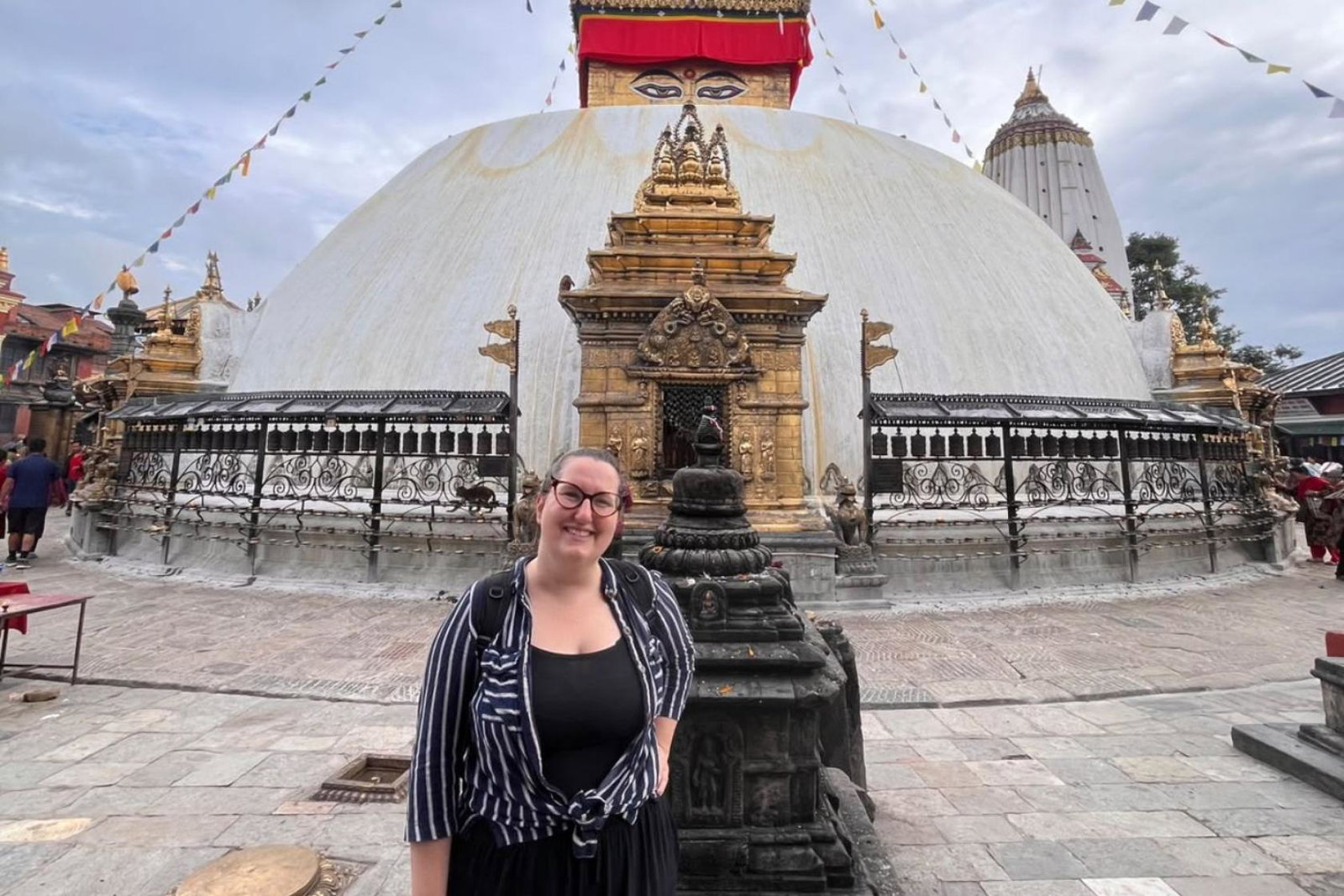
When the flash floods struck Nepal in August, Jenny Elliott was just 35 miles away.
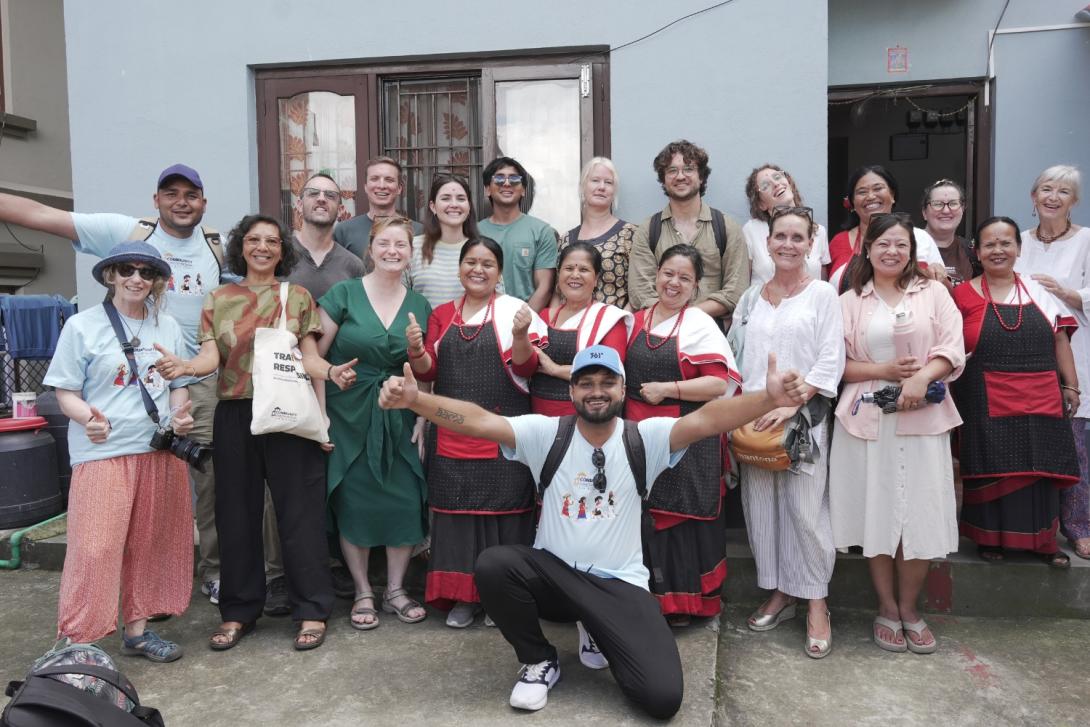
The travel enthusiast was taking part in a week-long fam trip for tour operator Families Worldwide alongside 14 other advisors from all over the globe, including France, Germany, India and South Africa.
Hosted by Community Homestay Network, the purpose of the educational tour was to showcase Nepalese culture beyond the high-altitude hikes – and to encourage tourism that positively impacts local people.
The opportunity was huge for Jenny, who had long wanted to visit Nepal in order to better understand its value proposition. She has spent the past 10 years working in travel, and with more than 70 countries already under her belt, knows all too well the importance of first-hand experience.
Having returned to the UK earlier this month, the impact of the devastating flood in Nepal – which killed at least 1,540 people – has only strengthened Elliott’s resolve to promote the destination.
“Back home, I think people thought the country’s entire infrastructure had been wiped out,” Elliott said. “Though it was emotionally devastating for the whole nation, the floods only impacted certain regions.”
Elliott added she had “no idea” the floods had even happened until she’d reconnected to WiFi following a day of activities.
“Suddenly, I had a ton of messages from people back home asking if I was okay,” she said. “But we were completely unaffected, physically.”
Fortunately, Elliott was based in Kathmandu Valley – nearly a seven hours’ drive [due to difficult road conditions] from Langtang National Park, where the flood originated. She was staying at a family home arranged by the Community Homestay Network, a Nepal startup that connects travellers with local communities.
The organisation runs a portfolio of 408 homestays across the South Asian country, and prides itself on attracting tourism in a sustainable way.
Each of the agents had their own rooms across a collection of houses, the majority of which were run by women. Though Elliott was lucky enough to have an ensuite, it’s commonplace for advisors to share a bathroom with one another during the stay. The accommodation is also fairly basic, with necessities like drinking water, toilet paper, towels and WiFi all provided.
“It’s not like staying in a hotel of course, because you’re in somebody’s actual home,” Elliott said. “But it was very clean and they’ve done a lot of work to make them feel really homey.”
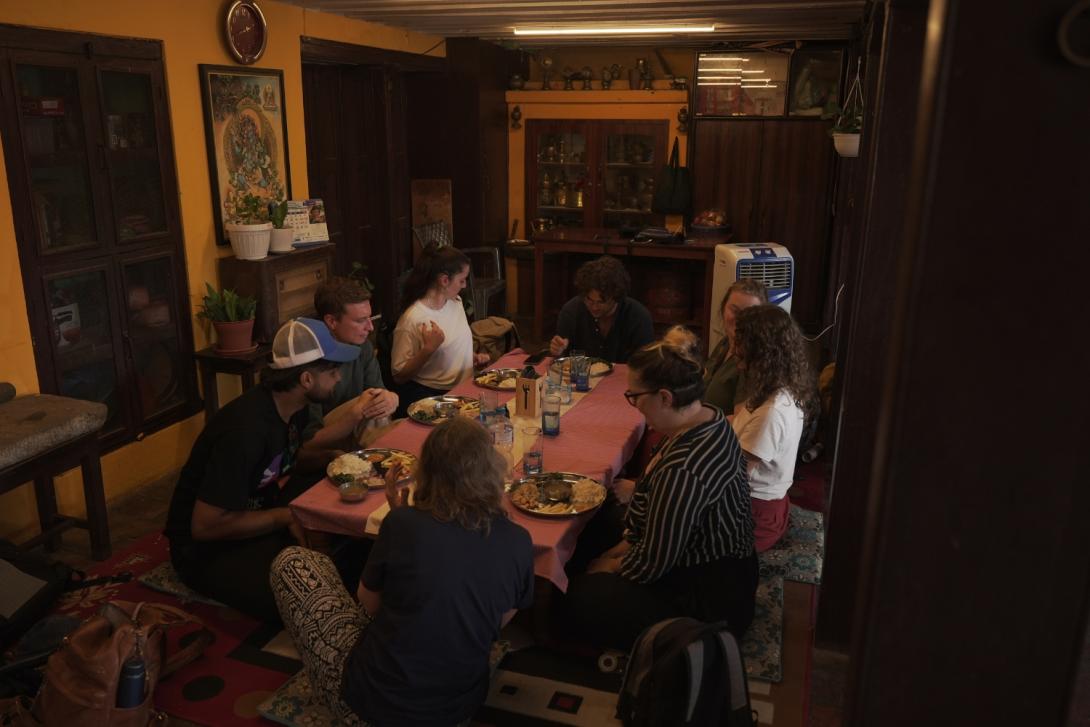
As for dining, travellers are usually fed three times a day – but not always at the times they might expect.
“Generally in Nepal, they don’t tend to have breakfast in the way Westerners do,” Elliott said. “It’s not like a big thing for them, but they’ll still give you breakfast in the morning, which is really nice.”
Instead, the day’s main meal is served at 10am or 11am – a practice rooted in Nepal’s agrarian lifestyle, which required farmers to consume a large amount of calories before an afternoon labouring on the fields.
“At this time, we’d usually have Dal Bhat, which has individual dishes of rice, vegetables, potatoes and sometimes even chips,” Elliott said. “You’d also have a bowl of lentil soup, and some chicken if you’re not vegetarian.”
The meal is consumed using the ‘scoop method’, which involves contorting the right hand into a utensil. “I was quite messy doing that, but luckily nobody judges you if you ask for a spoon!” Elliott said.
For dessert, the agents usually enjoyed Juju Dhau, a type of yogurt made with buffalo milk. “That was gorgeous,” Elliott said. “They always served it and I became obsessed with it.”
Though alcohol wasn’t typically included in meals, the agents did have a boozy beverage on a couple of occasions during their stay.
“We had rice beer and rice whiskey on one particular night, when the whole homestay community came together for a festive event,” she said. “There was dancing and music – it was amazing.”
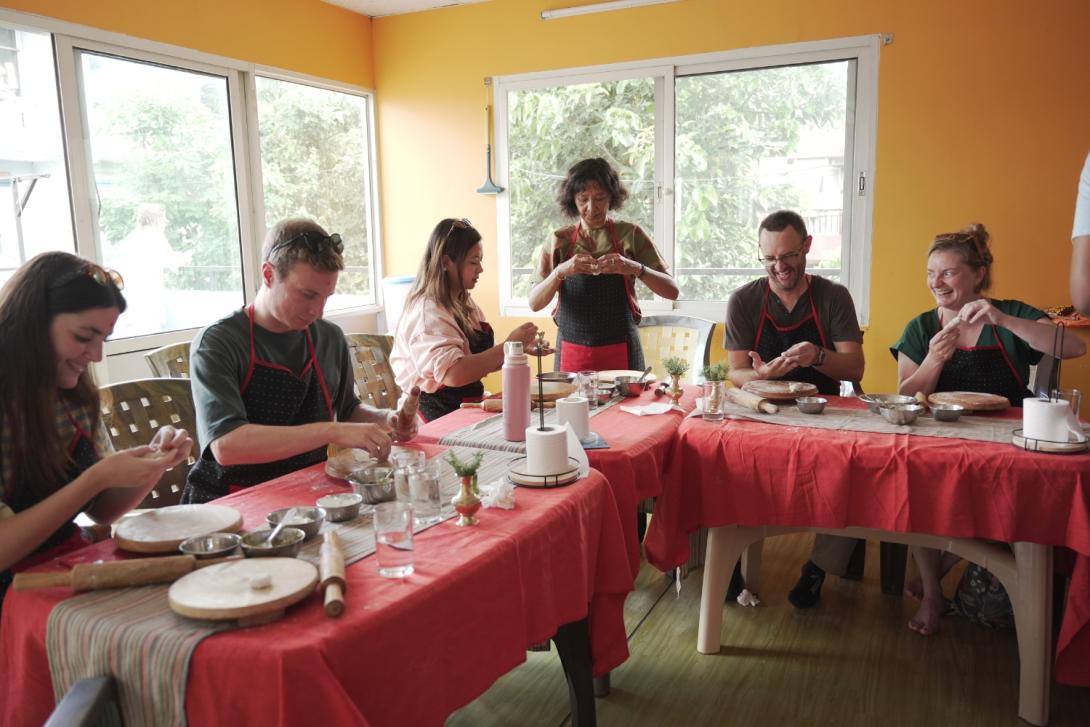
As for her highlight of the trip, Elliott most enjoyed her visit to a homestay in the ancient Newar town of Kirtipur. “They taught us how to make momo, which are like these delicious Nepalese dumplings,” she recalled. “Making them was fun in and of itself, but the best part was you have to shape them like dumplings. You can be really creative because there's different ways you can fold them and fill them.”
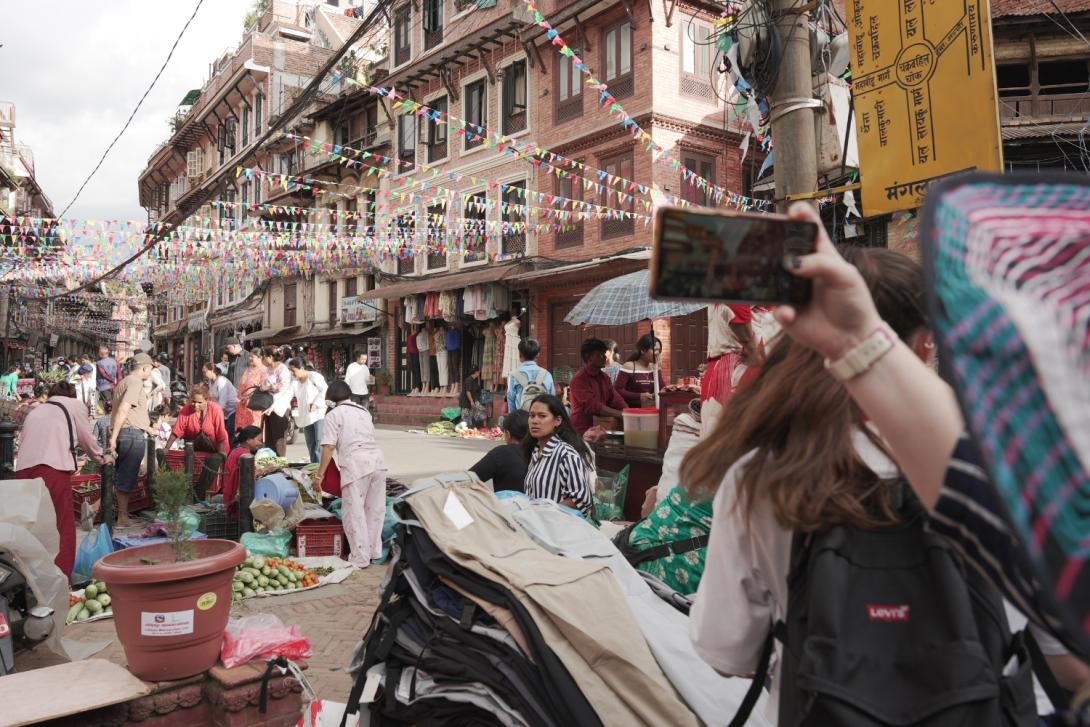
At other points, however, Elliott was admittedly more out of her comfort zone. She became briefly separated from her companion during Gai Jatra, an annual festival that takes place between August and September in honour of the recently deceased.
“It can get very chaotic in some of the main squares, and I actually wanted to get wrapped up in the chaos, so I went down to explore,” she said. “There was one point where I completely lost the other person I was with, and I was like, ‘There’s no way we’re going to find each other again. We’ll just have to meet back at the rooftop bar!’”
For Elliott, this cultural immersion only highlighted the diversity of Nepal’s offering for tourists.
“I think most people in the UK think a Nepal holiday is all about trekking and mountains,” she said. “But there’s so much more to the country. It has this incredibly active, vibrant culture that takes place during the off season.”
Since returning, Elliott has been raving nonstop about her trip to Nepal. She believes it is particularly important to share her positive experience of the country in light of its floods, which has led to a sudden drop in visitor arrivals for its peak season of September to November.
“A lot of people are wondering, is it okay to go to Nepal? And the answer is yes, absolutely,” Elliott said. “It’s always good to have people supporting its tourism sector.”
Elliott especially advocates for agents to sell Community Homestay Network, which ensures their clients’ money is going directly to the local economy. For every dollar spent, $0.64 goes to the hosts, $0.16 goes to the community fund and $0.02 goes to the network’s management.
“You’re not staying at some big brand name hotel, where you’re wondering, ‘How much of my spending actually filters down to the people who live here?’”
The homestay hosts also co-develop the experiences, working alongside the network to create everything from cultural workshops to bicycle tours.
“You're not just supporting the family whose roof you’re under, you’re literally helping fund the entire village just by being there,” said Elliott. “There’s also a lot of women in the community running these homestays, and it gives them independence and their own income, which they've never really had before.”
Elliott is now working on an itinerary with the Community Homestay Network that focuses on Nepal’s unique culture, with the aim of promoting the destination as more than a hiking hotspot. As well as reassuring tourists that Nepal is still for tourists, she also hopes it will pique the interest of people who mightn’t have otherwise considered visiting the destination.
“The sky was generally not clear when I was there, so I didn’t see a mountain once – and I still had a great time. This country is incredible and it’s not all about trekking!”