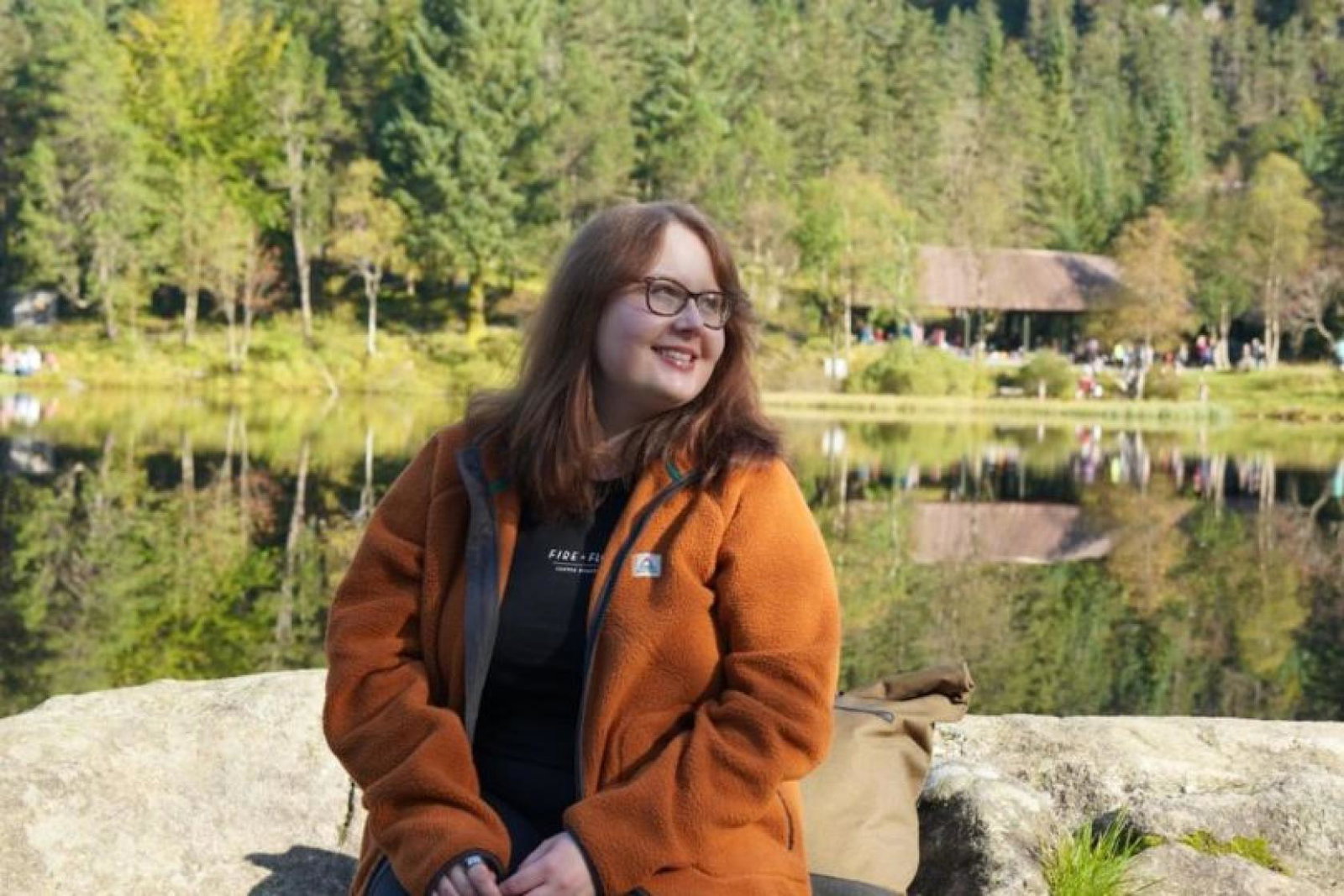
Allie Mason read an article in Women’s Health magazine that changed her life, back in 2019. The article was a personal piece written by a journalist who had thought she suffered from depression and anxiety but was, in fact, autistic.
“I thought, I’m in the same camp,” says Allie. “I’m being treated for depression and anxiety – I missed a lot of my schooling and my degree because of this – and I’m just not getting any better.”
Allie took charge of her own destiny, doing her own research, which she took to her doctor, to ask for a referral. “Six months later I saw a specialist who diagnosed me as autistic,” she says: “That speed is unheard of now, it’s more like four years now ... and I’ve learnt that certain NHS postcodes are refusing to take ADHD referrals over the age of 25 because the waiting list is too long.”
This postcode lottery is devastating, she says, because without her own diagnosis, she knows she’d still be struggling, and she wouldn’t have made a success of her life. The kind of success that propelled her into TTG’s 30 Under 30 programme.
A crucial part of Allie’s diagnosis was learning to understand herself. She used to regularly experience debilitating panic attacks. After realising that the reason she was having them was because of sensory overwhelm, she now removes herself from environments that trigger the attacks, for example, places that have bright lights, loud noise and are busy with lots of people.
She acknowledges that might not always be possible and says there is a spectrum of solutions. “You’re not going to find me in the middle of Rio Carnival,” she explains.
“But if I need to go to WTM London for example, for work, then I will seek out the quiet room, and I will feel more confident putting myself in challenging situations because I know I have a plan b.”
An open-plan office is also her idea of sensory hell, she reveals. But she didn’t want to opt out of the office experience when joining Steppes Travel in 2024. So, after enduring a desk positioned in the full glare of fluorescent lights for a few weeks, she had an open and honest conversation with her manager, and she swapped desks with a colleague to face the natural light of the window.
Autism and adventure
When Allie was first diagnosed, she wanted to explore the benefits of spending more time outdoors and feeling more connected with nature, something she had always felt the desire to do, but struggled to actually enjoy, as things like grass, sand, wind and snow can all be sensory triggers.
“I read loads about this, and I realised that while individual sports, such as a sailing organisation, might have a web page about sailing and autism, there was no central resource pulling it all together.”
In December 2020, Allie sent a proposal to Jessica Kingsley Publishers, specialists in books on autism, social work and arts therapies, which led to her publishing her first book: The Autistic Guide to Adventure. “That was my first transition,” she explains. “From educating myself to sharing that knowledge with others.”
At Kendal Mountain Festival, she met Guardian Travel editor Jane Dunford, who encouraged her to write about travel as an autistic person. Allie now has another book in the works, title to be confirmed, focusing on neurodivergent travel.
Writing an article for the Guardian in 2024 spurred Allie on to actively look for writing opportunities in the industry, and that’s how she became a copywriter for Steppes Travel. Although Allie’s role is more generalist, her bosses have embraced her skillset, and she’s been recruited to deliver training to the operator’s Travel Experts around responding to accessible travel needs.
“There aren’t many people who are neurodivergent talking about neurodivergent accessibility in travel,” she says. “We’re lacking a [paraplegic disability advocate] Sophie Morgan for the neurodivergent travel industry.”
“There are certain pockets of the industry doing really well,” she says. But the likes of Emirates, the world’s first autism-certified airline, and Dubai International Airport, the world’s first autism-certified airport, she acknowledges, are in part motivated by the commercial benefit of these underserved markets and so they are not at the forefront of making sure the rest of the industry follows their lead.
“This is where advocates like me come in,” she says. “People who are willing to make a lot of noise and connect these silos. Little pockets of progress are easy to ignore but when things happen in a huge wave, you have no choice but to join in.”
Lack of support
The gold standards are the exceptions rather than the rule – and the industry has a long way to go, she says. Especially in understanding that neurodivergent children grow up to become neurodivergent adults, and they still need support.
After being interviewed in a documentary for the North East Autism Society, she encountered the story of an autistic adult male, who shared evidence of being confronted by airport security when he had a meltdown that was triggered by sensory overload.
“He was a man with shaved hair, and he had put his hood up, because that’s one way to deal with sensory overload. He was not supported when he should have been – just because they judged his look as ‘stereotypical troublemaker’.”
“It’s such a simple thing – to practice empathy and understanding – but it’s not happening,” she says.
Specifically for travel agents, she recommends providing alternatives to chatting with clients by phone. In general terms, she says, most autistic people do not handle phone conversations well. They prefer a video call, which provides more context to process a situation, or an email conversation, which provides more time to process a situation.
“I understand the commercial imperative to get on the phone and talk the client into a booking but if I was to enquire about a holiday with a travel agent, and they insisted we talk about it on a phone call, then I would go elsewhere,” she admits.
“If a client says, please contact me by email and doesn’t explain why, I know it’s easy to assume they’re talking to five different agents – but it could be because they have accessibility needs. Disclosure shouldn’t be a requirement for dignity.”
Not a TikTok trend
“For autistic people like me, now is both the best we’ve ever had it, and the worst we’ve ever had it,” she reflects.
The worst – because neurodivergent people have to live in a society that has evolved to suit neurotypical people.
“There have always been autistic people,” she says. “But there hasn’t always been fluorescent lighting and open plan offices.”
Also – the prevailing view that “neurodiversity is just a TikTok trend”.
“It drives me up the wall,” Allie says. “We already have to fight preconceptions about our behaviour. Now we have to fight the idea that everyone is jumping on it as trend.”
And when initiatives designed to help are being used maliciously for the wrong purposes, such as queue jumpers taking advantage of fast pass systems intended for autistic visitors in theme parks.
Yet Allie herself recognises that the Hidden Disabilities Sunflower lanyard presents a difficult tightrope to walk: “Approximately half of those who could legitimately use a lanyard don’t, because they don’t feel comfortable disclosing their disability in such a visible way.”
But, on the flip side, are the safe spaces provided by online autistic communities. “The fact that so many people are talking about autism online, it’s been a lifeline for me, because I don’t feel so alone in my experiences,” she says.
These online communities represent a powerful movement that needs advocates like Allie to bring the conversations offline – to be open about their own experiences, help others to share theirs and encourage everyone, everywhere to be more empathetic and understanding.
“There’s a lot of research out there,” Allie says. “But it’s not always accessible to the everyday Joe. I see myself as interpreter, wading through the jargon and telling people how the research applies to them.”
Looks like the neurodivergent travel industry might just have found its Sophie Morgan after all.