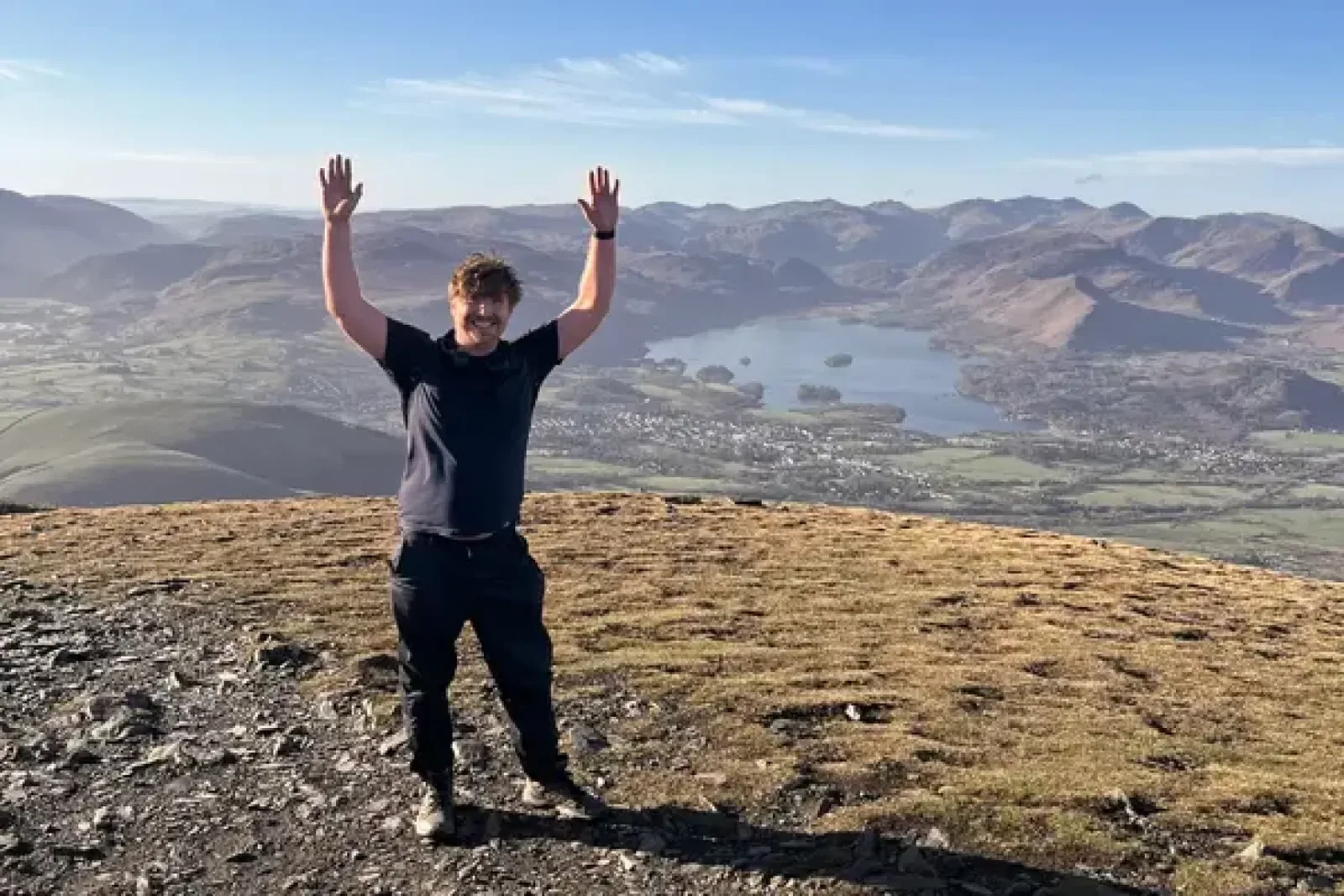
What brought a young Geordie travel agent to the point where he felt he had no other option but to drive to a remote beauty spot and attempt to take his own life? It was more by accident than design that he survived, and in the aftermath, he curled himself up in a ball in the dirt and cried for hours. It was weeks before he could tell his partner and his parents what he had tried to do.
Michael has come a long way since that day, July 10, in 2023 – and is now campaigning to help others with a government petition to change the Health and Safety at Work Act.
There were many, complex factors that propelled him down the road that left him depressed and attempting a decision which would have devastated the people closest to him. But he believes there is more that work places can – and should – do to support employees.
Leaving school without qualifications, Michael felt hampered by his dyslexia. Being diagnosed with MS aged 24 was a cruel blow. One that came just as he was finding his feet, earning money and travelling the world as a private chef, first with luxury travel operators in the Algarve and the Alps, and later on oil rigs.
“I couldn’t work as a chef, I couldn’t travel, I had no money,” he says. “I felt really down and I worried that the disease could worsen at any time.”
Michael applied for a job with well-known tailor-made travel specialist on the high street, but struggled with a comprehension test that was a part of the interview. “It crushed me,” he says. “I put so much prep into trying to get ahead, and it just felt like the worst interview ever.”
Sales block
He started researching homeworking agencies, specifically those that were willing to take on new recruits with no experience of selling travel. “I had little idea what was involved,” he admits. “I just wanted to work abroad, be a digital nomad, and working as a home-based travel consultant would allow me to do that.”
He paid a sign-up fee to one such company of several thousand pounds but – despite the training provided and the support of the team – found it impossible to convert enquiries.
“I ended up more and more in debt because the sign-up fee needed to be paid off in monthly instalments through your commission. If you didn’t earn commission, it was taken from your bank account via direct debit. I wasn’t even close to earning the commission I needed to pay it. The financial pressure was huge. I was also lost in personal debt and relying on this for an income.
“I felt like a failure because I couldn’t do it. I blamed myself, adopting an attitude of ‘don’t quit, don’t complain’. On 10 July, I couldn’t bear the pain anymore. I should’ve reached out and told people how I was feeling. I just didn’t understand why I couldn’t fit in the workforce.”
People often talk about a turning point. Trying to end his life proved to be Michael’s. Although it took him a while to summon the courage, he opened up to his partner and his parents about what he’d attempted to do in that remote beauty spot. And once he’d shared his struggles with his colleagues, he shut his laptop for the final time and decided to leave the travel industry. “I felt a bit better each day that passed. I knew I needed to leave the set-up, because it was clearly making me ill.”
With a clearer mindset, he agreed a payment plan to repay the debt and entered therapy, which helped Michael to make his peace with what had happened.
“On reflection I could have been more open about how severe things were. But I wasn’t the only one in my cohort of joiners who was struggling and losing money… I think there were lots of warning signs and red flags… if you know how to spot them.”
Michael’s recovery included a diagnosis of ADHD, which he says gave him the answers to things that had tormented him. “There was a life flip,” he explains. “Things I had always seen as negatives, I began to see more as positives.”
Campaigning to save lives
He also educated himself on how the mind works, and that has made him realise there is still so much education that needs to be done, especially in the workplace, around mental health and specifically suicide prevention.
Channelling his energy into something positive, he’s started a petition, to change the Health and Safety at Work Act. Although the act is broad in scope, there are currently no minimum standards for employers to follow around suicide prevention in the way that there are for fire prevention, first aid and so on.
“Six thousand people die from suicide in this country every year, and we don’t know how to talk about it,” he says. “People say to me, ‘you’re so brave’ but it shouldn’t take bravery to talk about it. We need to share the facts and the science – tell people, this is what happens to your mind [with suicidal thoughts] – and we need to make that training repetitive enough so it becomes a mindset change.”
“I don’t have all the answers,” he adds. “I just recognise the problem and know there’s a gap we need to fill. I don’t believe anyone has done anything wrong. It’s just a tragic set of circumstances that is sadly repeated thousands of times in all sorts of different ways every year. And that’s the real reason we need better education and legislation surrounding mental health.”
“If someone breaks their leg at work, it’s recorded as an accident so we can learn from it and make the workplace safer. So why don’t we do the same when someone ends up on antidepressants specifically due to workplace stress? If we treated that as an occupational hazard too, we could track it, spot patterns, and take action to reduce burnout and protect mental health – just like we already do with physical injuries.”
Inspiring storytelling
Another way Michael is helping to advance the discussion around mental health has been to interview travel personalities about the benefits of adventure travel on their mental health.