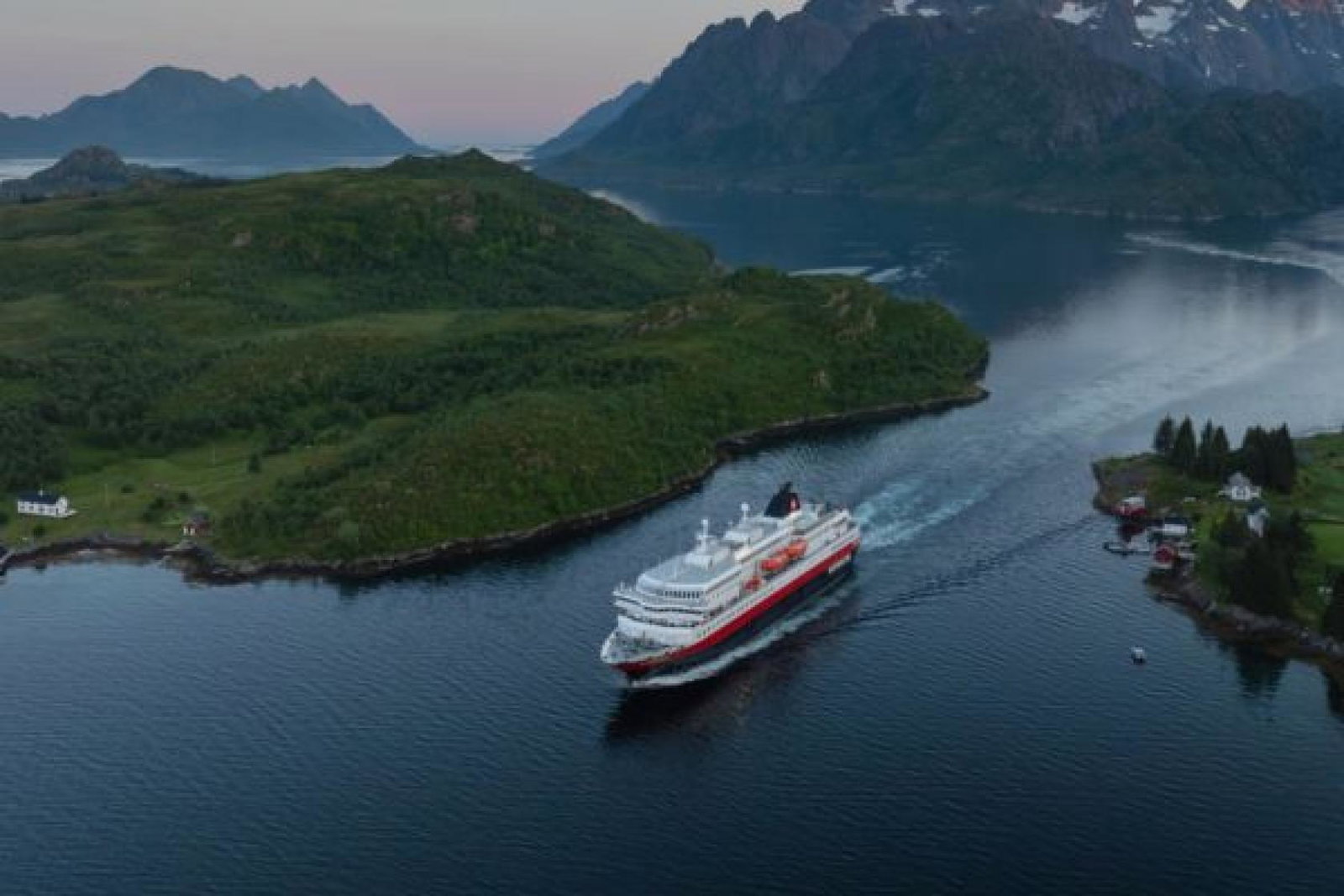
The vessel will also connect to shore power wherever possible during the 4,000 kilometre-sailing that starts on 29 October.
Hurtigruten chief executive Hedda Felin said: "Our ships already sail on blended biofuel, but for the first time we will carry out the entire sailing on 100% advanced biofuel.
"For us at Hurtigruten, it is important to do what we can to reduce emissions, and this voyage is an example of how biofuel can play a key role in achieving Norway’s climate goals."
Hurtigruten also has an ambition to design a ship that can sail without emissions in normal operation. The project is a collaboration between Hurtigruten, Sintef and several other partners in the Norwegian maritime industry.
Felin added: "Looking further into the future, we want to build new ships that reduce the total energy demand by 40% to 50%. We can then sail on batteries as the main source of energy, assisted by a number of innovative solutions such as sails, air lubrication of hulls, more efficient design and contra-rotating propellers."
Since 2022, the line has invested €100m in technical and environmental upgrades to their fleet to reduce harmful emissions, while also phasing in the use of biofuels.
This sailing on 29 October will run on hydro-treated vegetable fuel.
"Advanced biofuels make it possible to achieve major emission cuts with our existing fleet. This is proven and safe technology, and at the same time can help protect the climate from large emissions created by the construction of new ships," Felin continued.
Earlier this year, another Norwegian coastal operator Havila Voyages pledged to grow its fleet further off the back of a 12-day "climate-neutral" voyage this autumn.