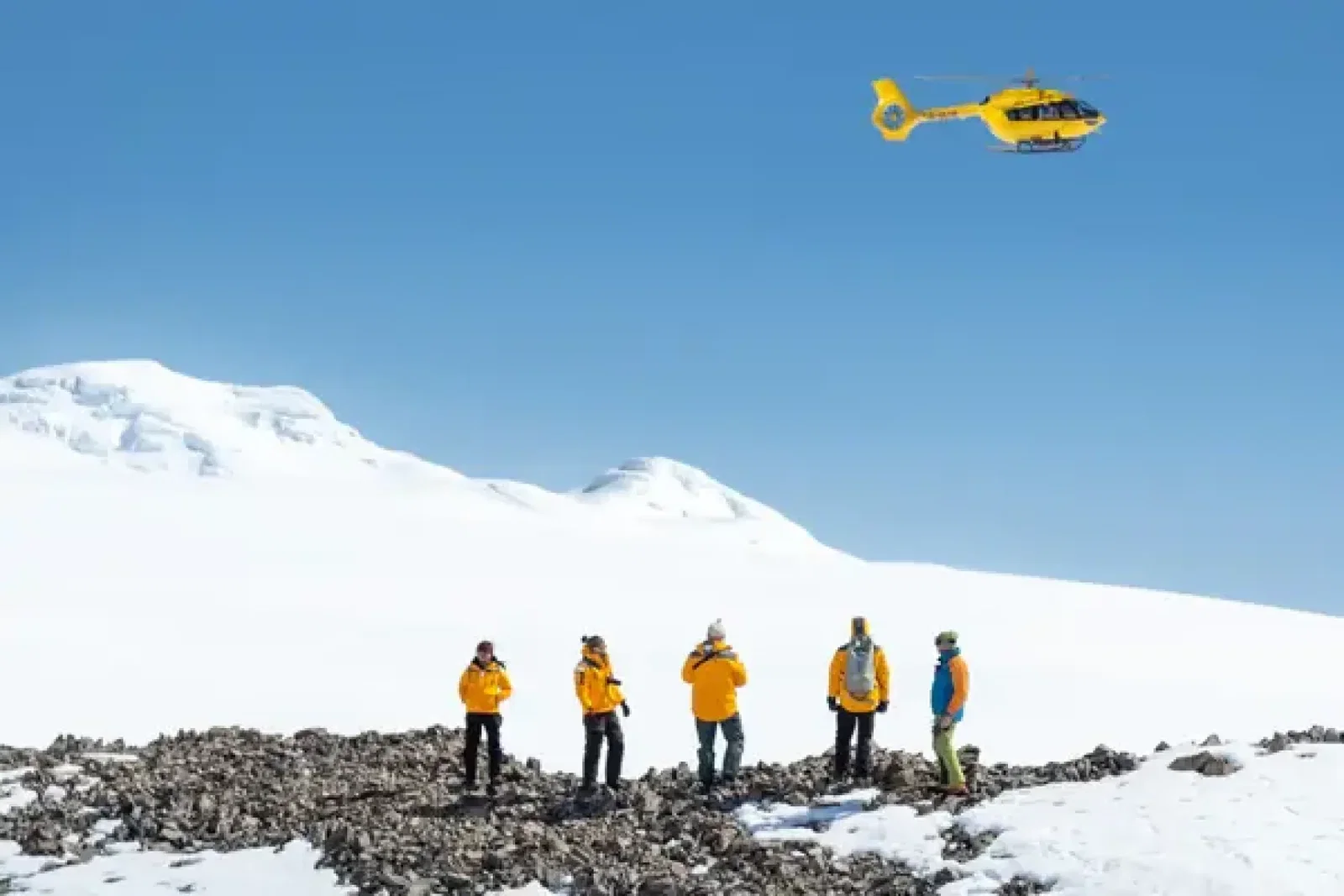
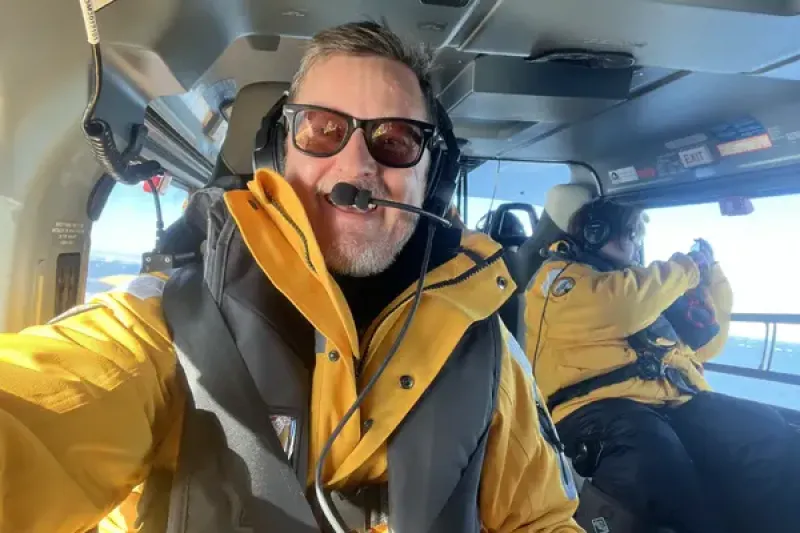
Up, up, up we go, in drysuits and lifejackets and with a view of a whole new world. We’re flying at 2,200 metres, over a glittering ice field, over a tidewater glacier, over an unnamed summit at the bottom of the world. First we lurch to the starboard side, engines thundering, then accelerate, nose down, over a ridge, climbing above low drifting clouds, monstrous crevasses and fragile ice caps that congregate in all directions. In panoramic wide-angle, the picture presented is an unknown part of the planet. A virgin frontier.
“You could never get used to this,” says ex-Royal Navy pilot Jonny Mutch through our headsets. Then we swoop, falcon-like, between two crumpled peaks, pushing out over an unearthly peninsula warped with ice. “We’re the first people to have ever done that,” he says, relaxed, smiling, a picture of polished James Bond cool. “Now, get ready for the really exciting bit… ” Moments later, we’ve landed on a sun-sheened plateau amid a whipped-up cloud of snow, making contact with a part of the world no human has ever set foot on before.
If it wasn’t clear enough already, we’re in a twin-engine helicopter spinning over the glaciers and mountains of Antarctica in daredevil fashion, some 64 degrees south. Most people travel everywhere here by expedition cruise ship, taking two dogged days to cross the Drake Passage from Ushuaia, Argentina and passing the South Shetland Islands before shadowing the west coast of the Antarctic Peninsula. Nonetheless, times are changing and helicopter tourism is taking off – literally and figuratively.
In recent years, a limited number of heli-enabled expedition cruises have begun to prise the seventh continent open, but the first all-out, heli-centric Antarctica cruise itinerary is set to debut at the end of this year. “Helicopter flightseeing and heli-landing excursions are a quintessential example of how we have continually pushed the boundaries of polar exploration,” says Catherine Lawton, senior director of product development at Quark Expeditions. “Having operated this way for several seasons, our team seized the opportunity to lean into helicopter operations by launching our new ‘Antarctica by Helicopter’ itinerary. It’ll run in true expedition fashion, with the ship following suitable flying weather and conditions to maximise the experience.”
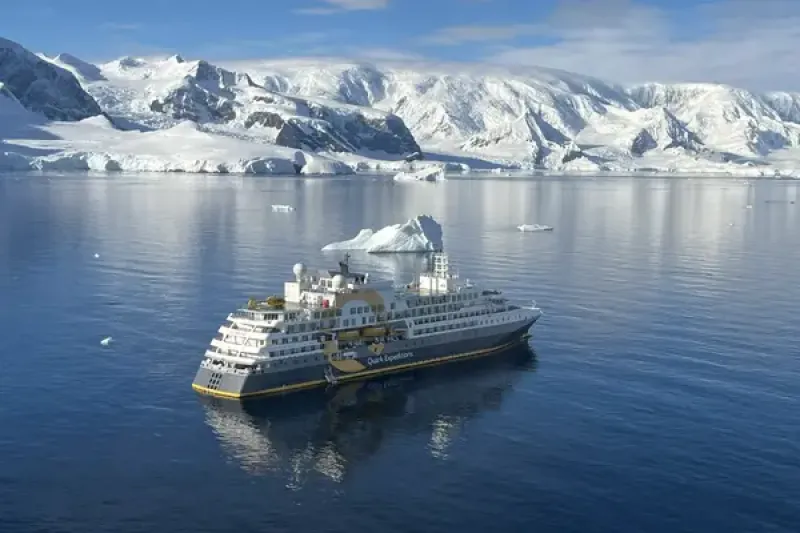
Helicopter excursions in Antarctica might seem like the latest gimmick for polar travellers, but for Quark Expeditions it’s the natural evolution of its heli-enabled cruises, which debuted in 2021. This followed the game-changing arrival of Ultramarine, an ice-strengthened expedition vessel fitted with two heli-pads and two best-in-class Airbus H145 helicopters.
Rarely visited places
Ask pilot Jonny, who’s spent 25 years operating off warships and frigates, as well as flying for the British Antarctic Survey, and he’ll tell you these new 12-day voyages – including at least two flightseeing excursions and one heli-landing – can access otherwise unreachable parts of the Antarctic peninsula. He’ll mention rarely visited places like Snow Hill, Antarctic Sound, Erebus and Terror Gulf, and the Weddell Sea. It’s one thing for your clients to see Antarctica from a cruise ship packed with other camera-ready travellers. Quite another when they are almost alone.
Antarctica’s justified reputation for heavy weather – so untamed, so unpredictable – makes helicopter operations complicated. Winds on the peninsula are more volatile than elsewhere farther south. Low cloud ceilings and flat light make landings impossible and can prevent flying. Around 14 hours is the minimum to get both helicopters in the sky and all of Ultramarine’s 199 passengers airborne. In short, there are no guarantees for your clients.
“We’re flying helicopters off a boat in Antarctica,” says second pilot Steve Martin, an ex-SAS military man. “There’s no alternate here. No airport. We have to get back to the boat no matter what, so we weigh up every risk with sound airmanship decisions.”
On my 14-day Crossing the Circle trip, a sort of preview of the itinerary launching later this November, I take to the skies to see Antarctica’s infinite emptiness twice, including one heli-landing. Each time, I find myself awed by the power of the landscape, adjusting my sense of size and scale. Antarctica from the air will do that to your clients too.
For Quark, sustainability is vital to the whole operation, even if helicopters by nature are a less than sustainable way to explore the farthest reaches of the planet. The aircraft consumes 30 per cent less fuel compared with aircraft of a similar size; the noise pollution is reduced by a fifth. More than that, the standards for flying are more stringent than anywhere else.
Sensitive flight paths
“Regulation is so tight not every cruise operator will be able to do this,” Jonny tells me one evening. “Every flight trajectory is scrutinised for wildlife avoidance, and even flying from ship to shore we’re minimising our impact on all the whales, penguins and bird life below. We’re extremely sensitive to what we are doing.”
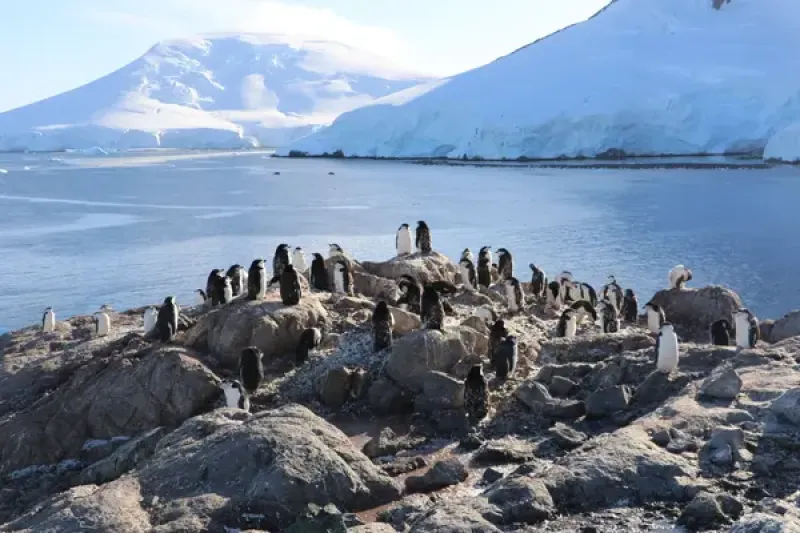
Even without the prospect of striking out into primal wilderness, the idea behind an Antarctic expedition cruise remains the same as it always has been: to connect your clients with the planet at its most extraordinary. One morning, shortly after breakfast, I paddleboard with two humpback whales amid toppling icebergs. Another, a pod of orcas gatecrash dawn in a feeding frenzy around our vessel. One afternoon, on a Zodiac cruise in falling snow, we watch a leopard seal stalk gentoo penguins through drifting waves of ice.
Back onboard, there are eulogies to the joys of all of this, but many accounts from the other passengers are in agreement: the most memorable moments are when shooting skyward. For every single time those blades turn, exploding into life above icebergs, floes, caps and sheets, something extra special happens. The pilots soar into the highest, driest, coldest, windiest, most isolated continent on the planet – and those with them couldn’t be more exhilarated.
Book it: Exodus Adventure Travels offers a 12-day Antarctica by Helicopter: Icebergs, Mountains & Remote Lands cruise with Quark Expeditions, from £10,705pp excluding international flights, departing Buenos Aires on 27 November 2025. Price includes a mandatory transfer package, including return charter flights to Ushuaia, full-board accommodation including drinks package, transfers and helicopter excursions. Quark Expeditions’ 14-day Crossing the Circle: Southern Expedition costs from £18,195pp, excluding international flights; exodus.co.uk; quarkexpeditions.com