


Rat-a-tat-tat! An unrequested wake-up call shatters my sleep. Until now, service at La Sultana Oualidia has been flawless. So why, I wonder groggily, is someone tapping on my window? Bleary-eyed, I pull up the blind…to find an African blue tit pecking at the reflective glass. I’ve been woken by the dawn chorus before – but never by an angry bird arguing with itself. Still, its timing is impeccable: it’s sunrise. Grabbing my room’s binoculars, I head onto the terrace.
Located halfway down Morocco’s Atlantic coast on the edge of the small fishing town of Oualidia, La Sultana Oualidia sits beside a 12-kilometre saltwater lagoon. Shielded from the ocean by cliffs and a sandbank, the lagoon is a wetland of international importance. Home to an astounding array of marine and bird life – and seven oyster farms – for foodies and nature lovers, it’s paradise.
It’s low tide, and a salty seaweed tang hangs in the warm breeze. On the shoreline, white storks and egrets prowl mercury-like rock pools, watched by a marsh owl perched in a Norfolk Pine. Beyond rustling trees and unfamiliar bird calls, Oualidia is pin-drop quiet.
Royal seal of approval
But summers in Morocco’s ‘oyster capital’ tell a different story. Renowned for its seafood, safe surfing, caramel sands, and mild climate, Oualidia draws thousands of domestic tourists throughout July and August. Fashionable since King Mohammed V built his now-derelict summer palace here in the 1940s, the resort attracts a well-heeled crowd, many of whom own second homes.
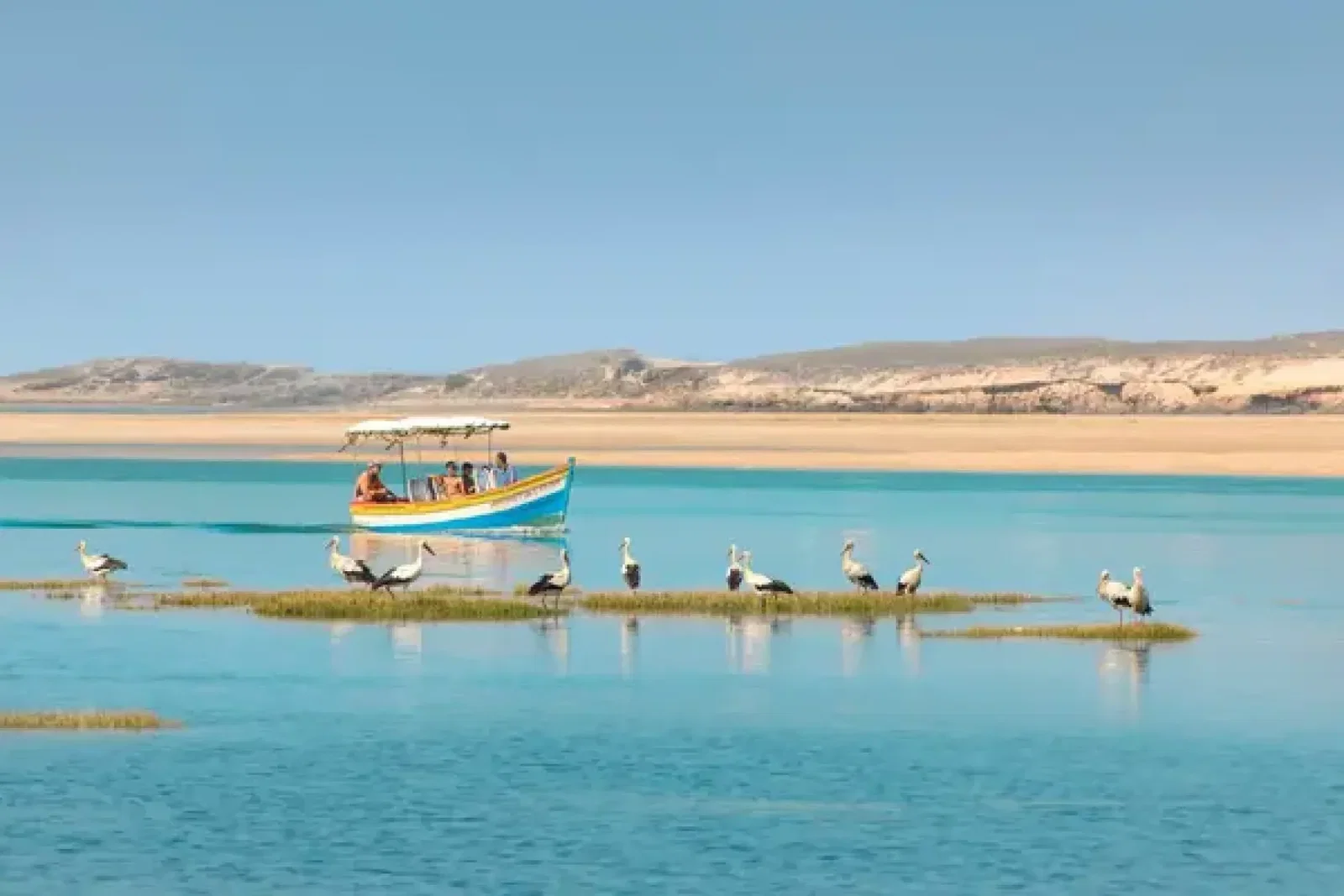
Still, by October, most visitors are feathered. So, later, I head out on a guided birdwatching safari with assistant front desk manager (and wildlife fanatic) Chahbi Messaoud. La Sultana Oualidia offers numerous adventurous ways to explore the area, from horse riding, fat sand biking, and night fishing to surfing lessons, paddle boarding and float tubing. With our kayaking plan scuppered by unusually choppy waters linked to tonight’s supermoon, we board a small fishing boat instead.
“Autumn migration is one of the best times,” smiles Chahbi as we chug into the lagoon, past curlews, plovers, and oystercatchers. “There are always many birds, but now and in spring, thousands arrive, even flamingos.”
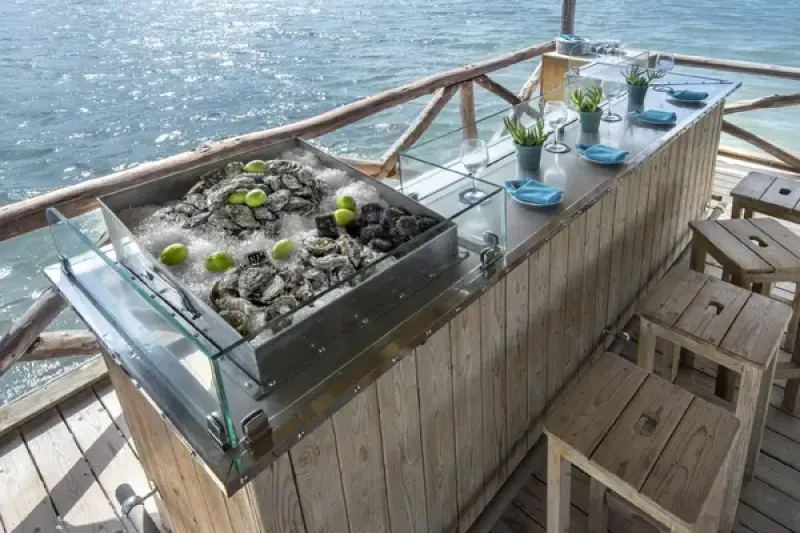
While flamingos aren’t forthcoming, the marsh teems with herons, storks, and spoonbills. An osprey sits atop an oyster bed’s marker post. Three hundred tonnes of oysters are produced here annually, and fishermen are chest-deep in the water, sorting gnarled basket-loads.
“The land here’s protected: 80% is for wildlife, 20% for the town. No dirty water is allowed into the lagoon, and the water quality is constantly checked,” Chahbi explains. “That’s why it’s so special for nature and food. John Dory, eel, turbot, sole, sea bass…all lay their eggs here. And, of course, we have the best oysters.”
Boutique bolthole
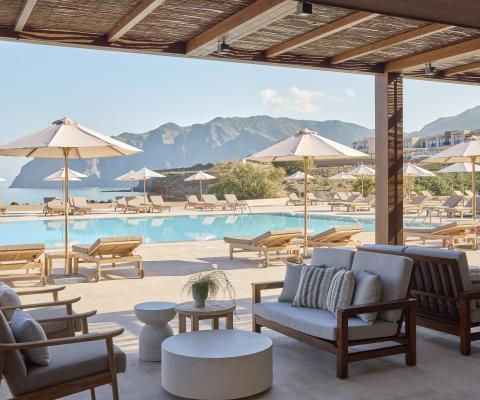
Of Oualidia’s 10 classified hotels, La Sultana Oualidia is the only five-star luxury property. Like an ancient Moorish fort, the traditionally stone-clad hotel is a stunning jigsaw of terraces, turrets, and domes. At night, when lanterns glisten, it’s fairy-tale pretty.
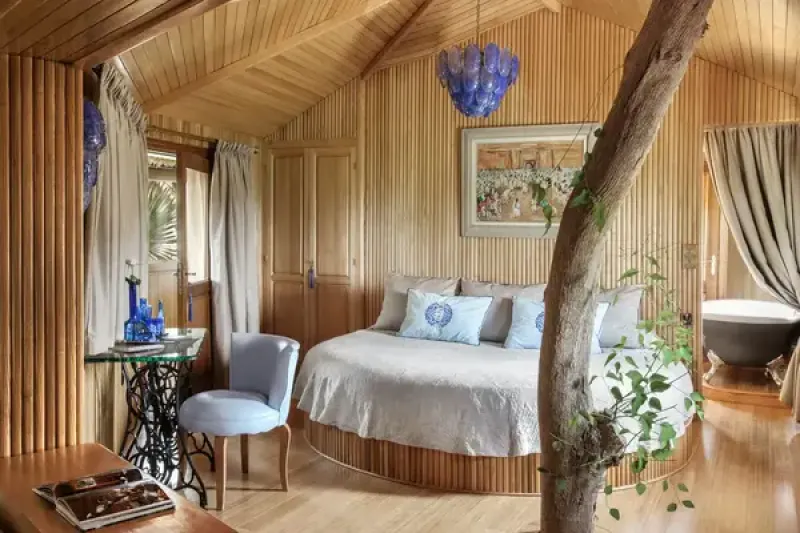
Twelve individually quirky rooms and suites feature tadelakt bathrooms, aged marble floors, private terraces and outdoor jacuzzis – plus mobile ‘butler’ phones to ensure clients’ whims are instantly answered. For total escapism and wrap-around views, the stand-alone treehouse suite is unbeatable. With its wood panelling and Art Deco brass flourishes, it’s all very ‘gentleman’s yacht’, apart from the eucalyptus tree growing through its middle!