





It’s high summer for the idle walruses in Kapp Lee, a flora and fauna-rich headland on Edgeøya island, that’s also a known haul out. Seeing the large group lolling about together in the shallows, chilling belly up and cooling their blubbery bodies with occasional dips in the water, instantly evokes images of high season Mediterranean beaches teeming with holidaymakers sprawled out on the sand.
However, the relaxed scenes I’m witnessing at this popular Svalbard landing site have a sinister undertone. Historically one of the archipelago’s largest walrus slaughtering sites, remains can still be seen scattered about – while slaughtering ended in the 1950s, today’s main threat is climate change, with walruses increasingly resting on land due to melting sea ice.
Back on board my home for the week, Swan Hellenic’s SH Vega, the other passengers are immersing themselves in the itinerary. One guest makes it their mission to meditate at every landing spot; another swaps the occasional shore visit for sketching, proudly showing me a book of delicately coloured pen and ink drawings.
I push myself out of my comfort zone by ‘polar plunging’ into the frigid ocean – I’m not the biggest fan of cold water, especially when swerving it is the easier option. But the Arctic show must go on: I gee myself up with a personal pep talk on the wellness benefits, and luxuriate in a hot shower afterwards.
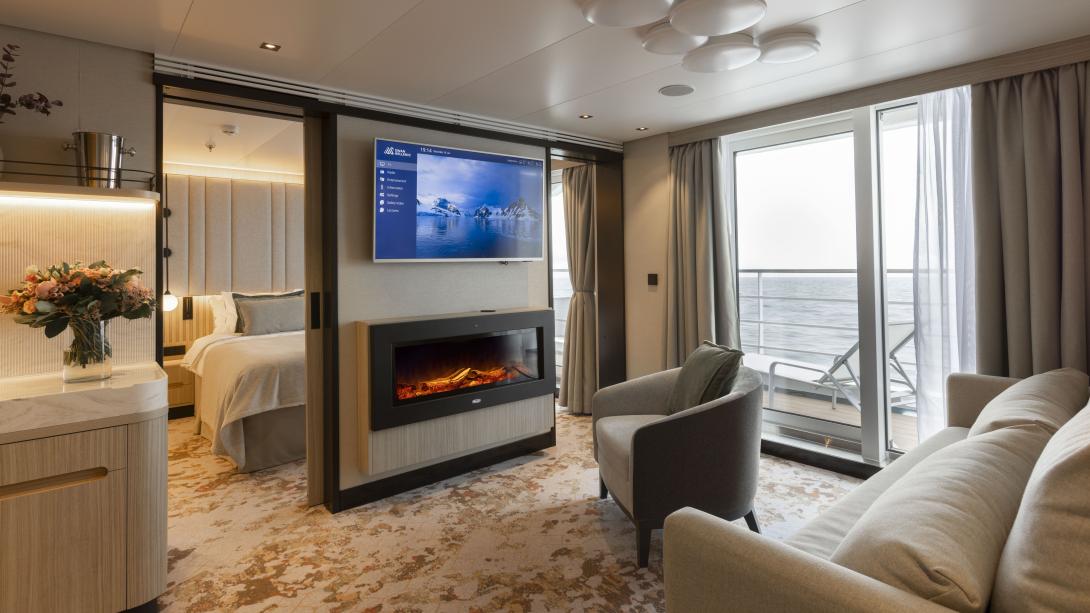
Premium Suites have a king-size bed, separate living room, and flame-effect fireplace © Swan Hellenic
Quite frankly, there are far worse places to warm up than the very homely SH Vega, with its inviting, Scandi-style design, three dining venues and spacious staterooms complete with Swan Hellenic’s signature cosy, crackling flame-effect fireplaces. The hygge effect is further enhanced by super comfy beds, luxurious bedlinen and thick curtains, which effectively block out the continuous daylight of the midnight sun.
Rule changes
One of the key wildlife draws in this part of the world is of course the polar bear. New rules in Svalbard prohibits the pursuing or disturbance of polar bears, and no one can travel or be closer than 500 meters to the world’s largest predator with a sense of smell 10 times stronger than a bloodhound, from 1 March to 30 June, and 300 meters outside this date. Additional rules state that vessels cannot carry more than 200 passengers – our 152-passenger ship, sailing with around 100 onboard, falls comfortably within these limits.
Cruise operators are also required to be responsible, and passengers are only permitted to go ashore when the landing area has been fully scouted. The polar bear population in the Barents Sea is stable at around 3,000, and with two ship quarter masters constantly scanning the environment, I like to think that the odds are in our favour.
One evening, a polar bear is spotted from the bridge. We rush to the top deck with binoculars – there’s a pair in every stateroom – and cameras in hand. Despite the 500-metre distance, said bear looks chubby and well fed, which is pleasing to see.
The bad news: 500 meters is a bridge too far for my phone to capture the moment. The good news: SH Vega’s onboard photographer is on the case with powerful camera equipment and a drone – the photos are shared at the daily briefings in the observation lounge.
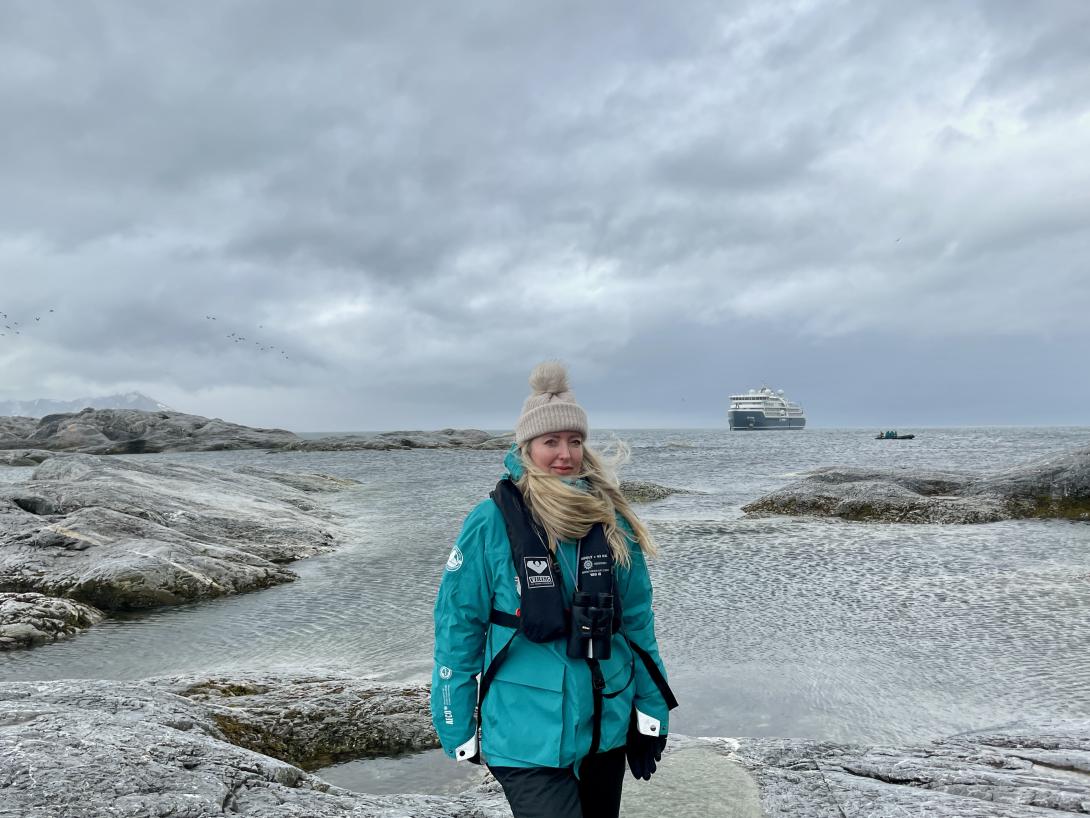
The distance rules do not bother me, says Rebecca. It's still a treat to spot a polar bear in its natural habitat © Rebecca Barnes
The distance rules do not bother me as it’s a treat to spot this magnificent apex predator in its natural habitat, and other guests feel the same. “It doesn’t impact our cruise, it’s a privilege to see these animals in the wild – it’s their home and spotting one is something that just cannot be ordered,” says Rob Pullen from Surrey.
SH Vega's expedition leader Katya Uriupova is equally upbeat. “We knew this was coming as Svalbard is a national park – in my opinion it’s a positive move, as in high season there are so many ships,” she says. “Feedback from the guests has been positive, because once you explain why the regulations are in place, and that the aim is not to disturb nature and put less pressure on the environment, they understand. It’s important that we are all on the same page.”
Another improvement this season, Katya shares, is that access to landing sites and specific locations is now done via an efficient online platform; previously ships had to request and arrange access by sending manual emails.
Into the wild
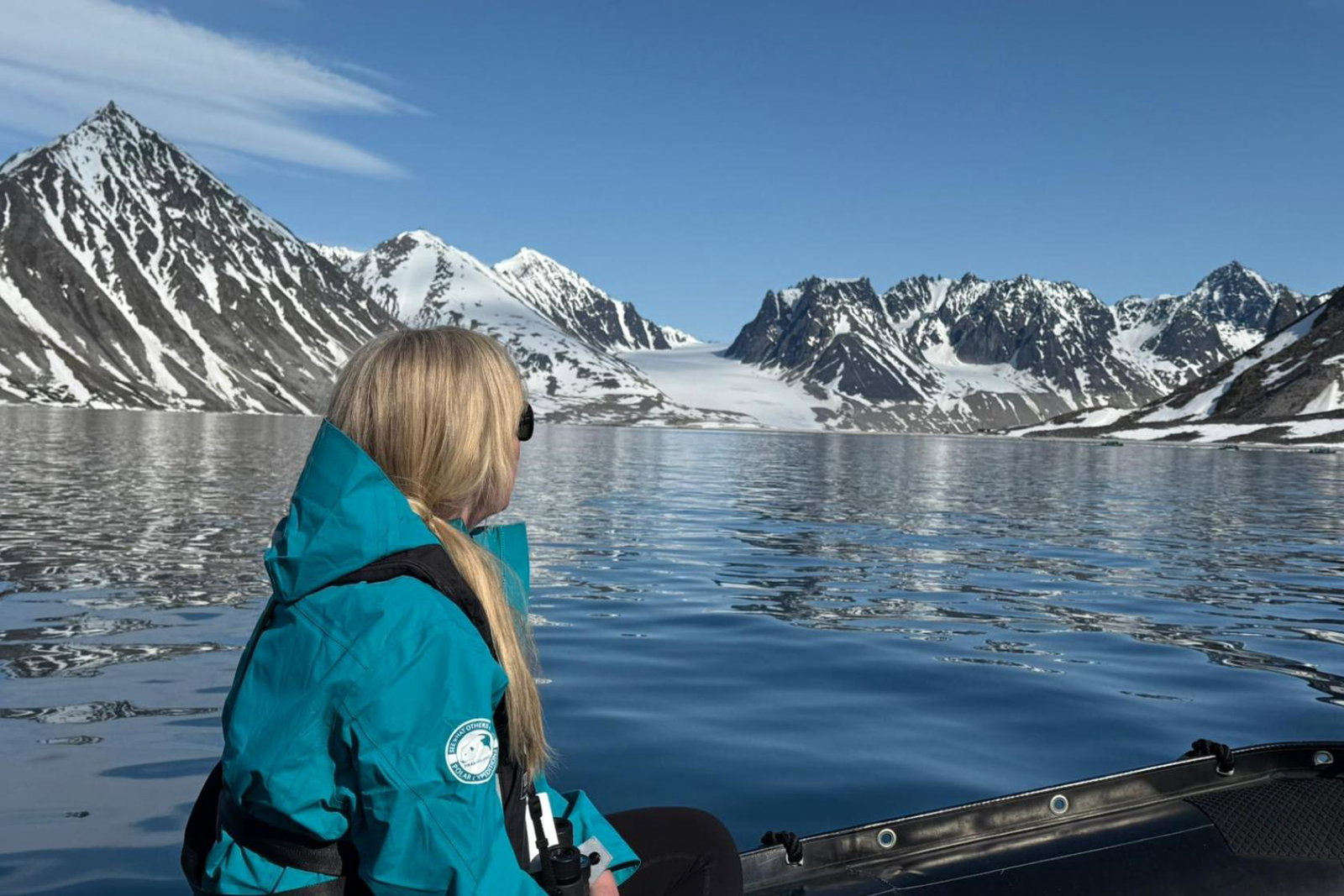
Awesome wildlife spots aside, the water is where it’s at: kayaking in Lilihookbreen under a cornflower blue sky and surrounded by glittering brash ice sets the scene for an idyllic afternoon exploring the glacier, the silence only broken by the occasional boom of ice calving in the distance.
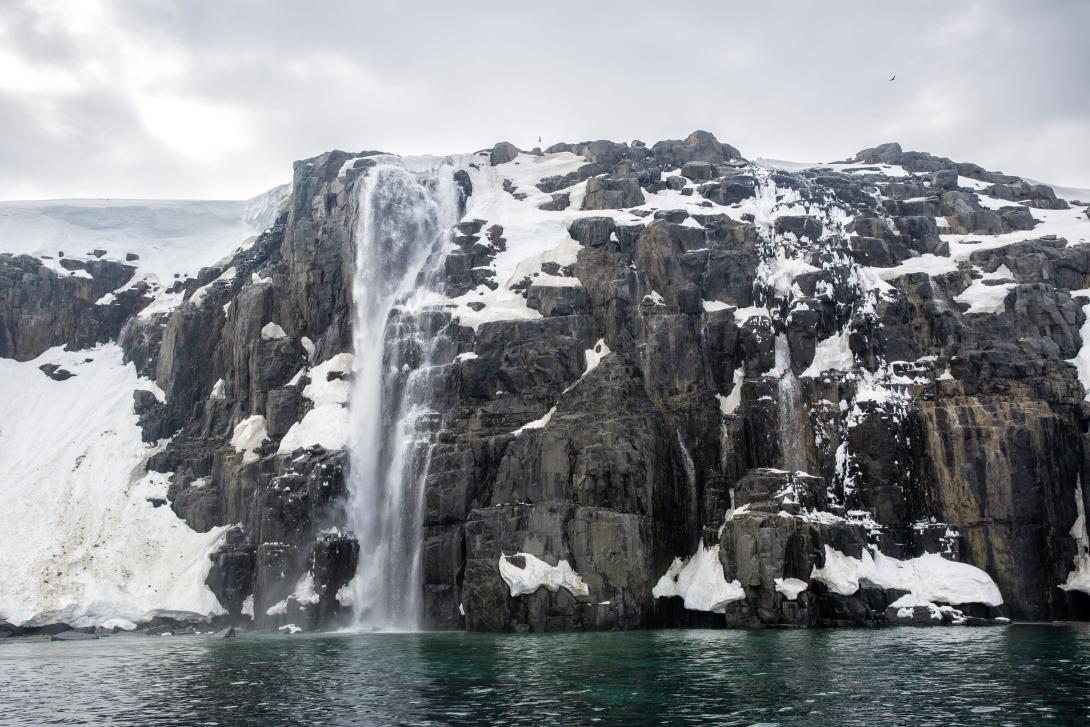
Alkefjellet: these cliffs are a breeding spot for thousands of Brunnich’s guillemots © Swan Hellenic
Another morning, as our Zodiac nudges closer towards Alkefjellet cliffs in north east Spitsbergen, hundreds, possibly thousands, of Brunnich’s guillemots swarm, call and drop like stones into the ocean – more than 60,000 breeding birds call this home in the Arctic summer.
Watching them populate this property hot spot is intense and mesmerising, as the cliffs’ vertical formation and ledges provide the perfect housing against predators including Arctic foxes, although with prime real estate snapped up quickly, much squabbling ensues.
The Zodiac approaches Sundneset nature reserve on livelier waters than we have encountered so far. Instructions to slide towards the top of the raft in order to exit without getting too wet in the process are taken onboard – I follow the “go higher, stay drier!” mantra, and spring out into the shallows.
Minutes later, I’m hiking though the water-logged lowland, tripping over reindeer remains and marvelling at the purple saxifrage, a tiny plant species that blooms in early spring, and sprinkles colour over the terrain. Meanwhile, the ship’s rifle master takes the high ground to keep watch for predators, and I scan the lofty tundra for an elusive Arctic fox still wearing the remains of his winter coat.
As SH Vega docks in Longyearbyen on the last evening, we hear that we have completed a full circumnavigation of Svalbard, sailing 80 degrees north to landing sites including Burgerbukta, a fjord with ice floes that look like frozen vodka sculptures, and Signehamna, where the screeching of thousands of kittiwakes provided an eerie wake-up call as I stepped onto my balcony one morning.
While the overarching message in Svalbard right now is to let nature breathe, there’s still plenty of opportunity to appreciate this fragile, but beautiful destination.
Book it: A seven-night Exploring Svalbard cruise departing 13 June 2026, on board SH Diana, costs from £5,725pp including return transfers from airport to cruise port, one-night pre-cruise B&B accommodation, all meals onboard, 24-hour room service, coffee, tea, soft drinks, and selected alcoholic beverages, lecture programme, one selected shore excursion / activity per port of call, standard WiFi, gratuities and port taxes, plus branded complimentary expedition parka and use of rubber boots in polar regions; swanhellenic.com