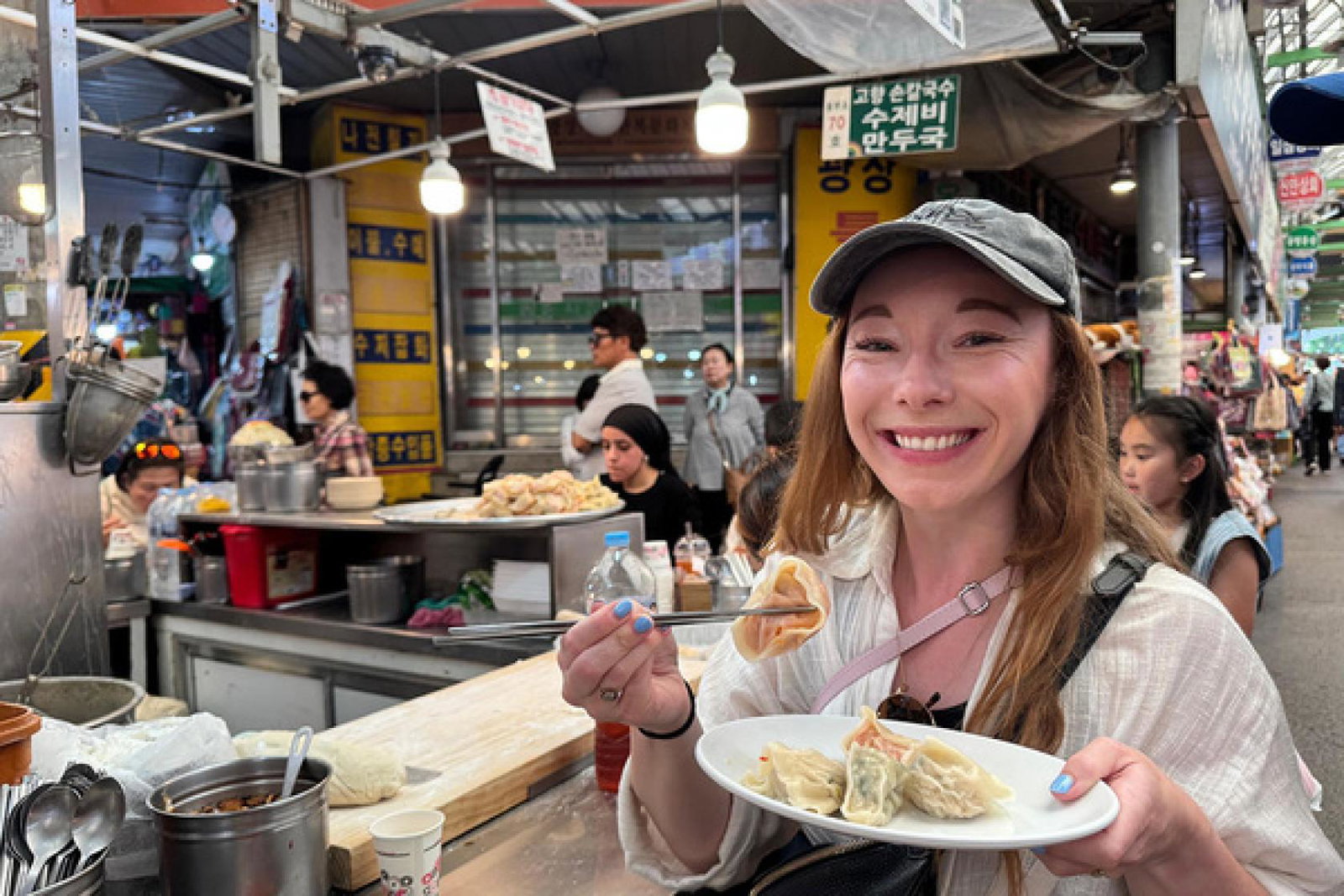
Squid Game fever is alive and well. I’m in the midst of Seoul’s frenetic, 120-year-old Gwangjang Market and I’m gazing down at a stall stacked with circular tins containing dalgona candy cookies, which each brandish a circle, triangle, star or umbrella shape.
If you’ve seen Netflix’s most watched (non-English) show – and if you haven’t, please stay with me – you’ll know I don’t want the umbrella. Luckily, the tin I buy contains a triangle and so I move on with a chuckle to another stall, which happens to be the subject of another Netflix success.
Coby, our Intrepid local guide who has fast become a friend, leads my travel buddy Mel and I there through a labyrinth of vendors cooking bindaetteok (mung bean pancakes), tteokbokki (spicy rice cakes) and dakbal. The latter he fails to explain is spicy chicken feet until a sample of the dish has passed Mel’s lips – the surprise and horror on her face upon reveal sees our fellow foodie travellers erupt into wild laughter. It’s the perfect icebreaker for the first night of our Real Food Adventure around South Korea.
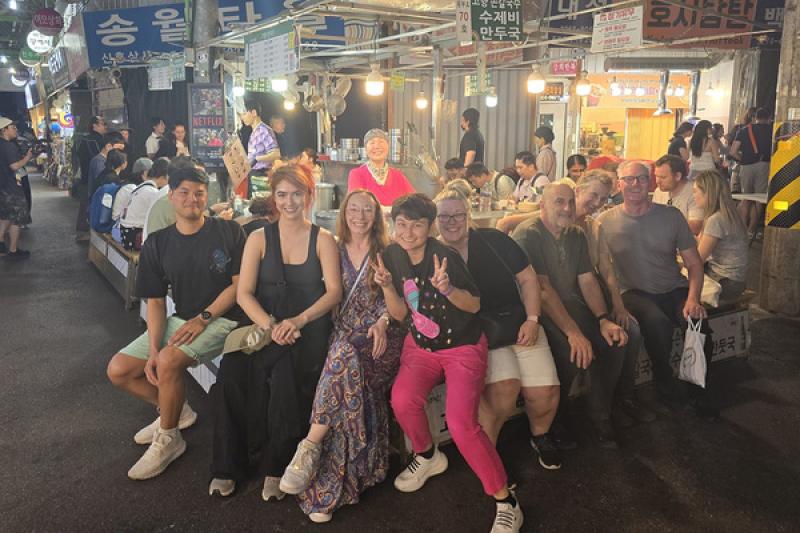
Our group of eight arrive at Cho Yoon-sun’s market stall and Coby swiftly sidles over cradling plates piled with both pork and kimchi dumplings. Cho Yoon-sun is the star of episode six of Netflix’s Street Food Asia documentary (why not advise clients to watch this to whet their appetite for South Korea’s capital?) and she’s not only fishing perfect dumplings out of a gigantic saucepan but expertly slicing rolled dough into noodles using a meat cleaver. Her skill is enough to make the stiffest jaw drop, and she’s so mesmerising that I return later to try her famous kalguksu noodle soup. Like the dumplings, it does not disappoint.
IN SEARCH OF SKILLS
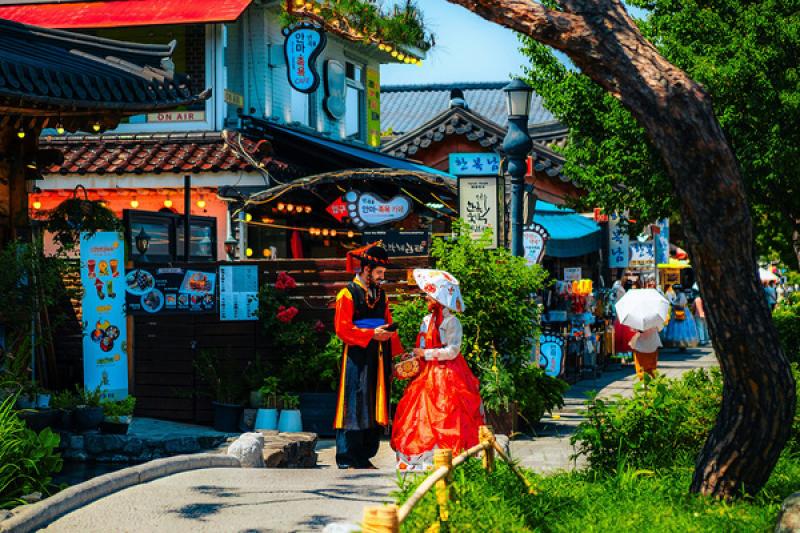
Cho Yoon-sun is one of many skilled chefs we meet during our travels in Seoul, Jeonju and Busan, which we move between on the country’s high-speed bullet trains over eight days. Arriving in Jeonju – a Unesco City of Gastronomy – we’re enchanted by the old town’s cobbled streets, people in traditional dress and historic houses known as hanoks.
Stepping inside the Jeonju Kimchi Cultural Centre, we meet a bonafide kimchi master who Coby describes as a “national treasure”. She’s dressed elegantly in pink and is masking a wicked sense of humour. A demonstration of how to grind ingredients such as garlic, seafood and chilli using an oversized pestle and mortar, then how to smother the mixture over a quarter cabbage, is followed by a taste test.
The kimchi master cuts off small pieces of the finished product and thrusts them towards our mouths saying “yum, yum” with such cheeky vehemence we know she won’t be taking “no” for an answer. I gently bite the titbit from her hand and she watches with glee as my face lights up with surprised delight. We try our hand at making our own kimchi under the master’s watchful eye, and agree the marinating process becomes quite therapeutic.
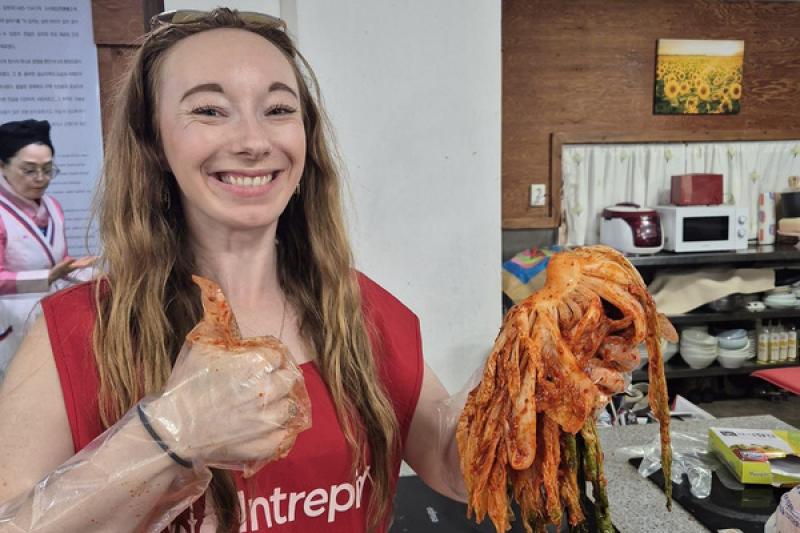
We have a similar experience making gochujang paste in Sunchang Gochujang, which is where the sweet and sticky red chilli paste was invented during the 16th-century and the Joseon Dynasty.
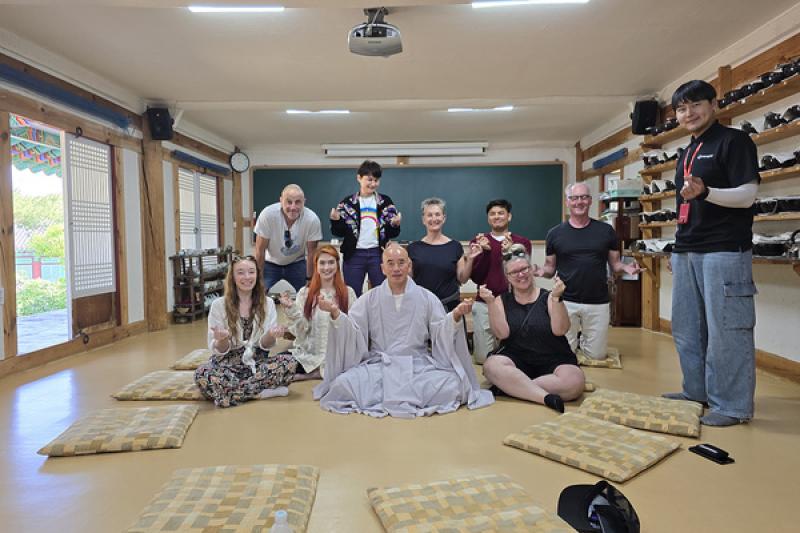
Learning a new skill from a Korean master of their trade is a humbling experience, but perhaps the most humbling moment of the trip comes during a visit to the Girimsa temple in Gyeongju. Here we sit cross-legged in a circle with a Buddhist monk and sip tea while he answers any questions we have to throw at him through our ever-essential translator, Coby.
The monk tells us about his beliefs and daily life, and asks his own questions about our morals, mindset and challenges. An hour goes by where I’m totally transfixed by this human who has no greed and holds no grudges, who says we should love and forgive those who wrong us. Life lessons are in abundance.
My favourite of his sentiments? “Change yourself and you’ll change the world.” The experience is a pivotal point in my understanding of the Buddhist way of life and values and inspires me to relook at my own values... although I’m not sure I’m quite ready to become a Buddhist just yet.
WISHING ON A STONE
What I am ready for, after all the food we’ve been consuming, is a hike to Gujanggun Falls. But this isn’t just any waterfall hike; this is a barefoot hike. Mel and I kick off our trainers in favour of doing it like the locals, who say ditching the boots has anti-inflammatory and anti-aging effects, improves blood flow and is beneficial to a person’s mental health.
I have no evidence of the first two, but I can attest to the third – the cool, smooth earth beneath my feet evokes a sense of freedom that’s good for the soul. Sometimes swapping the path for the stream, I wind 7km through the forest listening to nothing but the sound of flowing water and chirping wildlife.
Along the edges of the path I spot rock towers in their masses; Coby tells me they’re wishing stones, with each stone representing a special request.
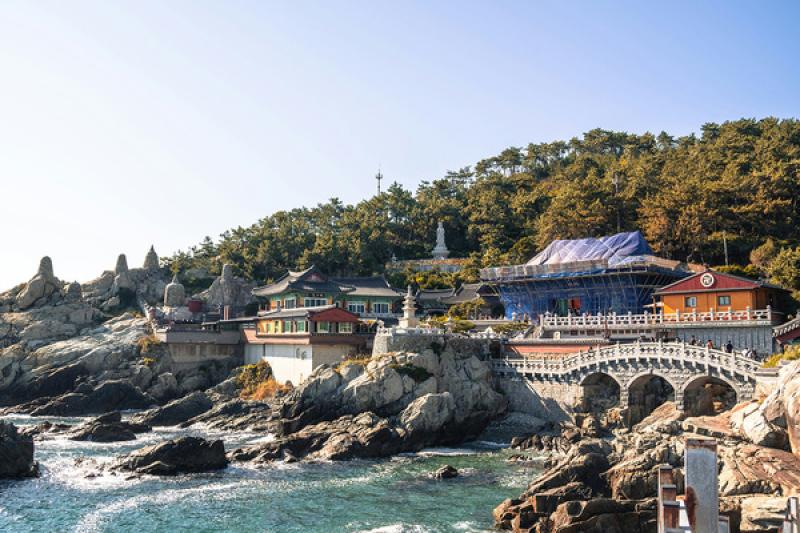
A few days later in the coastal city of Busan I make a wish of my own at Haedong Yonggungsa Temple, which is a striking place of worship built into the rocks beside the crashing waves. I write a message of hope on a golden leaf and bind it to a railing with hundreds of others, then I use a ladle to pour water over a golden buddha’s head three times for good fortune.
My own recent personal health challenges cause me to shed a tear, and it feels as if I leave a piece of my heart behind in that temple.
CULTURAL GEMS
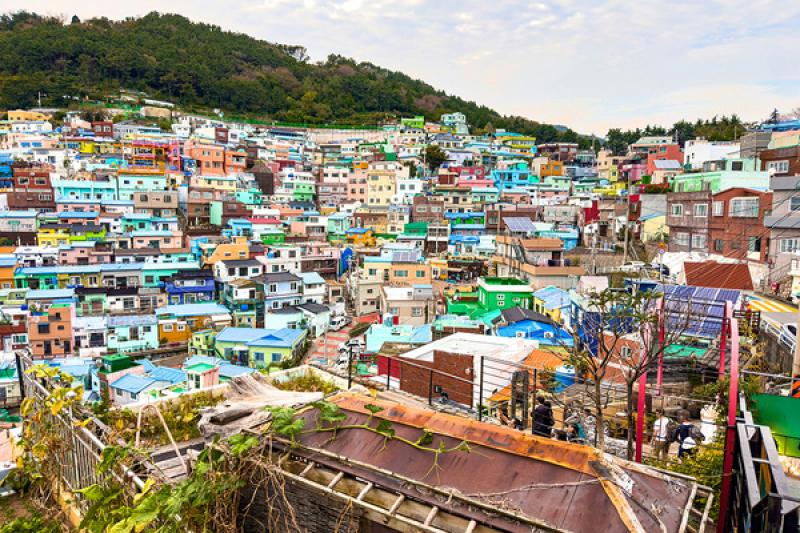
One of our final stops on this Intrepid adventure (besides a prize-worthy Korean BBQ dinner in Seoul’s trendy Hongdae district), is to Gamcheon Culture Village in Busan. This is a hillside town that reminds me of Brazil’s infamous favelas, the houses made from simple materials, accessible only by foot and painted in various hues of blue, orange, green and pink.
Gamcheon might look scruffy from the outside, but look closely and visitors will find treasures within. Think intriguing art galleries, thriving cafes, and shops selling artisan crafts and clothes; all hidden in unsuspecting locations along the village’s steep, winding alleys.