Who would have thought that an olive tree, a symbol of peace, could bring such trouble? And yet, for the native wall lizards of Ibiza, the tree has proved an implacable foe – a Trojan horse that has brought devastation to its species.
Harbouring in the crevices of ancient varieties brought from Spain to the islands by property-owners wishing to landscape their gardens, were ladder and horseshoe whip snakes with a taste for lizards. ‘Since the snakes arrived, nearly 20 years ago, they have eaten some sub-species of the wall lizard into extinction, and severely impacted others,” says Victor Colomar, vet at Consorcio para la Recuperación de la Fauna de las Islas Balears (Cofib), which aims to protect native animal and plant species.
“We don’t have precise numbers, but lizard populations have shrunk dramatically, while the snakes have proliferated.”
Before they arrived, says Victor, the lizards were so abundant that I would have needed to tread carefully to avoid them. As it is, I have to look for their flashes of blue, streaks of green and dashes of orange.
A plague on the islands
“We have a huge problem. The snakes like it here, so they have bred well. And they are good swimmers, so they have travelled to many of the islets surrounding Ibiza, where they are also preying on indigenous birds.”
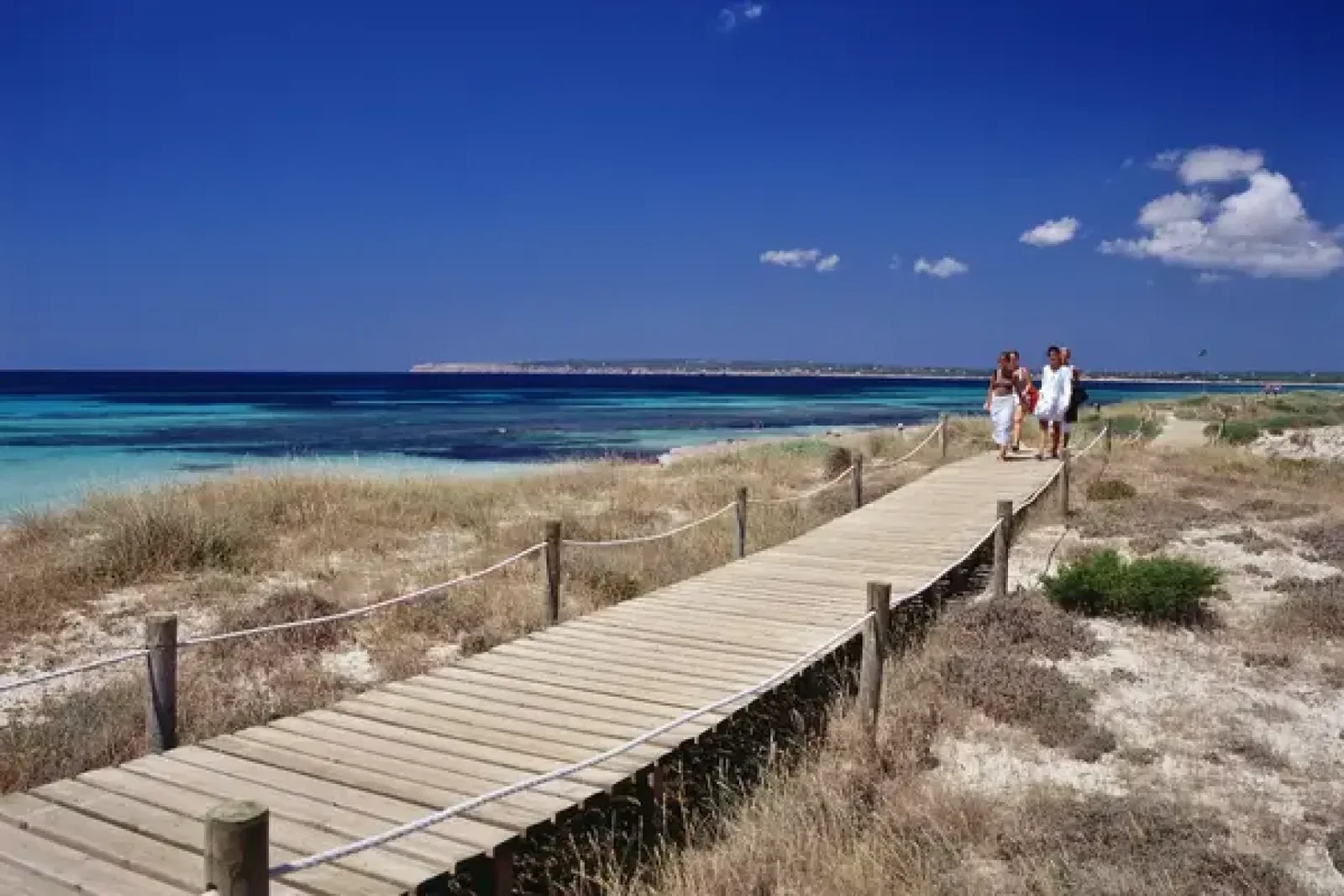
Part of Victor’s job is to solve this problem, and today he and I are walking around a tiny area of the island’s jewel – Ses Salines Natural Park – to see if he has caught any snakes. He checks one, two, three traps – nada. Just the live mice he uses as bait, but not sacrifice – the mice are in a different compartment from the one the snakes fall into, so remain unharmed.
None today, at least not in these ones. But there are 2,000 traps in Ibiza, plus 500 in Formentera and 200 in the islets, and there have been times when they have been very busy: between 2016 and 2024, 12,436 snakes were captured in Ibiza, and 5,901 in Formentera.
Funding for the traps – part of a wider project to protect endemic species – has come from the Sustainable Tourism Tax. Introduced in the Balearics in 2016, it applies to everyone aged over 16, and is collected by hoteliers and apartment owners throughout the islands. Rates vary according to season and type of establishment.
The levy’s purpose is to offset the damage inflicted by tourism with the financing of projects that protect the country’s natural, built and cultural heritage, and the amount of money raised is not insignificant. Since 2016, a total of 297 projects have been approved for a total amount of €861 million financed by the tax, 110 of which have already been completed.
Culture club
Despite being ideally aged to have enjoyed Ibiza’s club scene, an unspent youth means that this is my first visit to the island, and I have reduced the chances of going clubbing even further by coming off-season, when the island hunkers down for winter, and the visitors are an altogether more cultured crowd, chasing the last rays of Europe’s sun. Ibiza old town is a joy for them and me, and I spend time wandering the ancient alleys, enjoying the unhurried pace of not being hustled or bustled.
I have come with the voices of those who have been many times ringing in my ears. Friends urged me to head to the north, telling me that I would fall into an intoxicated love with the ancient forests there, that I would feel invigorated by scrambling up rugged cliffs and then plunging my dusty feet, face and hands in the cool waters of its isolated coves. I don’t manage to get to the north, but even rooted in the city, as I am, I see that, like me, Ibiza has grown up. The ravers might still come for shots of nostalgia, but they’re probably rising at dawn, not heading to bed then.