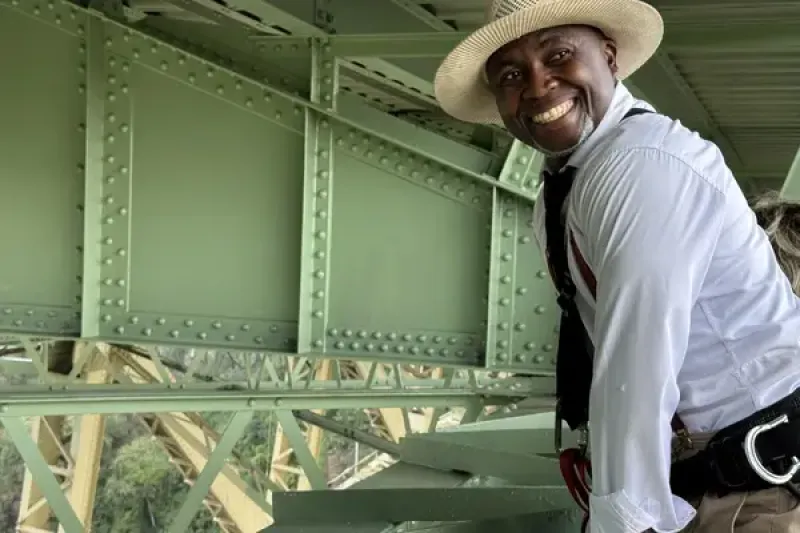
Looking past my feet, through an elegant lattice of steel, I see down, down, down to the Zambezi River. A rainbow glitters above it. To my right, Victoria Falls churns, angry and awesome with end-of-wet-season rains. Ahead of me is Georges Imbault – original engineer of the 120-year-old bridge I’m walking beneath – being played with theatrical gusto by guide Kim Adams.
This year marks the 170th anniversary of Scottish explorer David Livingstone becoming the first European to behold Mosi-oa-Tunya (‘the smoke that thunders’). Now, Victoria Falls – as he renamed the world’s largest sheet of water – is one of Africa’s most-visited sites. A ‘must see’ on many itineraries, it’s easily reached from multiple countries, sitting at the centre of the Kavango-Zambezi Transfrontier Conservation Area (uncoverkaza.com), the largest protected land area on the planet, encompassing parts of Angola, Botswana, Namibia, Zambia and Zimbabwe.
The Falls is also a hub for countless activities, from high-adrenalin thrills to wildlife and community-focused tourism. There’s a lot going on, and it deserves more than a fleeting visit.
“Clients should allow a minimum of three days if they can, four would be better,” reckons Suzanne Walford, product manager at African Pride. “It’s a shame to get there and realise too late there’s so much to do.”
Possibilities include gorge swings, zip-lines and whitewater rafting (best September to December, when water levels are low); visiting the Falls on foot, via vintage-style Bamba tram, by helicopter or microlight; Zambezi cruises or game drives into surrounding national parks; and cultural experiences, such as dance shows and community projects.
Across the border
“It’s worth visiting from both the Zimbabwean and the Zambian sides, for different perspectives,” adds Suzanne. “Border crossings are easy to navigate, and the KAZA Univisa allows entry to both countries. Clients can stay in the towns or choose one of the gorgeous lodges upstream, which offer game experiences; many of these also include a complimentary tour to the Falls. Plus Chobe in Botswana can be visited as a day trip while longer itineraries can be added, visiting other areas in Zimbabwe, Zambia’s national parks, the Okavango Delta or Namibia’s lush Zambezi Region.”
This is what I’m doing: exploring the wider Kavango-Zambezi – but with plenty of time around the Falls. In Zimbabwe that includes not only the excellent Historic Bridge Tour but also the Victoria Falls Theatre’s exuberant dance-and-music show Simunje (I later discover one of my assistant Bridge Tour guides plays Simunje’s puppet elephant).
It also includes lunch at Dusty Road, a funky restaurant set up by Sarah Lilford in 2019 in Chinotimba, a township that’s home to 97% of Victoria Falls’ population but is generally bypassed by travellers. Amid a colourful higgle-piggle of eclectic, up-cycled furnishings, I tuck into a smorgasbord of Zimbabwean dishes, from pickled Zambezi bream to nkukhu eleDovi (chicken in peanut sauce), sadza (maize meal) and panna cotta-like baobab cream.
“There was a really big gap here,” Sarah says. “I wanted to offer something authentically local to visitors.” She also provides employment for 17 Chinotimba residents.
Wildlife CSI
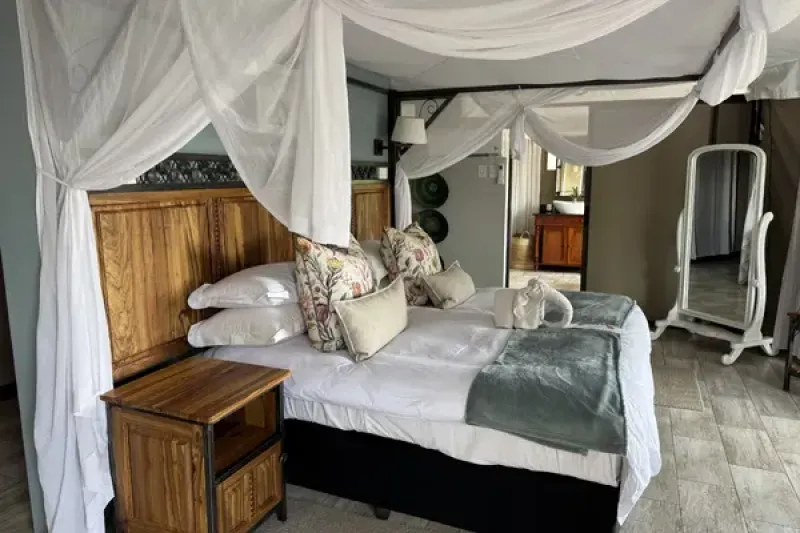
There are plenty of hotels in the town of Victoria Falls but I’m staying on the outskirts, at the elegant Elephant Camp, which offers a proper safari lodge feel. From the private plunge pool on my deck, I marvel at the Falls’ mighty spray billowing in the distance as well as warthog scuffling nearby. Elephant Camp is also close to the Victoria Falls Wildlife Trust, a charity dedicated to conserving and protecting southern Africa’s natural environment via wildlife research, rescue, rehabilitation and even countering crime.
I join a tour, which visits the lab where the Trust’s technicians are like wildlife CSIs, analysing meat samples seized from poachers. The evidence is used in court, explains molecular biologist McDonald Shiri: “Different animals mean different penalties.” The team also runs toxicology tests, to track animal poisonings, and undertakes DNA analysis of ivory, to help identify poaching hotspots.
It’s all essential work, as Victoria Falls is a human/wildlife-conflict pinch point. I encounter many elephants crossing the roads, and many more in unfenced Zambezi National Park, which surrounds the town. Indeed, no need to go far from the Falls for a safari: on a golden late-afternoon drive here I tick off zebra and a huge gang of buffalo before sinking my G&T sundowner watching elephants cavorting in the dust.
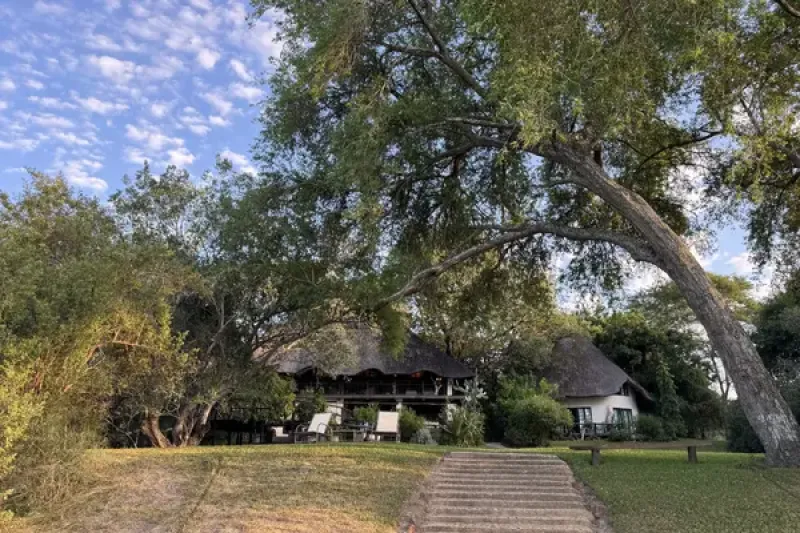
The same bridge I walked below is the one I’m driven over to enter Zambia – surely one of the world’s most scenic border crossings. Here, my home is Waterberry Lodge, upriver from the town of Livingstone; its thatched cottages hide in butterfly-swept gardens that slope to the Zambezi. You could do worse than spend the day simply sitting here, listening to the symphony of birds and the chuckling hippos, watching the monkeys tumble, and then making a foray by boat to watch the sun set on this wide, soul-stirring river.
Feeding success
I do all that, but also pay a visit to Tukongate School. Waterberry has been supporting this project in the neighbouring village since 2009, first sponsoring a teacher to hold classes in the mud-and-pole church. Fast-forward to 2025 and Tukongate is a vast, smart, inspirational operation. It employs 25 teachers, has 250 students and runs an adult education centre. Most impressive is the emphasis on nutritious food. Children are given breakfast and lunch, which motivates them to attend. Even better, much of their food is produced on site.
I watch cook Rhoda slicing aubergines just picked from the school’s 10,000 square metres of organic gardens; there are also chickens, pigs and fish ponds providing fresh tilapia. “There’s been a visible difference in the kids since we improved the food,” explains Waterberry’s managing director Michael Voack. “Their skin has changed, their smiles have changed.” It’s a fascinating visit, that doesn’t feel voyeuristic – we don’t interrupt any lessons, the children ignore us completely.
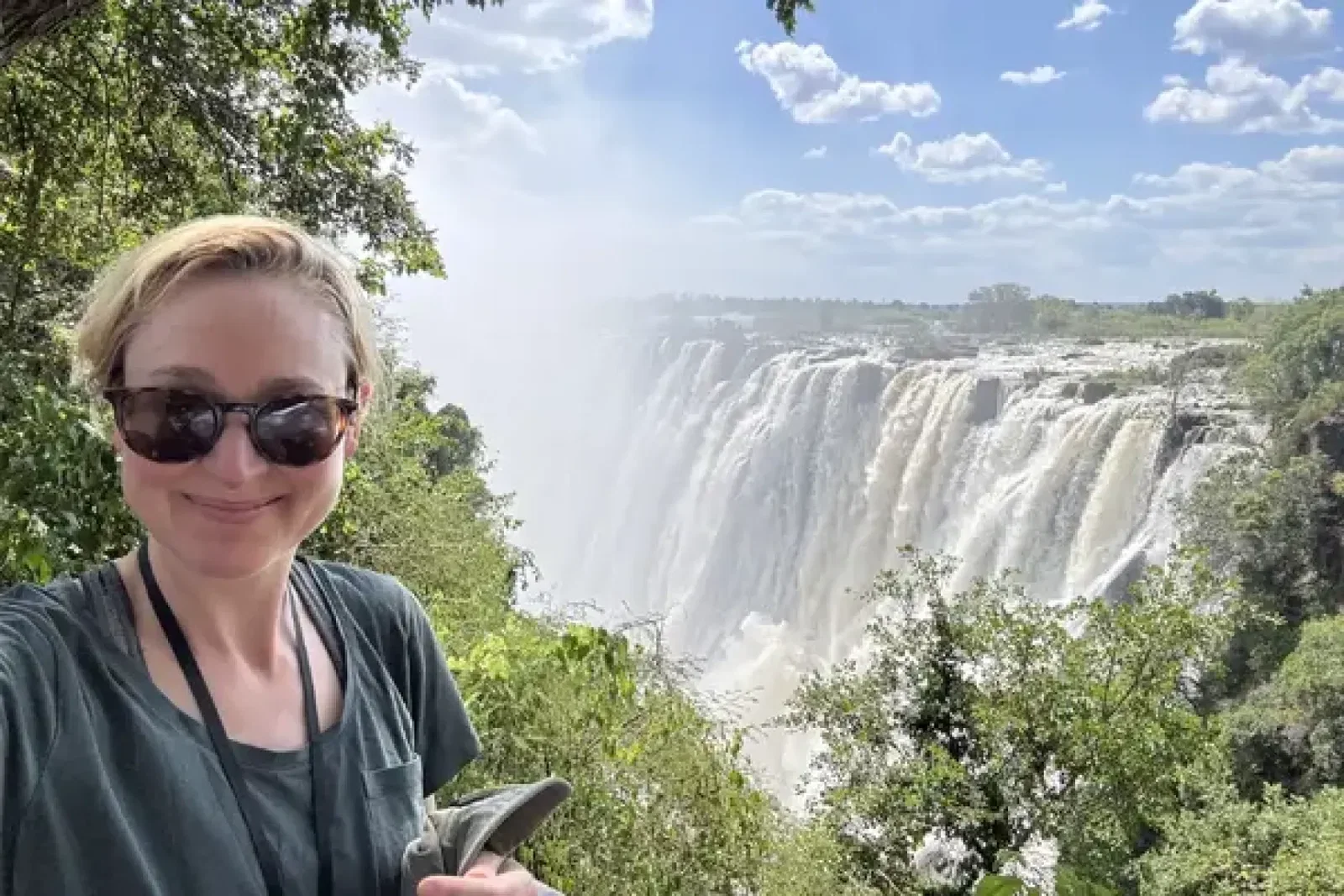
Of course, it would be rude not to visit Victoria Falls itself, which on the Zambian side – the closest vantage – means being both wonderstruck by its brute force and drenched by its torrents. From July to November, water levels drop to a trickle, but in late March the cascade is rain-swollen and roaring: I happily receive an invigorating soak. Then – icing on the cake – I get the chance to survey everything I’ve seen so far from a fish-eagle’s perspective…
Pilot Grant Welch zooms me up from the launch-pad at Batoka Sky Helicopters and almost immediately we’re orbiting Victoria Falls, in all its smoking and thunderous glory. I see rainbows dancing in its spray, the historic bridge arcing across its gorge, elephants lolloping in its untamed hinterlands – and plenty of reasons to stay another day.
Book it: African Pride offers three nights at Elephant Camp and three nights at Waterberry Lodge, based on two adults sharing, from £5,999pp. Departing London Heathrow on 25 June 2025; price includes international and local flights, full-board accommodation, local drinks, game viewing and park fees; african-pride.co.uk