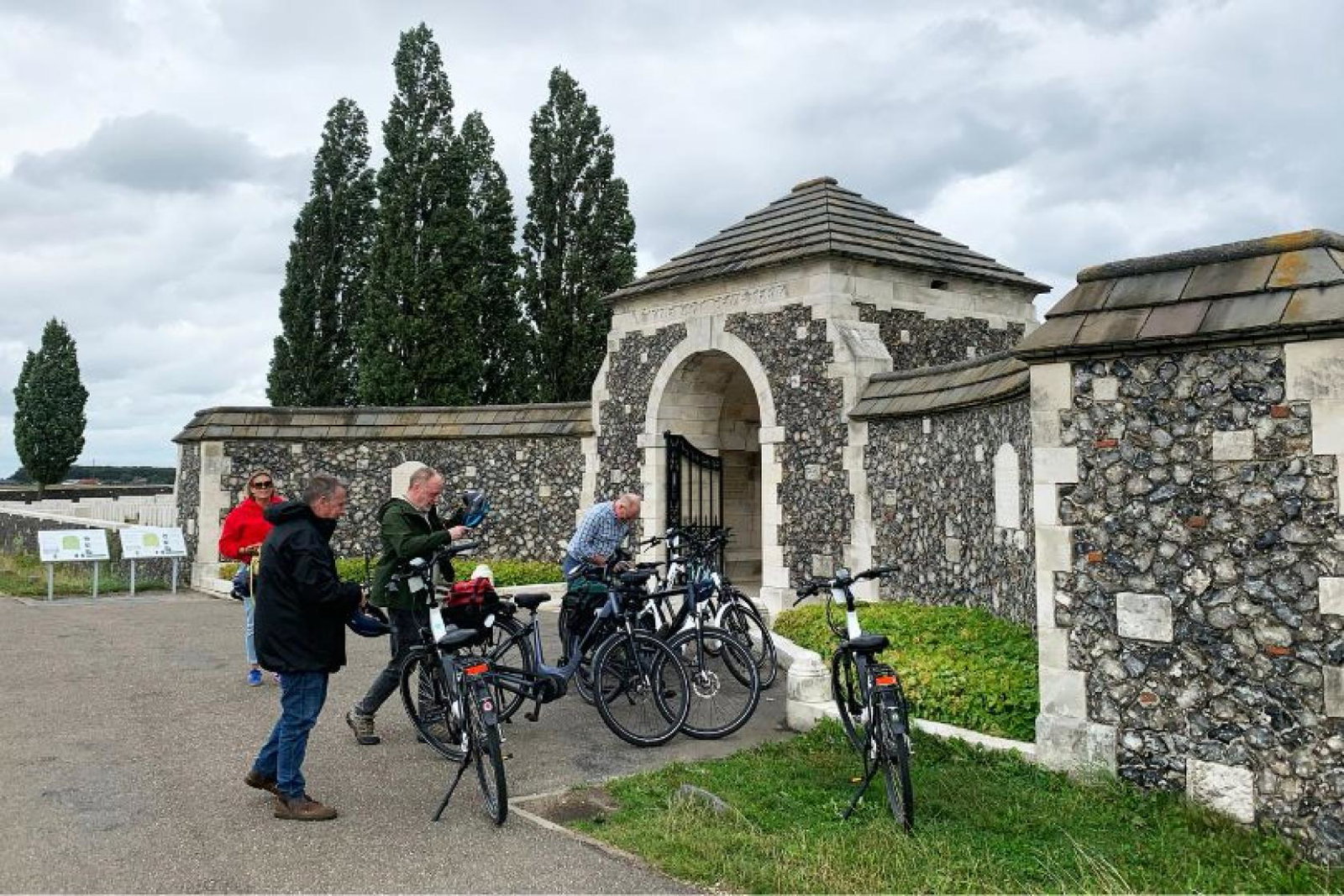
A tuneless trumpeting shatters the rural peace as our bikes glide into Polygon Wood, where hundreds of World War I soldiers are buried.
It wasn’t an amateur attempt at the Last Post, but Tommeke the donkey, who lives at the farm next door. Tommeke likes to greet visitors with his loud braying, so much so that during formal ceremonies he’s fed carrots to keep him quiet.
Meeting Tommeke sums up my trip to Belgium’s Flanders Fields; moments that bring a lump in the throat, and others evoking cartoon grins. I’ve always imagined a tour here meant a solemn coach pilgrimage around the Commonwealth War Graves and – selfishly perhaps – it wasn’t top of my list. I was wrong; add cycling, Belgian beer and wine plus the local cuisine and you have a really rewarding short break.
Getting there means a Eurostar trip to Lille, then a 40-minute drive to Ypres, whose medieval centre was faithfully reconstructed following artillery bombardment. The photos of its destruction are shocking, this was WWI, yet the devastation reminds me of Hiroshima.
Trench warfare
Ypres became critical territory after the Germans were prevented from marching into Paris. They switched their efforts to the Channel ports, sparking years of trench warfare at Ypres as the Allies fought to gain ground around the town to block the German advance to the coast.
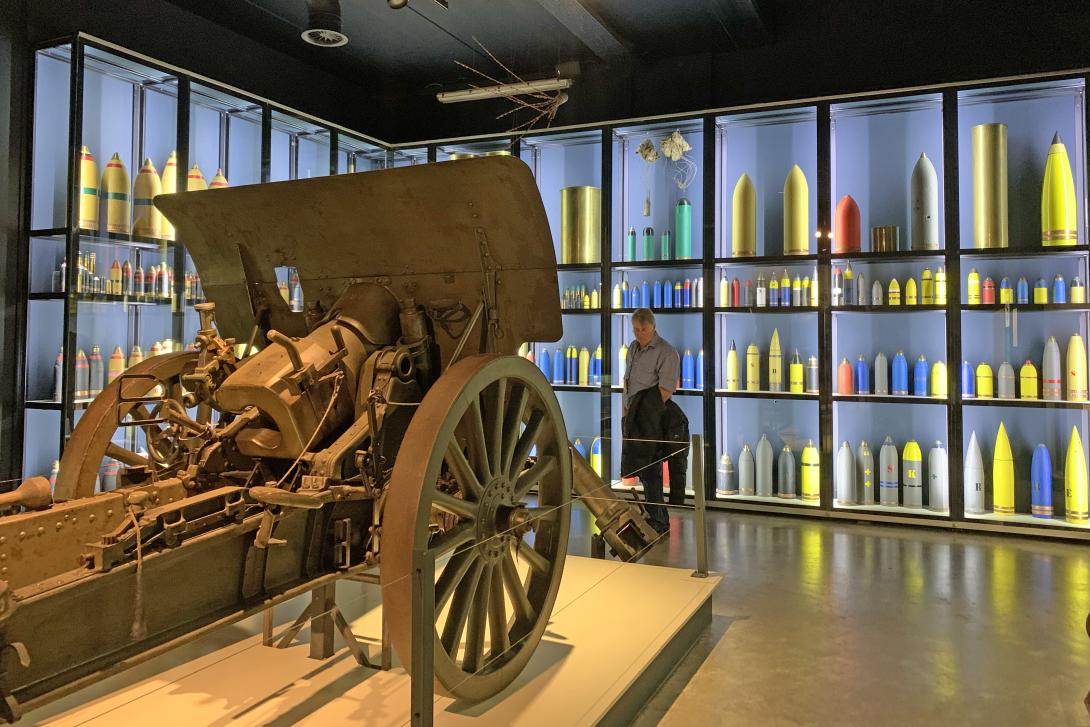
Ypres’ excellent Flanders Fields Museum tells the story in graphic detail. The Belgians opened sluices to flood the land, impeding German progress, but after heavy rainfall, many troops on both sides drowned in the mud. Pictures show young British conscripts with only ‘puttee’ bandages protecting their legs, while officers were issued with knee-length boots. Poison gas and cluster bombs were used for the first time.
Our guide Marnick is passionate about the museum’s purpose: “It’s quite a message to the younger generation that comes here that peace is very, very valuable and the madness that happened here must never happen again,” he says.
Marnick explains how the famous Menin Gate memorial, where the Last Post is sounded each evening, came about. It’s on the road to Menin, the next town from Ypres. “Most of the soldiers that went to the battlefields passed through that road – never to come back,” he says.
There are 55,000 names on Menin Gate of those with no known grave. Later, I join hundreds watching as some junior school age children lay a wreath, and that lump in the throat emerges.
Bike-friendly Belgium
Next day we cycle and it’s a revelation; 90% of Belgian children bike to school and at a junction, a White Van Man pauses politely to let me pass – that doesn’t happen in the UK. Deep in the countryside dozens of cyclists emerge regularly, seemingly from nowhere. I can see why it’s popular: bike lanes are everywhere and the landscape largely flat.
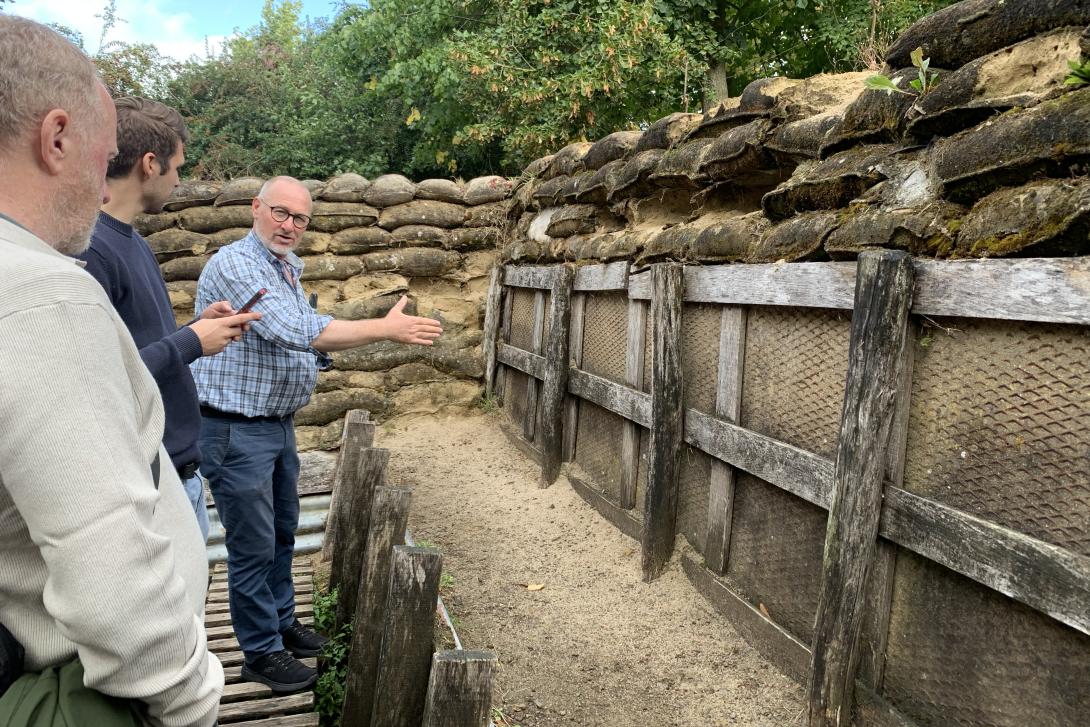
We call at the newly renovated Passchendaele Museum, a Tardis-like 1930s mansion in Zonnebeke. It details the war’s most futile battle, one that in 1917 moved the allied line only five miles in 100 days but cost 125,000 lives due to unseasonably heavy summer rain. Underneath the villa are reconstructed bunkers, while outside are mock-ups of trenches used by both sides. Standing in one on a dry sunny day, it’s impossible to imagine conditions as the landscape became swamp amid incessant explosions, sniper fire and the lesser evils of rats and fleas.
Today, more than 160 cemeteries honour the dead. Among them is Tyne Cot, site of a German stronghold on a ridge below Passchendaele. The carnage that ensued means 35,000 are commemorated there and 12,000 buried, the majority unidentified.
A gastronomic adventure
The battlegrounds are now agricultural, and we zip past occasional sunflower fields and, surprisingly, many vineyards, as we cycle the Legacy Route. Climate change means Flanders is now the Burgundy of Belgium with 60 wineries. The terrain is best suited to sparkling white and it’s excellent.
The wonderful Merlyn Restaurant in Beselare specialises in locally sourced wine and food and gives French gastronomy a run for its money. Over dinner, Passchendaele Museum managing director Debbie Manhaeve tells how a journalist published pictures comparing Flanders’ battlefields with today’s Ukraine frontline. “That’s when people started to realise it wasn’t far from home, and that’s why we need to keep telling the story,” she says.
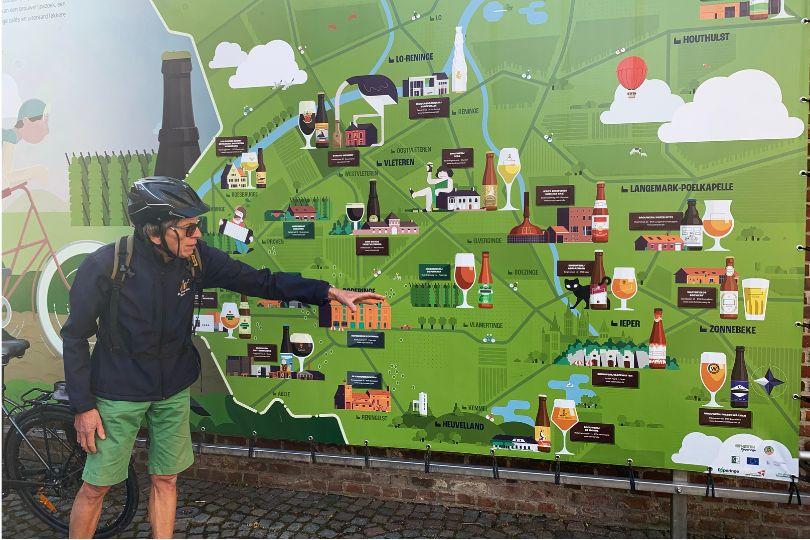
Back on the bikes next day, we cycle a section of one of four Beer Routes along roads almost traffic-free. “It’s a funny combination, isn’t it, beer and war,” says our guide Bertin. It is, but think of Belgium and you think of beer. Poperinge, our next stop, even has a Hop Museum where you can try your hand at brewing.
Beer owes its origins here to Trappist Monks, and the brew at nearby Westvleteren Abbey is sought after worldwide. I’m told it’s powerful stuff and as we pause outside the abbey, I ponder that maybe Trappists are silent because back then they were too sloshed to speak.
We ride on through the grounds of a chateau in woods dappled with autumn sunlight before emerging onto a major road – but one bordered by a segregated cycle lane, this is Belgium after all. Our final stop is St Bernardus Brewery, whose beers, labelled with a ruddy faced monk, are acclaimed worldwide – there’s even a themed bar in Tokyo.
We’ve only cycled 12 miles, and electric bikes make it a breeze, but still, it’s time for a drink. However, one of the beers is 12% proof. “That’s what we call a nightcap,” I’m told. It’s 1pm so I settle for something less potent at Bar Bernard, the brewery’s floor-to-ceiling glass restaurant that would not look out of place in Paris or London. On its rooftop terrace, I scan the surrounding vineyards as plates of waffles, Flemish stew, steak tartare, seafood and frites pass by.
It's the kind of restaurant where you can dress to impress or, like two locals, rock up in dayglo orange Lycra – once again, I’m among dozens of cyclists. Their bonhomie makes me think there’s no right or wrong way to experience Flanders Fields; it’s an important, poignant region, but doesn’t have to be a sombre experience. Go there and pay your respects but also eat, drink, cycle, and meet Tommeke; you’ll doubtless agree.
Book it: Byway Travel offers a three-night Flanders Fields package from £613pp. The price includes Eurostar travel to Lille plus hotel accommodation with breakfast; byway.travel
In Ypres, Biking Box Cycle Tours organises bike hire and guided or self-guided itineraries on electric or conventional cycles; bikingbox.be/nl