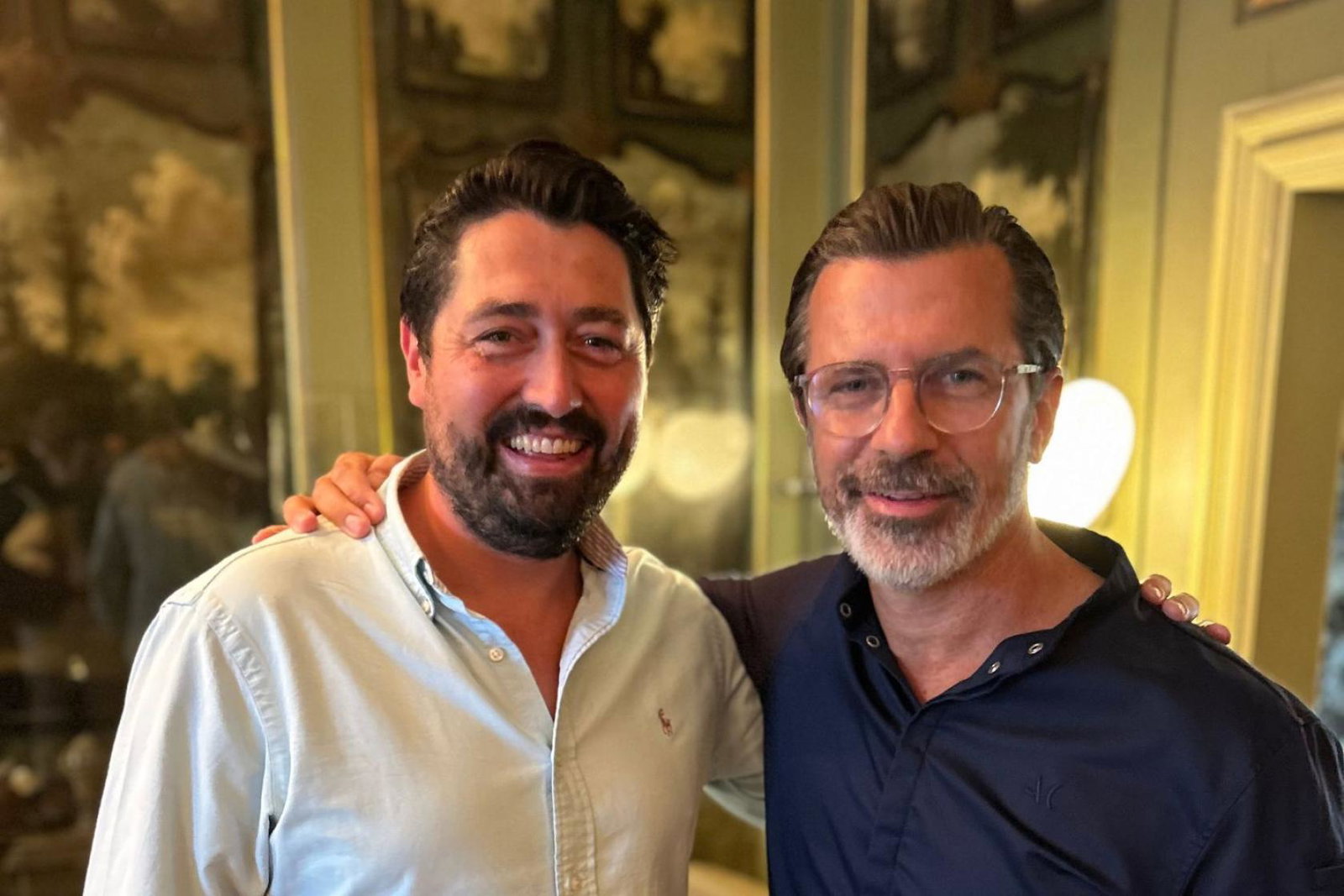
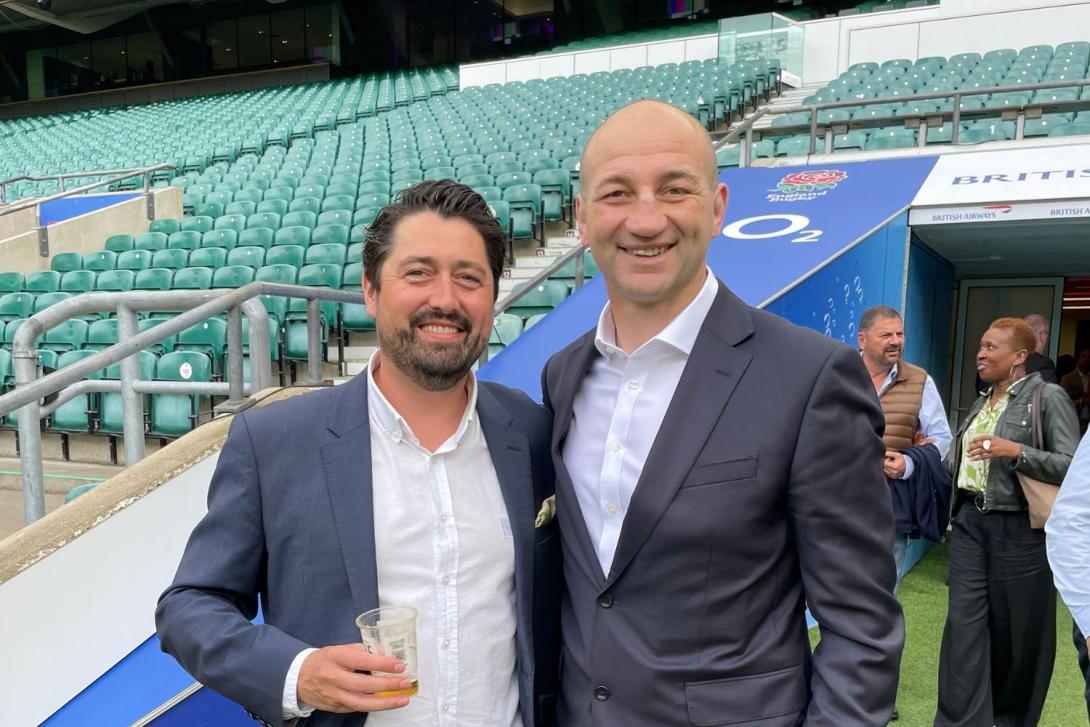
Co-founded by brothers Alex Cheatle and Andrew Long in 1998 out of their shared London flat, Ten runs concierge services on behalf of millions of members – either individuals or as part of services offered by private banks and premium card issuers.
But many people in luxury travel may not have heard of it. Services are run on a white-label basis, with the company’s priority having been discreet service provision, not bold brand statements.
From NatWest Black Concierge Service to HSBC Private Banking, Ten is the driving force behind what these organisations offer their top customers, giving on-demand services that can “unlock exclusive access, privileges, and upgrades across travel, dining, entertainment, and lifestyle”.
“Whenever we partner with a private bank, we open an office in that market so we can provide genuine 24/7 service to members,” explains Ross Pakes, Managing Director of Ten’s newer Private Travel division.
“We’re in South America, North America, APAC, EMEA – we look after the highest spending clients of many of the biggest banks in the world.”
This level of service provision is nothing new of course – either by Ten or other membership-driven concierge brands – but what Pakes and his team are now creating pushes things up several notches. After nearly three decades, they’re entering the fully-fledged, tailor-made luxury tour operating space.
It’s not surprising, given Pakes’ previous 17-year run with Abercrombie & Kent.
Historically, Ten’s role has been firmly on the lifestyle side: think table reservations, VIP tickets, private shopping.
“You’ll often hear, ‘I use Ten through my NatWest card for restaurant bookings in London,’” Pakes says. “But they haven’t really thought of us as someone who can own their whole travel programme.”
This is what Pakes intends to change. With a global database of more than 420,000 high-net-worth individuals already engaged with a Ten-based service, the company has identified a significant opportunity.
“These are loyal members who already trust us for lifestyle,” he says. “The strategy now is to show them we can look after their entire travel needs – not just fragments – particularly at the high-net-worth and ultra-high-net-worth level.”
A different kind of competitor
Pakes worked his way up through A&K over the past two decades, beginning as a Facilities Administrator before progressing through a range of roles including Product Assistant, Product Manager and Regional Manager. In 2017, he was appointed Product Director.
His broad experience across luxury product development, commercial strategy, sales leadership and managing high-value client and supplier relationships within the HNW/UHNW travel sector have clearly been an attractive pull for Ten.
Since joining in 2024, he has built a team of 25 and continues to look for the right people to build out the vision for Private Travel.
On the surface, this operation may look like another entrant into an already crowded luxury space. But according to Pakes, its structure, and therefore the way it competes, is very different.
“At this level, people still fundamentally buy from people,” he says. “They might use AI or do their own research, but when the world turns upside down they don’t want an anonymous call centre. They want a named expert who knows them.”
Where Ten also diverges from a traditional tour operator is in its business model. Yes, getting the price right is important, but chasing margins and commission – not so much.
“Our core revenue comes from the banks paying us to serve their members,” he explains. “We’re not primarily driven by commission or margin on every single booking. Our ‘north star’ is to be the most trusted service in that member’s life, and that naturally changes the tone of the relationship.”
If an operator/agent’s customers are potentially considering what upper-echelon membership of their bank could offer them, then this matters.
Ten can be highly competitive on pricing without needing to squeeze every last percentage point out of each trip. It also allows for more flexibility in how itineraries are structured, Pakes believes.
“If someone wants a full white‑glove, fully packaged itinerary somewhere like India, we can design and deliver that,” he says. “Equally, if they want a super‑flexible, best‑rate hotel‑only stay in the Cotswolds, cancellable 24 hours before arrival with value‑adds, we can do that too. The terms and conditions flex according to how they want to travel.
“Members might also ask us to just hold the flights they want now, but build the hotels later and then add dining and tickets afterwards. For a lot of travel companies, that’s operationally a painful thing to do. For us, it’s normal. Concierge has always been about dealing with what’s in front of you.”
Limited places available: apply by 17 July
Be among the first travel advisors to attend Black Book, the new luxury travel event launching this October.
Designed to connect agents with leading luxury brands through pre-matched one-to-one meetings, Black Book offers a unique opportunity to build valuable new partnerships and grow your luxury business.
Places are limited and applications close on 17 July. Apply now to secure your chance to attend.
Lifestyle + travel: the Ten model
The fusion of concierge and travel is where Ten believes it has a structural edge, and where its growing private travel arm may both collaborate and compete with existing players.
“Our heritage is concierge,” says Pakes. “So we’re already set up to handle flights, accommodation, restaurant reservations, tickets and experiences as one continuous journey. We have more than 1,100 expert colleagues worldwide. In Japan alone, we’ve got well over 100 people servicing private banks’ customers.”
This global network gives them something of an edge too: when a member from anywhere in the world needs a recommendation for their trip to Tokyo, for example, the request is handled by Ten’s team on the ground there.
“They’re dealing everyday with high-spending locals,” he says. “We’re not just sending clients to the obvious tourist spots. We’re booking the places where locals with money actually go.”
For UK agents and operators, that raises an obvious question: is Ten a partner, a competitor, or both?
“It depends on the context,” Pakes admits. “We’re not out to raid other people’s books: it’s a small industry and we’re very conscious of that. But we do have this huge existing member base already inside our ecosystem, and what we’re trying to do now is educate them about what we can do for them in a wider travel sense.”
Ten is also a big potential employer, with its private travel team drawn from across the trade – and deliberately structured to behave more like a network of “empowered advisors” than a classic “call centre”.
“We’ve got people from traditional tour operators, people from hotel representation, and people who’ve come across from concierge,” adds Pakes. “But the common denominator is mindset, not job title. We want people who are entrepreneurial, comfortable with ambiguity, and happy to behave more like independent agents.”
Private travel managers “own” their book of members and relationships in what he describes as a flat, collaborative structure within Ten. Where their own destination knowledge is lighter, Ten leans heavily on partner DMCs, and brings them into the member relationships.
“We can put a DMC on a call with the member,” he explains. “Japan is a good example again, as that DMC acts as an extension of Ten alongside the private travel manager. The member gets deep expertise in real time, and our own team learns from that interaction.”
He is candid that some DMCs are wary when they hear the word “concierge”.
“They’ve seen situations where they’re reduced to just offering bare transfers and hotel bookings,” he says. “But we work hard to position ourselves differently – we want proper, high-value itineraries when that’s appropriate, and we want those on-the-ground DMCs visible as experts, not just hidden back-office.
“For DMCs, the upside is access to a new, very targeted demand stream. But yes, they need to be comfortable with this member-first, very flexible way of working.”
In with the old
While the travel philosophy and product development has yet to be built, Ten will be pushing on an open door when it comes to bookings – with a large, warm audience of already engaged members.
How does he think they may have been holidaying before this latest development at Ten?
“Some of our members have always been happy as DIY travellers,” says Pakes. “Others were already using us for bits and pieces – a flight here, a hotel there – while placing their big itineraries with traditional tour operators or independent agents. And then there’s a group who might previously just come to us for elements like tickets, especially sports and entertainment.
“Our message is more a case of you already have us in your life, you already trust us for certain things – let us at least quote on the whole trip and show you what we can do.”
One new colleague – having joined from a luxury tour operator and being “brilliant on sports travel” – now finds that members who previously booked only their Formula One or tennis tickets through Ten are asking the company to handle the entire trip around it.
“It’s easier and more reassuring for them to have a single point of contact who understands their preferences,” Pakes notes.
Conservatively, Ten estimates around 10-15% of its global database of several million people could be classed as high- or ultra-high-net-worth individuals – and that’s just among those who have registered for the concierge.
There is a further pool of eligible cardholders who are yet to deeply activate their benefits. “Private travel is one of the most effective hooks we have to bring those people into the ecosystem,” Pakes explains.
Global rollout, constant service
While Ten originated in the UK and Pakes is based here, the build‑out of private travel is firmly global.
“In Brazil, we’re building a team of six or seven,” says Pakes. “Right now, they sometimes route requests into the UK if the client is happy to speak English, but the idea is to grow proper local capability.”
In North America, Ten has a team in Toronto it expects to at least triple; meanwhile in Zurich, a six‑strong team works closely with an extremely wealthy Swiss membership. There is also a presence in Sydney, and strong growth prospects in the Middle East.
Recent events in the Middle East have also highlighted what Ten means by ‘24/7 support’.
“We had a number of members in the region, particularly via our Swiss team, when the situation deteriorated,” Pakes notes.
“Our advantage is that 24/7 doesn’t mean one person with an emergency phone. It’s a proper follow-the-sun model.”
A call made in the middle of the night in Europe might be answered in Mexico or South America “in perfect English”, with no long hold times.
That allowed Ten to move quickly, evacuating members from affected areas or rerouting them to safer alternatives in the UK or Europe. So what are the ongoing impacts of the Iran crisis on travel sentiment?
“We’re seeing some hesitation on new bookings – people are taking a bit longer to commit – but we haven’t seen mass cancellations,” Pakes says.
“It always comes back to the ‘why’ behind the trip. If the purpose is family time, remote working or a special celebration, we can usually find a way to achieve that somewhere else.”
That focus on “why” someone is travelling – not just where – is quickly becoming a trend in luxury travel, and is central to how Ten positions itself. This movement has clear, potentially positive, implications for agents and operators targeting similar clients.
“Is it about keeping the family together during busy work periods? A milestone anniversary? A particular restaurant, exhibition or concert?” asks Pakes.
“A trip might be built around a major sporting event or even a Taylor Swift concert on the other side of the world. Travel is the framework, but the lifestyle element they want to achieve is what really matters.
“We have this extraordinary global database already in our ecosystem,” says Pakes. “The real work is educating those members about what we can do for them in travel – and then earning their trust, trip by trip.”