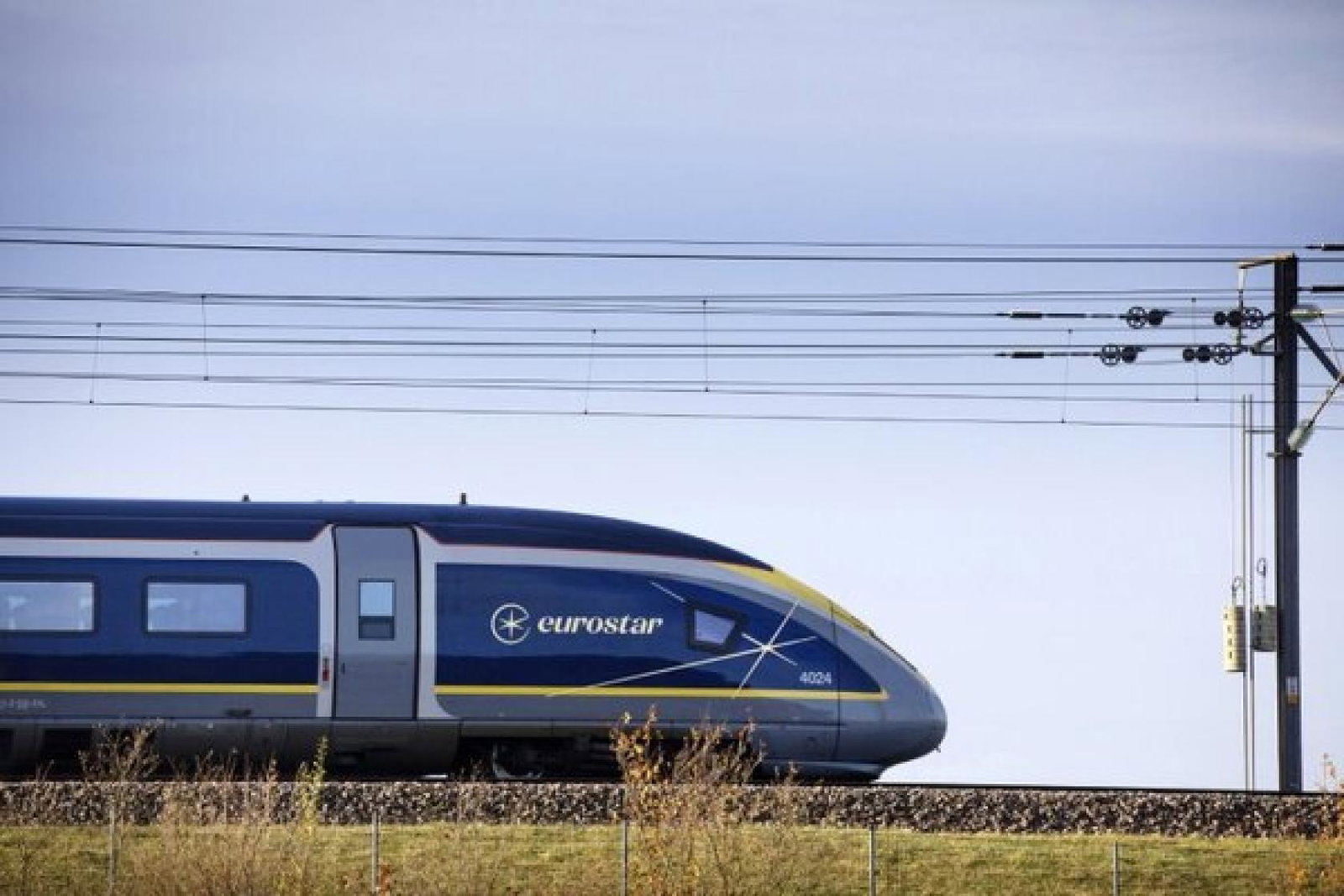
Launched in 1994 following completion of the Channel Tunnel, Eurostar has been the sole operator of intra-continental rail services between the UK and mainland Europe ever since, seeing off several ultimately failed attempts to challenge its supremacy.
But the landscape looks as likely as it ever has to change in the near future; in November, it was reported Virgin Group founder Richard Branson was keen to re-enter the rail market, four years after Virgin Trains ceased operating in December 2019, to take on Eurostar.

Start-up Evolyn is another competitor in the mix; it is looking to acquire up to 12 trains from French manufacturer Alstom with a view to launching services between the UK and Europe in 2025, promising the nearly 20 million passengers who travelled with Eurostar last year "a modern, innovative and sustainable alternative".
Then there’s Heuro, another new company promising "seamless" intra-European connectivity with "fair and transparent pricing"; led by Dutch businessman Roemer van der Biggelaar and his father Maarten, Heuro intends to start operating services between Amsterdam, Brussels, Paris and London from 2028 – competing directly on Eurostar’s core routes.
Eurostar, for its part, took a beating during the pandemic as demand dried up, with few travellers any more inclined to spend a couple of hours in a tin can hurtling through the French countryside than they were one cruising 38,000ft above it.
However, its protracted merger with fellow European rail operator Thalys, which was proposed just a few months before the onset of Covid-19, has now been completed, along with a brand overhaul. Passenger numbers, meanwhile, rebounded 22% to 18.6 million last year, with the new-look Eurostar targeting 30 million annual passengers by 2030.
Another boost for Eurostar is the 2024 Olympic and Paralympic Games in Paris. The operator is rail partner to the British, Dutch, German and Belgian Olympic teams, and expects to carry close to two million passengers on its Paris routes during the two Games.
Price imperative
For agents and rail specialists, competition can only be a good thing; it increases choice, and typically drives up quality of service. James Hill, a consultant at slow travel specialist Byway Travel, said he was enthused by the prospect of new market entrants.
"Additional trains would mean more capacity and potentially more competitive prices – our customers would certainly see the benefit," he told TTG.
"We love Eurostar’s services and use them in most of our itineraries, but we’d be interested in adding competitor services alongside them, especially if there are lower-cost options."
Hill added any efforts to expand the market would be welcome and would likely lead to more people travelling by rail, with ticket prices still among the main barriers to more widespread demand for rail travel and rail breaks.
Another potential benefit of new entrants would be a wider range of ex-UK rail routes, including ski services. Eurostar and Travelski’s direct ski trains to Moutiers and Bourg St Maurice – gateways to the French Alps – were casualties of the pandemic, and have been replaced by services featuring a change at Lille. Another was Eurostar’s Disneyland Paris service.
"There are a lot of skiers who would like to see the return of direct services to the French Alps,” said Ski Solutions chief executive Craig Burton. Indeed, Inghams partnered with Eurostar to offer eight weekend ski train services this winter, which got under way in December, serving 22 resorts across four countries.
Another direct route the trade hopes to see return is London to the South of France, which was axed by Eurostar in 2020. “Wearing my cycling hat, I would like to see more services to the Mediterranean and to the likes of Provence, Nice or Marseille,” added Burton, who also owns cycling tour operator Cycling for Softies. “They would all be good long-distance routes that we would love to see established."
Flight replacement
Here in the UK, strikes, high fares and weather-related disruption ensure the rail network operates under a near-permanent cloud. And with plans for HS2 now stripped back to a bare-bones service, a rail revolution here seems unlikely.
Europe, meanwhile, has forged ahead. France’s iconic TGV network has long been the envy of Brits who spot them wizzing across countryside vistas on their summer holidays, while Italy and Spain have in recent years invested heavily in national and international rail infrastructure to create viable and affordable alternatives to domestic and short-haul air travel.
Renfe’s monopoly on high-speed rail in Spain ended in 2021 with the launch of Ouigo Espana and, a year later, Iryo, whereby Spain became the first European country to have three competing high-speed rail companies. "High-speed rail passengers in Spain surged by 76% to 23.7 million in 2022, largely due to the competition among these companies,” said Hill.
“This boom in rail travel, offering more services and lower prices, has made it a strong competitor to domestic flights, especially on routes like Madrid to Barcelona where 80% of travellers prefer taking the train," he added.