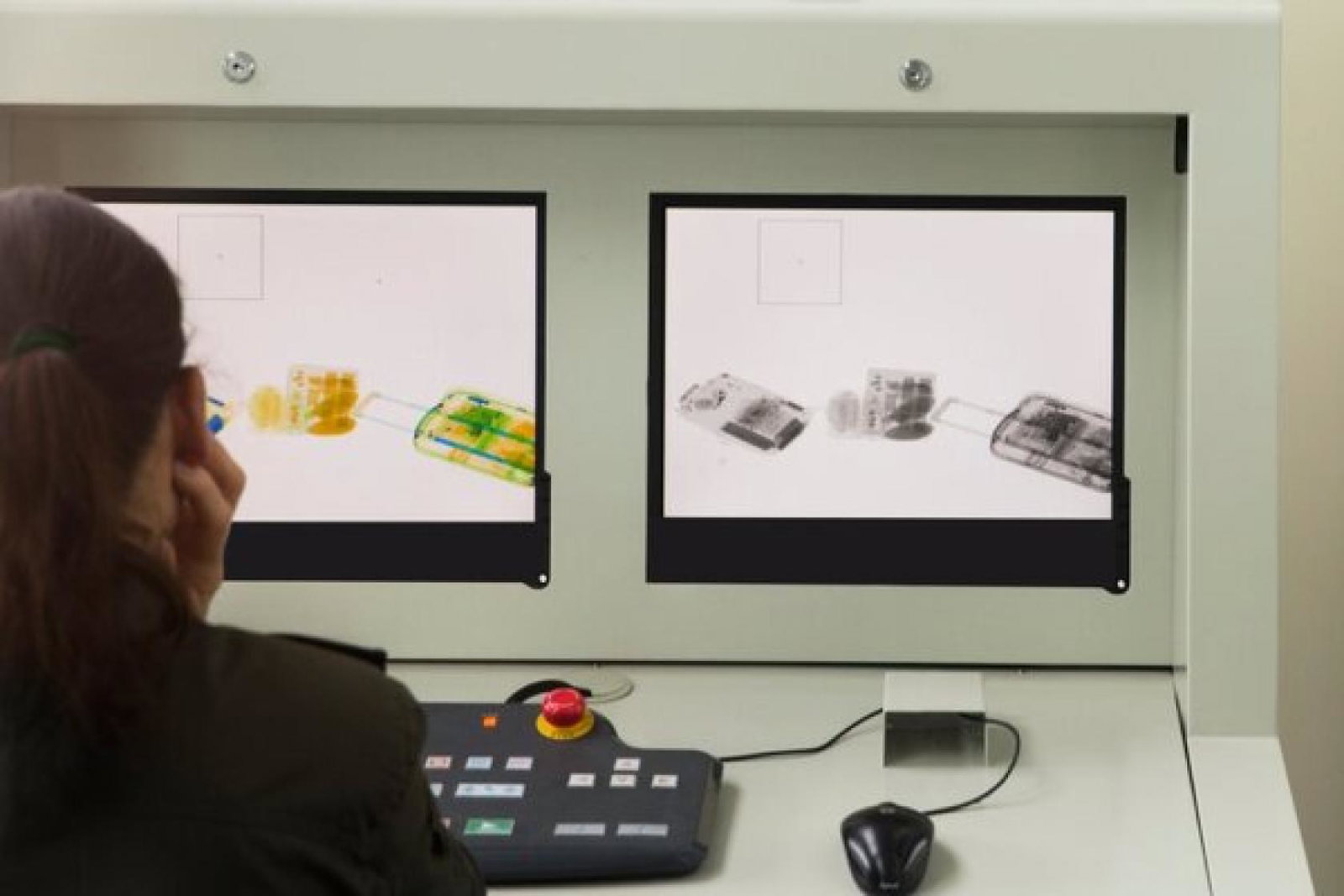
The lack of a uniform landscape looks set to prolong existing confusion about the rules when it comes to clearing security at UK airports; most airports still impose a 100ml liquid limit, with some allowing liquids and electronic items to remain in bags and others not.
Edinburgh airport this week became the first Scottish airport to lift the long-standing 100ml rule, and now operates a two-litre restriction on liquids. Birmingham has also upped its limit to two litres.

However, Abta said: “It’s best to take a better safe than sorry approach and stick to 100ml, because it’s not necessarily the case when you return or are in transit that you will be allowed more, so it’s best not to get caught out.”
‘Momentous day’
The situation has arisen after UK airports were initially given a June 2024 deadline by the Department for Transport to upgrade their scanners, an initiative that was designed to speed up passenger processing.
However, most airports were given extensions and are still purchasing new equipment and redesigning their security halls to fit larger scanners and more security lanes. TTG has asked the DfT for an update.
The new rules are in force at Birmingham, which now has a two-litre limit on liquids, pastes and gels in hand luggage, with no limit on the number of containers. However, one point of potential confusion is insulated bottles, which must be empty.
Containers must be left in hand luggage and not put in plastic bags. Similarly, all electricals must now be kept in hand luggage during the security search. However, pockets must be emptied of phones, keys, coins and tissues, although watches can be left on.
Edinburgh airport’s transition to a two-litre allowance follows a £24 million investment in eight new scanners. Its rules are now the same as Birmingham’s.
Chief executive Gordon Dewar said: “A whole generation of travellers have only known the 100ml rule to be the case so it really is a momentous day as we become the first airport in Scotland to lift the rule since it was introduced in 2006.”
Many airports, such as Gatwick, now allow liquids and gels to remain in hand luggage, but have retained the 100ml limit. However, most UK airports still impose the 100ml limit and require passengers to remove them from bags, including Heathrow and Manchester.
Similarly, holidaymakers using many of Europe’s smaller airports will find themselves subject to earlier security roles on their inbound journey owing to a lack of new scanners, meaning local purchases of liquids will be confiscated.
Dewar added it was “important passengers continue to check with the situation at their return airport as not all airports will be moving away from 100ml just yet”.
‘Likely to cause confusion’
The Advantage Travel Partnership said agents had a role to play in advising clients. Chief executive Julia Lo Bue-Said said: “Removing the 100ml liquid rules for passengers is a positive step forward for air travel. However, having individual airports set their own timelines on lifting the 100ml restrictions on liquids is likely to cause confusion to travellers this summer and will result in delays.
"The slow rollout has already led to confusion and frustration, and travellers are likely to be tripped up if the rules continue to change as short notice and vary for different airports.”
She urged UK airports to work collectively with the government to ensure “very clear messaging, adding: "We would advise travellers to check the rules that are in place for the airport they are departing from before travel. It is also important for travellers to be aware of the rules of the airport they are returning from as they may differ."
After the UK reintroduced a blanket 100ml rule early last summer, the EU took a similar step later in the summer, enforcing a wholesale switch back to the 100ml rule.