New regulations
There’s no getting away from the fact that 2018 is going to be a year of change for all travel companies, with a wave of new legislation coming into force that will have a significant impact on how the travel trade does business.
Brexit may be coming, but it won’t arrive in time to stop a range of European Union directives from being enacted into British law long before the UK’s current planned leaving date of March 2019.
First up is the Payments Services Directive 2 (PSD2 for short), which will be introduced on January 13.
This includes a range of changes affecting the payments industry, but the main impact for agents is that it bans all surcharging for customers using their credit and debit cards. Agents can no longer pass their card costs directly on to the customer in the form of a surcharge – although they can still introduce a booking fee as long as it is applied across all payment methods.
Several operators have agreed to increase commission levels as a way to, at least, partially compensate agents for this lost revenue.
Hot on the heels of PSD2, comes another acronym travel companies can’t afford to ignore – GDPR – also known as the General Data Protection Regulation, which will come into effect from May 25.
GDPR gives consumers greater privacy rights, including the choice to be forgotten, and will force organisations to be more transparent about the personal information they hold on clients. These new rules mean that travel firms will have to reassess their digital marketing strategies to make sure they comply with the new requirements.
If that wasn’t enough for agents to cope with, the new Package Travel Regulations are due to come into force from July 1 – although, as reported in TTG last month, some in the industry think this could be postponed due to the delays in the consultation process by the Department for Business, Energy and Industrial Strategy (Beis).
The excuse for this delay has been last year’s “snap” general election, although the distraction of Brexit cannot be helping. The problem for the industry is that travel firms may only have a short time to implement the changes needed to comply with the new regulations when they are eventually revealed by the government.
The long-awaited new rules – the first updated regulations since 1992 – are designed to take into account the rise of low-cost airlines and bookings via the internet over the past two decades.
One of the major changes is to introduce Linked Travel Arrangements, which are not classed as a package holiday and offer a lower level of consumer protection. Most commentators within the industry admit that the new regulations are likely to make things “more confusing” for both the trade and consumers.
The regulations also come at the same time as the government looks at further reform of the Atol system, the value of which has been under even more scrutiny following the government’s decision to repatriate all Monarch passengers, regardless of whether they were protected under the Atol scheme or not.
“[New package travel regulations] are designed to take into account the rise of low-cost airlines and bookings via the internet”
Sickness claims
One of the biggest topics during 2017 was the huge surge in gastric sickness claims being made by holidaymakers. But fortunately there are positive signs that the tide is turning in the industry’s favour against these claims – many of which have been found to be fraudulent.
The number of sickness cases against travel companies increased by 500% between 2013 and 2017 as law firms and claims management specialists encouraged holidaymakers to make claims.
The travel industry started fighting back more effectively last year – a couple were jailed in October for making a fraudulent claim in a private prosecution by Thomas Cook, which hopefully will act as a deterrent to other claimants.
After intense lobbying by Abta and the wider industry, the government has put forward proposals that would fix the costs of these sickness claims and stop claims management companies from racking up huge legal bills when they pursue these cases. This should “level the playing field” between holiday sickness claims and other low-value personal injury claims going through the courts.
Fake sickness claims are a problem that the industry has hopefully already seen the worst of – Cook’s chief executive Peter Fankhauser has said he expects “a massive drop in claims” in 2018.
Despite this optimism, there will still be an anxious wait to see the exact policy that the government decides to pursue on this issue.
One of the downsides for some travel firms has been a significant rise in their insurance premiums as a direct result of the increased sickness claims. John Hays, managing director of Hays Travel, said some of the quotes for the agency’s public liability insurance premiums had “quadrupled” for 2018 as a result of the problem.
Airport expansion
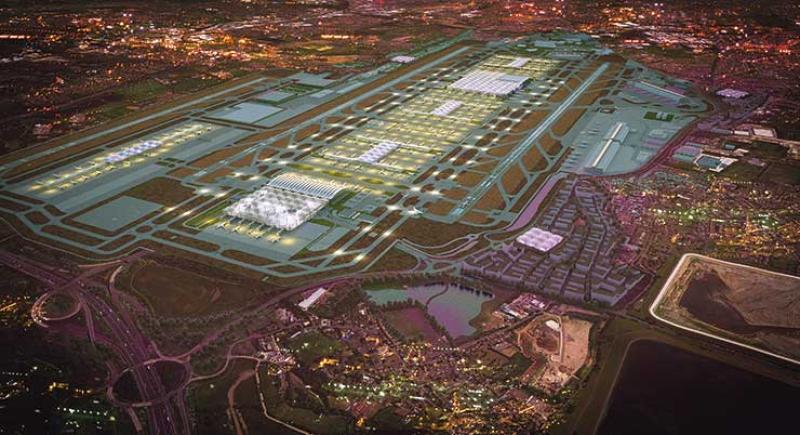
Will 2018 finally be the year that Heathrow gets approval to build its third runway after decades of dithering? This particular can has been kicked down the road so many times that nobody will be very surprised if the decision gets delayed again.
The suspicion of possible further delay was given more credence when the Department for Transport decided to reopen the consultation on its airports national policy statement (NPS), which would effectively give the green light for Heathrow expansion, to re-examine issues such as noise and an air quality plan.
For now, the government has been insisting that it is “on track” to publish final proposals for airport expansion in the “first half of 2018” which would then be subject to a vote in parliament.
The government is still talking up the benefits of allowing Heathrow a new runway, particularly in terms of adding more long-haul destinations, compared with a second runway at Gatwick, so perhaps it may finally happen if MPs vote in favour.
However, it’s always worth noting the high-profile opponents of Heathrow expansion, including foreign secretary Boris Johnson, Liberal Democrat leader Vince Cable and shadow chancellor John McDonnell, whose constituency includes Heathrow.
Should the third runway finally get approved, Heathrow will submit a planning application and begin consulting with local communities on its detailed proposals. If all permissions are granted, the airport hopes to start construction in 2021 and complete the runway by 2025.
Brexit
The UK and European Union may have finally reached a deal on the first phase of the Brexit divorce but now the really tricky process starts of creating a new trading relationship, most likely outside the European Single Market.
As news emerged of the deal last month, Abta immediately reiterated its key demands that the travel industry needs to be solved urgently: maintaining the ability of Britons to travel freely within Europe, ensuring that companies can send reps to support holidaymakers overseas, securing visa-free travel and protecting consumer rights.
There have been suggestions from Ryanair that UK-EU flights could be grounded in summer 2019 if there is no Brexit agreement or transitional deal in place – the airline has even threatened to take its UK-EU flights off sale in October 2018 if there is no deal agreed by then. But other carriers, such as British Airways’ owner IAG and easyJet, have played down such fears.
Transport secretary Chris Grayling has said the prospect of there being no UK-EU flights after Brexit is “inconceivable”. But the European Commission has warned in no uncertain terms that UK airlines will no longer enjoy the freedom to operate flights to the EU after March 30, 2019, if an agreement is not reached.
Destinations
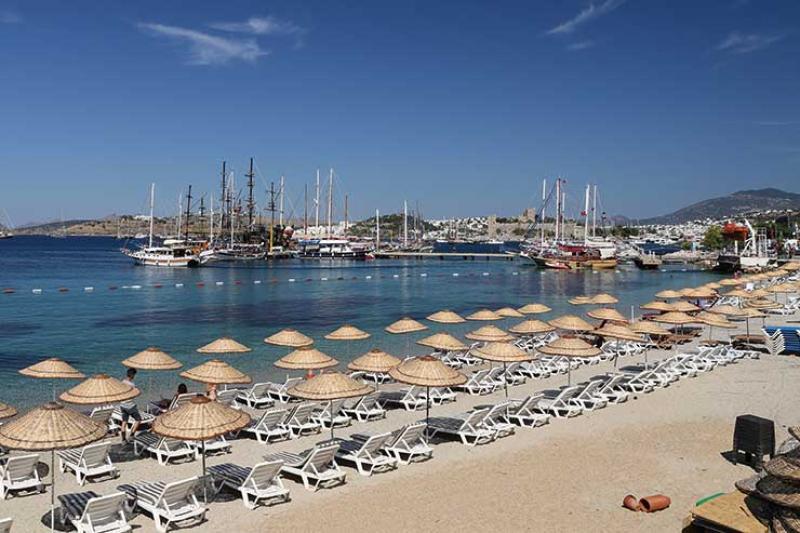
The resurgence of destinations in the eastern Mediterranean, especially Turkey, is expected to pick up more momentum in 2018, with tour operator Tui already seeing a 70% rise in bookings to the destination for this summer, while Jet2holidays has increased Turkey capacity by 60% or 140,000 extra seats.
One of the reasons for this recovery in bookings to Turkey has been the higher hotel prices in Spain over the past couple of years as people flocked to the western Med, but operators expect there to be some “rebalancing” in the prices between the two destinations as this year progresses.
The continued weakness of the pound against the euro is no doubt helping to tempt UK holidaymakers to non-eurozone countries including Turkey, Croatia and Bulgaria.
Egypt has also been recovering as a destination from the UK, although this is limited by the continued inability to fly to the country’s main Red Sea resort, Sharm el Sheikh, due to the UK government’s concerns about the airport’s security.
Another destination to watch will be Tunisia, which had its Foreign Office advice against non-essential travel lifted in July 2017, two years after the Sousse massacre in which 30 UK holidaymakers were killed.
Thomas Cook will return to Tunisia from February with flights from Gatwick, Birmingham and Manchester to Enfidha–Hammamet International airport. The programme will then be extended by adding Newcastle and Glasgow flights for summer 2018.
But Tui has so far not committed to returning to the country where 30 of its customers were murdered in the 2015 attack.
For long-haul, this year will see Danish airline Primera Air starting UK operations with flights from Stansted and Birmingham to both New York and Boston, as well as some services to Spain.
A major question will be how Monarch’s former slots, particularly at Gatwick and Luton, will be utilised by British Airways and Wizz Air respectively during summer 2018, having purchased them from Monarch’s administrators. It will also be intriguing to watch how Norwegian will use the extra 28 weekly Gatwick slots it purchased from Small Planet Airlines in December.
Coming attractions
This year will see a host of major events taking place – the highest profile of which will be the World Cup football tournament in Russia between June 14 and July 15.
The draw seems to have been relatively kind to England, the only home nation to qualify for the tournament, who will be playing their first game against Tunisia in Volgograd on June 18, followed by Panama in Nizhny Novgorod on June 24 and Belgium in Kaliningrad on June 28.
England’s participation in the World Cup has previously played havoc with the “lates” holiday market and travel companies often see a surge in bookings in the immediate aftermath of England’s exit from the competition.
Less disturbing to travel bookings should be next month’s Winter Olympics in Pyeongchang, South Korea, from February 9-25. Elsewhere, the 21st edition of the Commonwealth Games will be hosted by Australia’s Gold Coast region from April 4-15.
More cultural events include the Maltese capital Valletta becoming a European Capital of Culture for 2018 alongside Leeuwarden in the Netherlands.
On the travel industry’s radar will be the launch of the next swathe of headline-grabbing cruise ships including Royal Caribbean’s record-breaking Symphony of the Seas, which will become the world’s biggest cruise ship with a maximum capacity of up to 6,870 passengers when it launches in June.
Before then, notable new ships include Seabourn Ovation, Carnival Horizon and Norwegian Bliss in April, followed by MSC Seaview in May. August will see the unveiling of Scenic’s first ocean vessel, Scenic Eclipse, which will have capacity for 228 passengers and is being billed as a “discovery yacht”. Azamara will also take ownership of Azamara Pursuit in March after purchasing the ship (formerly Adonia) from P&O last year.
The year will be rounded off by the launch of Celebrity Edge in December, where the show-stopping attraction will be the Magic Carpet, a movable platform cantilevered off the side of the ship that can be used both as a restaurant and tender boarding area.