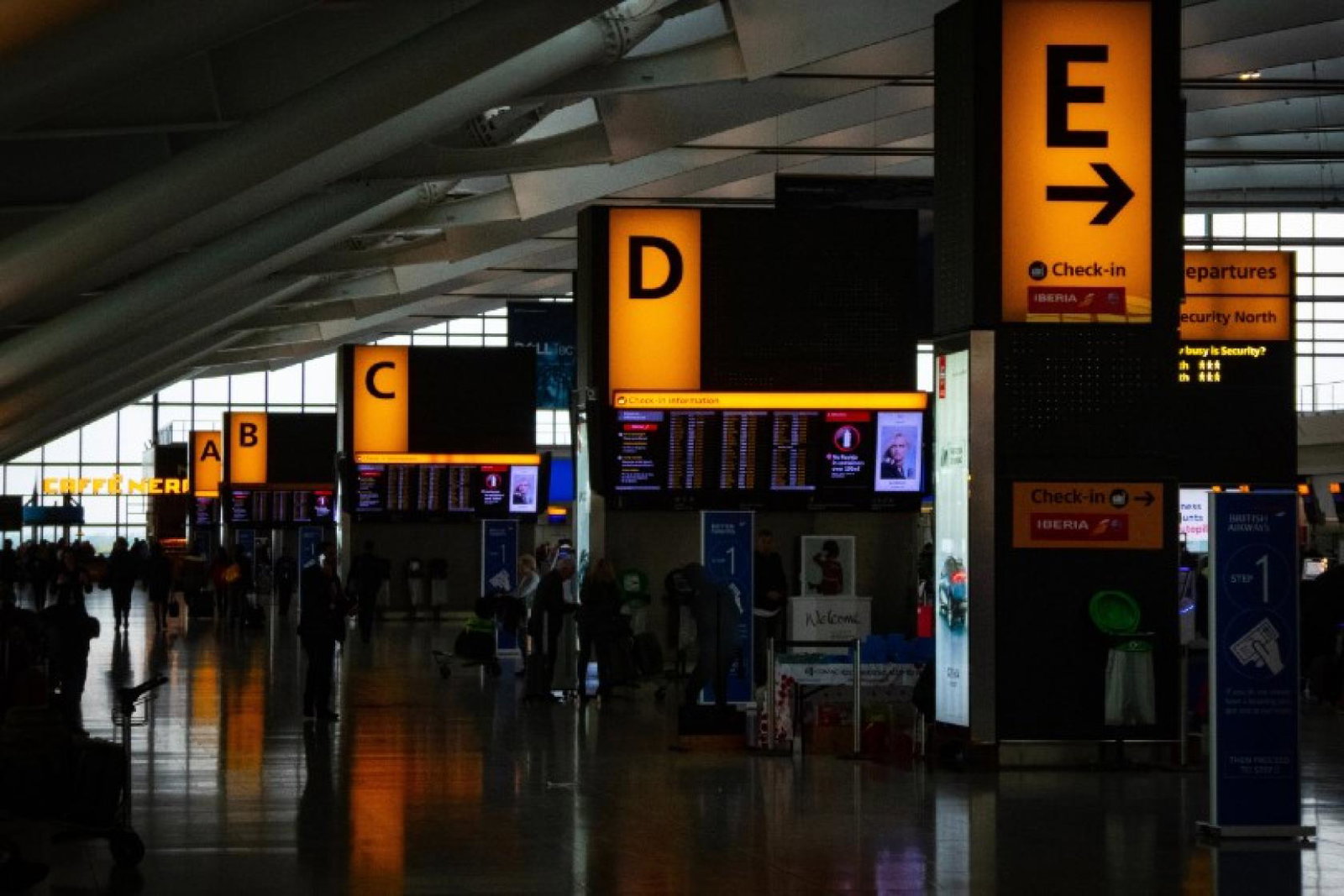
Some 19.4 million passengers passed through the UK’s busiest airport last year, less than a quarter compared with pre-pandemic levels and down from 22.1 million in 2020.
It estimates in excess of 600,000 passengers cancelled travel plans involving Heathrow in December alone owing to the emergence of the Omicron variant of Covid-19 and "the uncertainty caused by swiftly imposed government travel restrictions".
Following the emergence of Omicron, the UK government reintroduced Day 2 PCR testing and pre-departure testing; both measures were rolled back late last week and over the weekend.

Heathrow chief John Holland-Kaye blamed the airport’s woes firmly on the UK government’s travel restrictions, most notably testing.
“There are currently travel restrictions, such as testing, on all Heathrow routes," he said. "The aviation industry will only fully recover when these are all lifted and there is no risk that they will be reimposed at short notice, a situation which is likely to be years away."
Heathrow said on Tuesday (11 January) there remained "significant doubt" as to when demand would recover; citing an Iata forecast, the airport said passenger numbers may not recover to pre-pandemic levels until 2025 – with that dependent on travel restrictions being removed at both ends of a route and passengers being able to travel confident in the knowledge these restrictions won’t be "rapidly" reimposed.
"We are urging the UK government to remove all testing now for fully vaccinated passengers and to adopt a playbook for any future variants of concern that is more predictable, limits additional measures only to passengers from high-risk destinations and allows quarantine at home instead of in a hotel," said Heathrow.