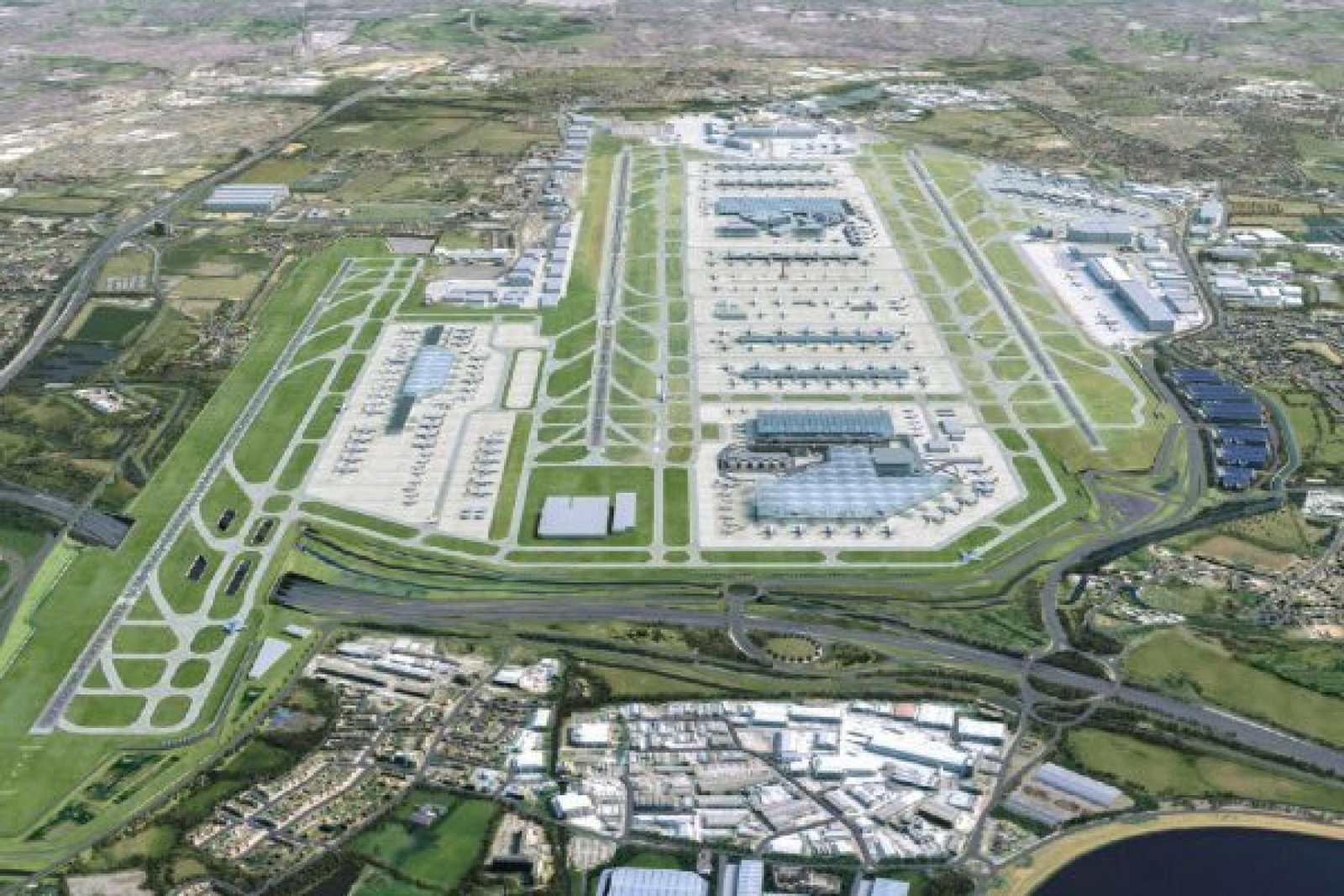
The airport has revealed its latest blueprint after the Labour government backed a third runway earlier this year. A previous plan for the runway, which was approved by parliament in 2018, faltered due to a succession of legal challenges and then the Covid-19 pandemic.
Under its new plans, Heathrow would build a 3.5-kilometre north-western runway, which would allow it to add 756,000 flights per year and 30 new destinations. The runway’s anticipated cost of £21 billion is 50% higher than the £14 billion price tag in 2018, which Heathrow said was due to “construction inflation” over the past seven years.
The UK hub said the third runway would form part of a wider £49 billion project, including a new £12 billion T5X terminal alongside Terminal 5, described by the airport as a “new second front door” to T5, to cater for its increase in passengers from the current 84 million per year.
Heathrow also plans to expand Terminal 2 and build three new satellite terminals to allow the “phased closure” of Terminal 3. Although this £15 billion project will go ahead “irrespective” of the final decision on the third runway.
Heathrow stressed the project would be “100% privately financed”, although airlines fear this will mean higher charges for using the airport in the coming year – leading inevitably to increased fares for passengers.
Thomas Woldbye, Heathrow’s chief executive, said: “It has never been more important or urgent to expand Heathrow. We are effectively operating at capacity to the detriment of trade and connectivity.
“With a green light from government and the correct policy support underpinned by a fit for purpose regulatory model, we are ready to mobilise and start investing this year in our supply chain across the country. We are uniquely placed to do this for the country; it is time to clear the way for take-off.”
The announcement of Heathrow’s plan came just hours after hotel tycoon Surinder Arora submitted a rival proposal for the airport’s expansion, which includes a shorter 2.8-kilometre runway.
Arora argues this project would be cheaper because it would not require the M25 motorway to be diverted – unlike Heathrow’s own plan, which would involve “realigning” the motorway. Arora submitted a similar proposal for a cheaper version of Heathrow’s new runway in 2017, which won support from airlines and is likely to do so again.
Transport secretary Heidi Alexander said the government would “carefully consider" the proposals over the summer, before starting a review of the Airports National Policy Statement later in 2025. This statement will effectively give the green light to Heathrow’s expansion, although it will almost certainly face a barrage of new challenges from local councils and environmental groups.
“I am pleased to have received the initial Heathrow expansion proposals – a significant step towards unlocking growth, creating jobs and delivering vital national infrastructure to drive forward our plan for change,” added Alexander.
Willie Walsh, director general of airline association Iata, said that Heathrow’s performance recently should give “pause for concern and careful scrutiny” when considering the airport’s future expansion.
“We applaud the government’s decision to support the UK’s global aspirations by advancing plans to expand Heathrow,” added Walsh. “This must not, however, come at any cost or make any assumption that the current operator is best placed to deliver the value that the UK’s economy will critically need for growth.
“The March closure of the airport [due to a power outage] was an embarrassment on the global stage that leaves little room for confidence in the airport’s management.”