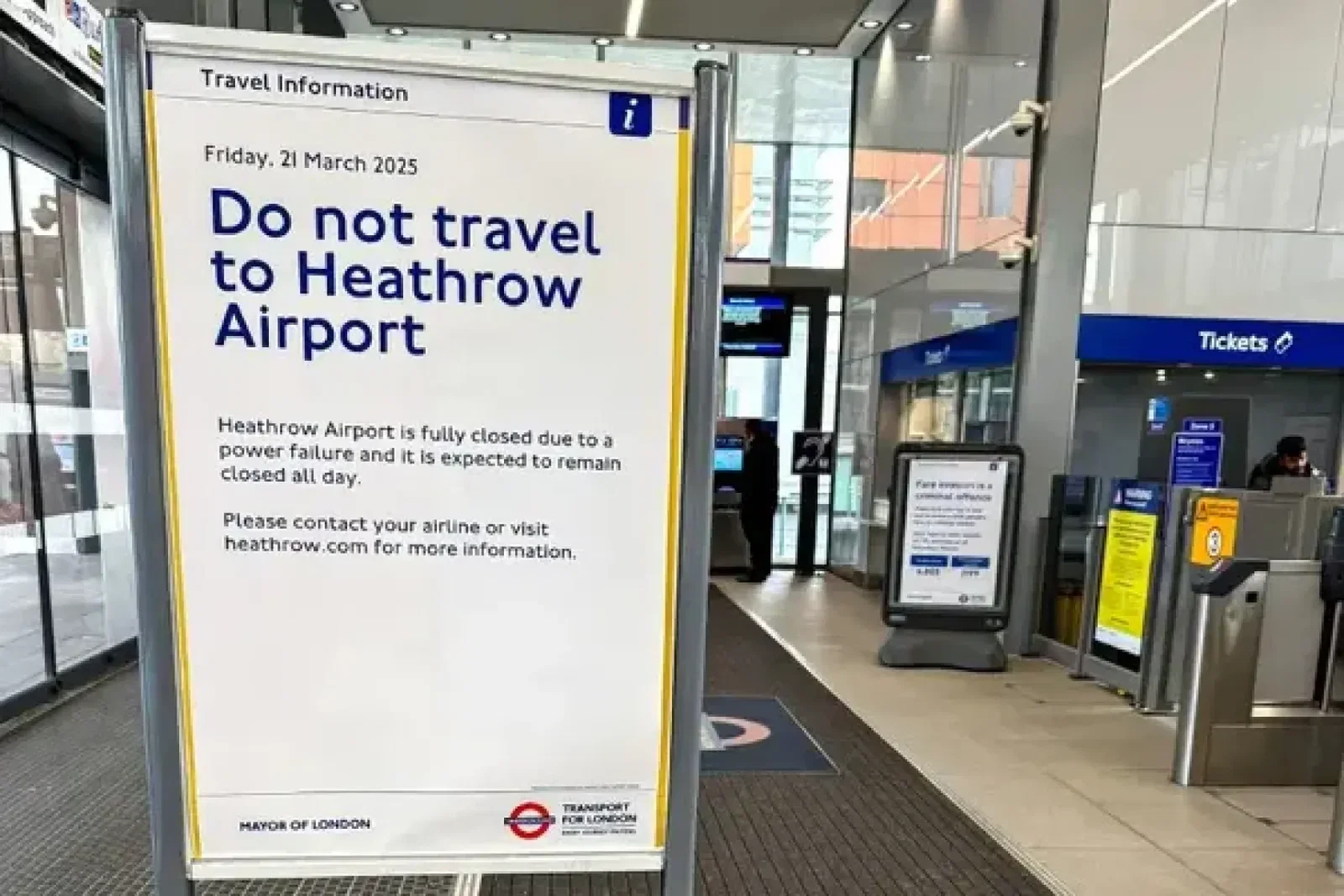
In its report, Neso – the National Energy System Operator – said power was restored to all of Heathrow’s terminals by 10.56am on 21 March following a major fire at one of the substations serving the hub, and to “the wider Heathrow Airport Limited network” by 2.23pm.
Heathrow initially said the airport would remain closed for the whole day, although flights did eventually resume at around 6pm.

The fire, which started late on 20 March, brought operations at the airport to a standstill, forcing airlines to cancel more than 1,300 flights. The incident is believed to have affected around 300,000 passengers.
Agents told TTG of how they worked through the night to support their clients and help them get on their way.
In its initial report, Neso said it was yet to established why two of the affected substation’s transformers – devices used to transfer power from one electrical circuit to another – became disconnected.
"The root cause of the fire remains unknown whil forensic investigations are ongoing,” read the report.
It added: "The Metropolitan Police Service confirmed on Tuesday 25 March it had ’found no evidence to suggest the incident was suspicious in nature’."
Neso will provide a final report to Ofgem and energy secretary Ed Miliband by the end of June.
A Heathrow spokesperson said the airport welcomed the initial findings, saying additional clarity on the causes of the fire “can help ensure greater resilience for the UK’s energy grid” moving forward.
Heathrow, though, has come in for flak for its response to the outage, particularly its decision to suspend operations for more than 18 hours.
Its bosses addressed some of the criticism last month by publishing a five-point action plan, which includes making changes to its own crisis response, tasking former transport secretary Ruth Kelly to review the incident and fostering greater collaboration with airlines.
The plan was released after a chastening appearance before parliament’s transport committee, where MPs were told Heathrow had twice been warned about the resilience of its power supply in the days leading up to the wholesale failure.