





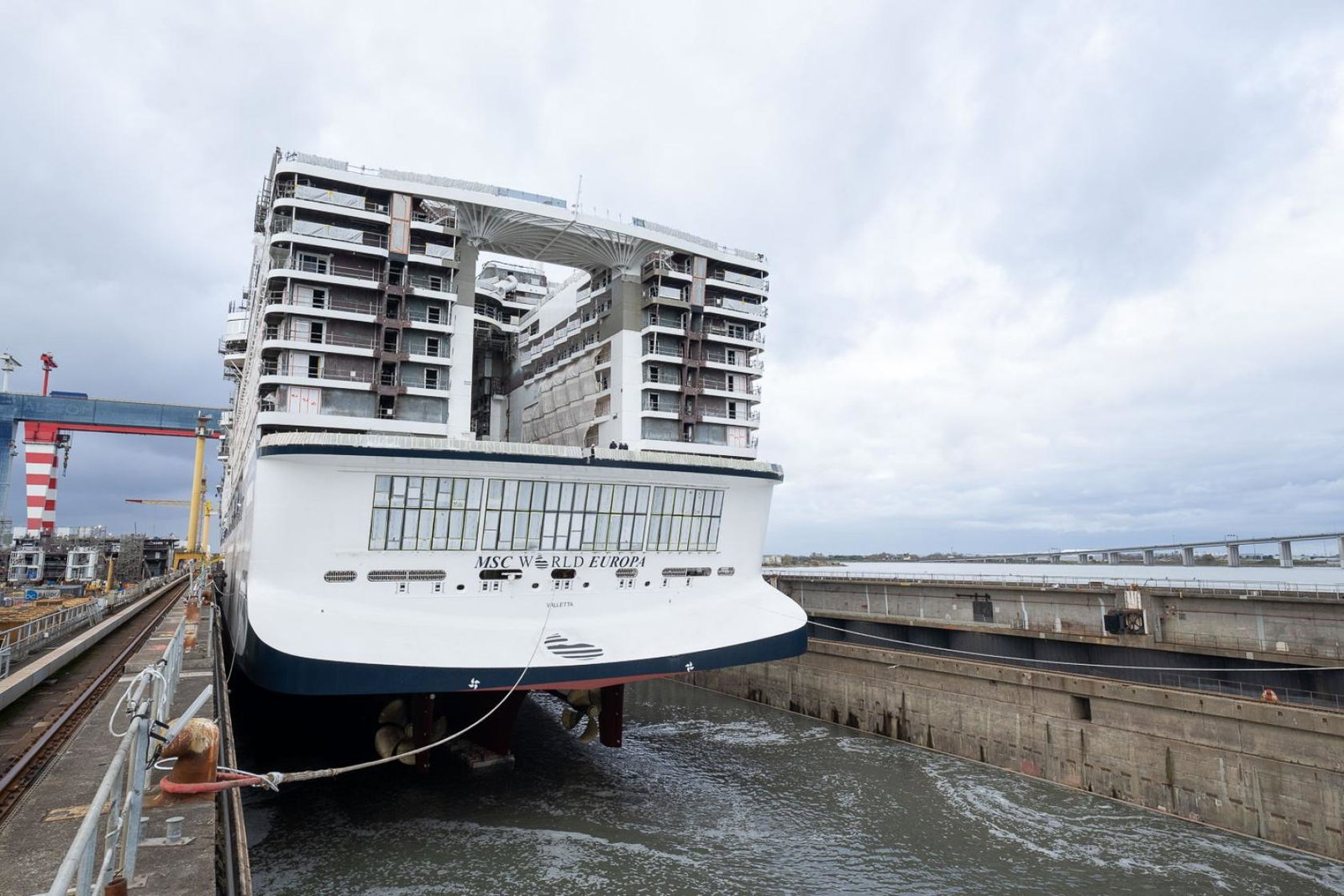
The line held the float-out ceremony for MSC World Europa, due to be delivered in November 2022, and coin ceremony for MSC Euribia, which will join the MSC fleet in June 2023, on Thursday (2 December).
The ships will be powered by liquefied natural gas (LNG) in a €3 billion investment by MSC into more sustainable fuels – boosting its efforts to reach net zero greenhouse gas emissions by 2050.
MSC said the engines of World Europa and Euribia have the potential to reduce CO2 emissions “by up to 25%” compared to standard fuels.
Construction on World Europa II is due to start in early 2023 and the vessels are the next stage of expansion plans which have seen MSC launch seven ships since 2017.
MSC and Chantiers de l’Atlantique confirmed the installation of a fuel cell pilot plant, known as Blue Horizon, onboard World Europa, which is capable of converting LNG fuel into electricity to be used for power and heating.
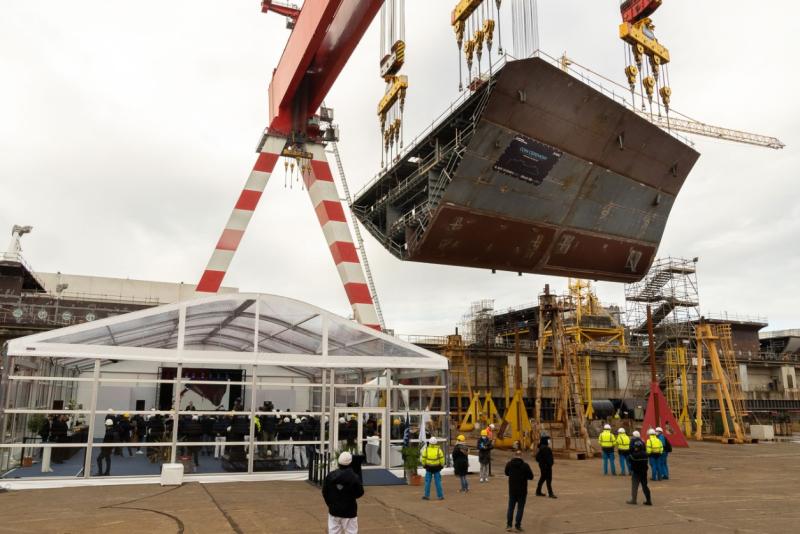
The solid oxide fuel cell (SOFC) will reduce emissions of greenhouse gases by about a further 30%, compared with a conventional LNG engine, and is also compatible with other low-carbon fuels such as hydrogen.
MSC executive chair Pierfrancesco Vago said the day was an “important milestone” for MSC on its journey towards net-zero emissions by 2050, and the two LNG-fuelled vessels were “bringing us ever closer to our vision of an emissions-free cruise industry”.
“We have a lot more to do but I am pleased that despite all that we have faced from the pandemic over the last two years, we have still been able to achieve with our partners at Chantiers de L’Atlantique the launch of these new LNG vessels – the first ever made in France that will also introduce potential new fuel-cell technologies to make them even more efficient,” he said.
“We now need to take even bigger steps and we will need the continued support of our suppliers, partners and governments to achieve this. We all need to work together to achieve our green future.”