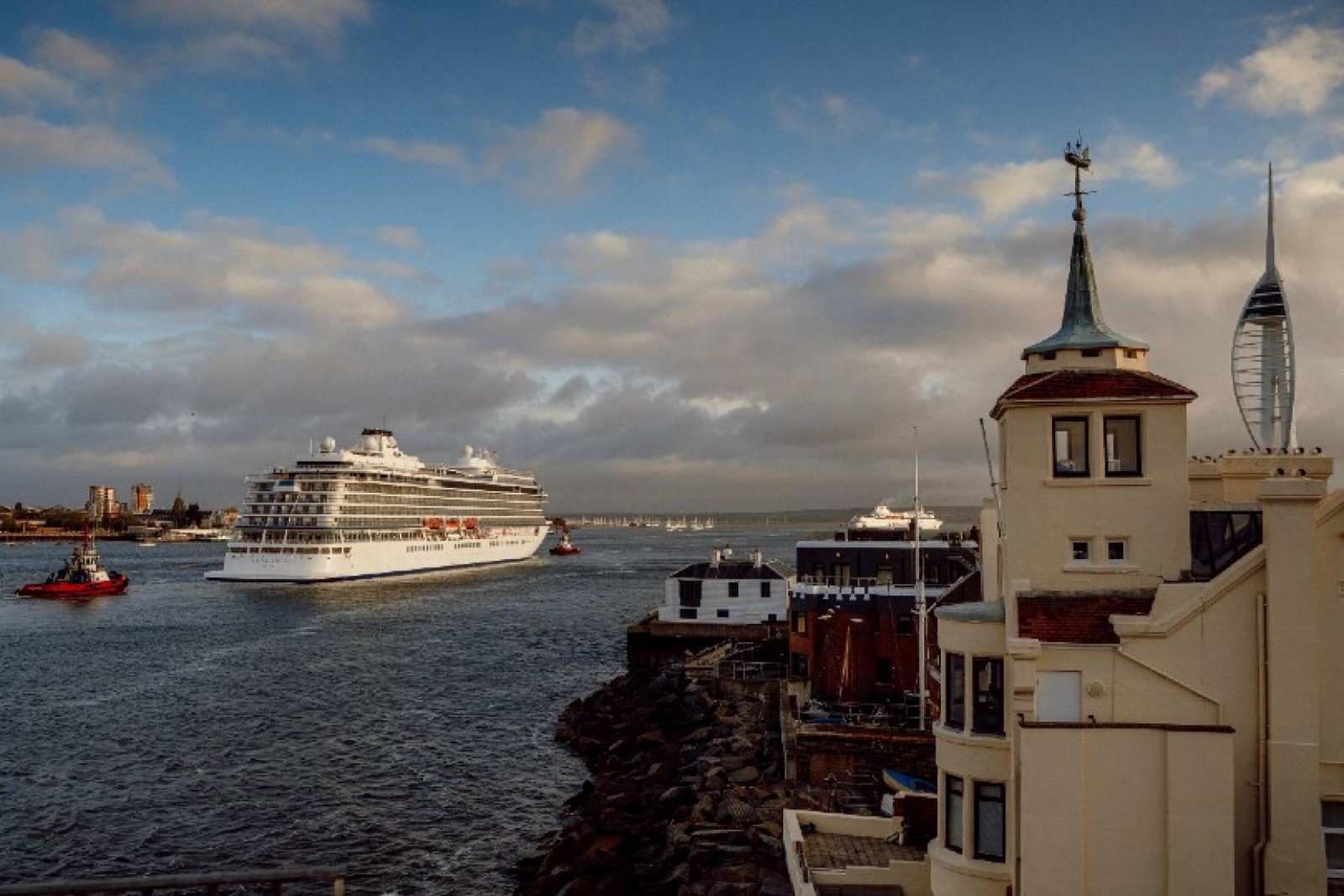
The move, subject to funding, means visiting ships will be able switch their engines off while docked and aid Portsmouth’s ambition to become one of the UK’s first zero-emission ports.
In a statement announcing the news, Portsmouth port said it would turn into "a living laboratory" as different sustainable power options were developed.
In the short-term, a battery storage solution will be used to provide shore power to cruise vessels, as well as a long-term ambition of supplying all vessels that visit the port.
With an existing AI-controlled “master battery” on-site, combined with new battery storage being installed alongside a new solar array, the port will have enough energy to supply small cruise ships when they dock.
Small-ship line Noble Caledonia has already agreed to upgrade its vessels to take shore power when the project goes ahead.
For the longer term, options are being explored to increase the amount of power available at the port, so shore power can be rolled out to all ships berths at Portsmouth.
However, the port said this plan would require government support across the maritime industry and required investment.
Port director Mike Sellers said Portsmouth was “determined to be industry leaders” in sustainability.
“This innovative approach, which incorporates existing technologies already available or planned at the port, means we can look to have shore power up and running by the end of 2022 for smaller cruise ships. We’re now looking at long-term plans to roll out this capability to our other berths,” he said.
"We’re supporting Maritime UK’s call for significant government funding in the spending review to support these changes, so that levels of investment are similar to the aviation sector, who get significant support.
"Collaboration is key to upgrading the port’s electricity supply, so that clean energy can be provided to all vessels when they are alongside."