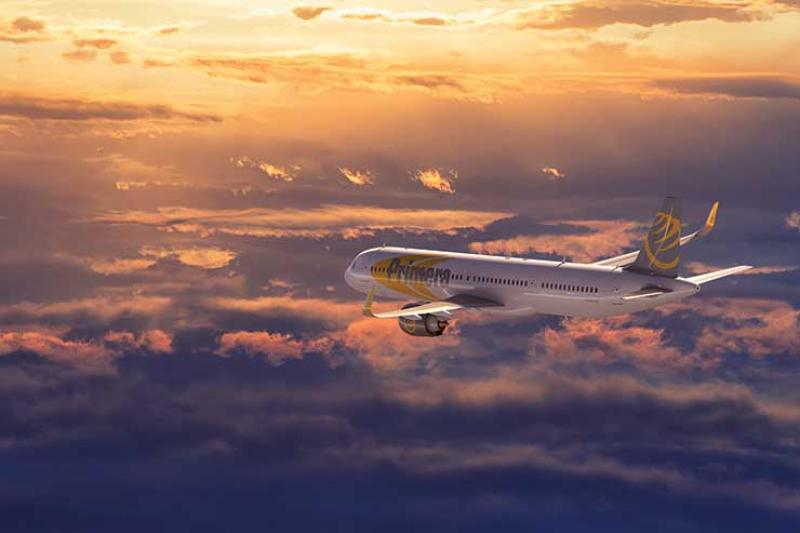
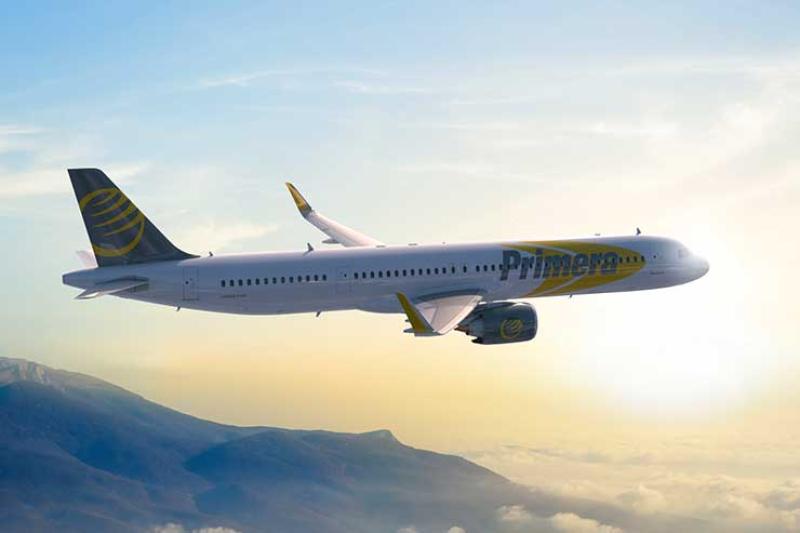
Amid a recent flurry of activity in the low-cost, long-haul sector, one new operator stands out as relatively unknown on both sides of the Atlantic.
Primera Air stormed on to the scene last year by announcing plans to fly from London Stansted, Birmingham and Paris Charles de Gaulle airports to New York, Boston and Toronto – a radical departure from its short-haul, charter specialism.
The company has an eclectic history that defies easy classification. Having started life as an Icelandic airline, JetX, it was acquired by and renamed after Primera Travel Group, a conglomerate of Scandinavian travel agencies and tour operators. Newly formed Primera Air then ditched its Icelandic identity, first by acquiring a Danish operating licence and then another in Latvia.
Having moved its headquarters from Reykjavík to Riga in 2014, Primera Air was best described as an Icelandic-owned airline based in Latvia that specialises in flights from Denmark and Sweden. Sun destinations in the Mediterranean and the Atlantic make up the bulk of its network – a consequence of the group’s structure and its historic reliance on leisure-focused charter markets.
But even that description is now incomplete, thanks to the addition of British and French bases. With a smattering of flights also operated from other countries – and with markets in the Middle East, Africa and Asia on the horizon – Primera Air is nothing if not a truly dynamic airline.
CEO Hrafn Thorgeirsson admits that some people “might find it odd” that the company has its fingers in so many pies. When it comes to explaining the structure, however, his answers are surprisingly logical.
Riga may be separated from Primera Air’s Scandinavian bases, but, he notes, it “is still closer to Denmark and Sweden than Iceland”. Having two Air Operator’s Certificates (AOCs), meanwhile, may add complexity, but it also adds flexibility. The Latvian licence, registered under the name Primera Air Nordic, benefits from more favourable employment laws, for example. And the Danish licence, operated as Primera Air Scandinavia, already had a permit to serve the US, which has sped up the transatlantic launch.
“We have the two AOCs for the same reasons that SAS [Scandinavian Airlines] now has two AOCs, and Norwegian has multiple AOCs,” Thorgeirsson says. “It does give us certain leverage… and it’s not really a big deal economically, because the back offices are the same for both. Everything is basically run like one airline in this building where I’m sitting.”