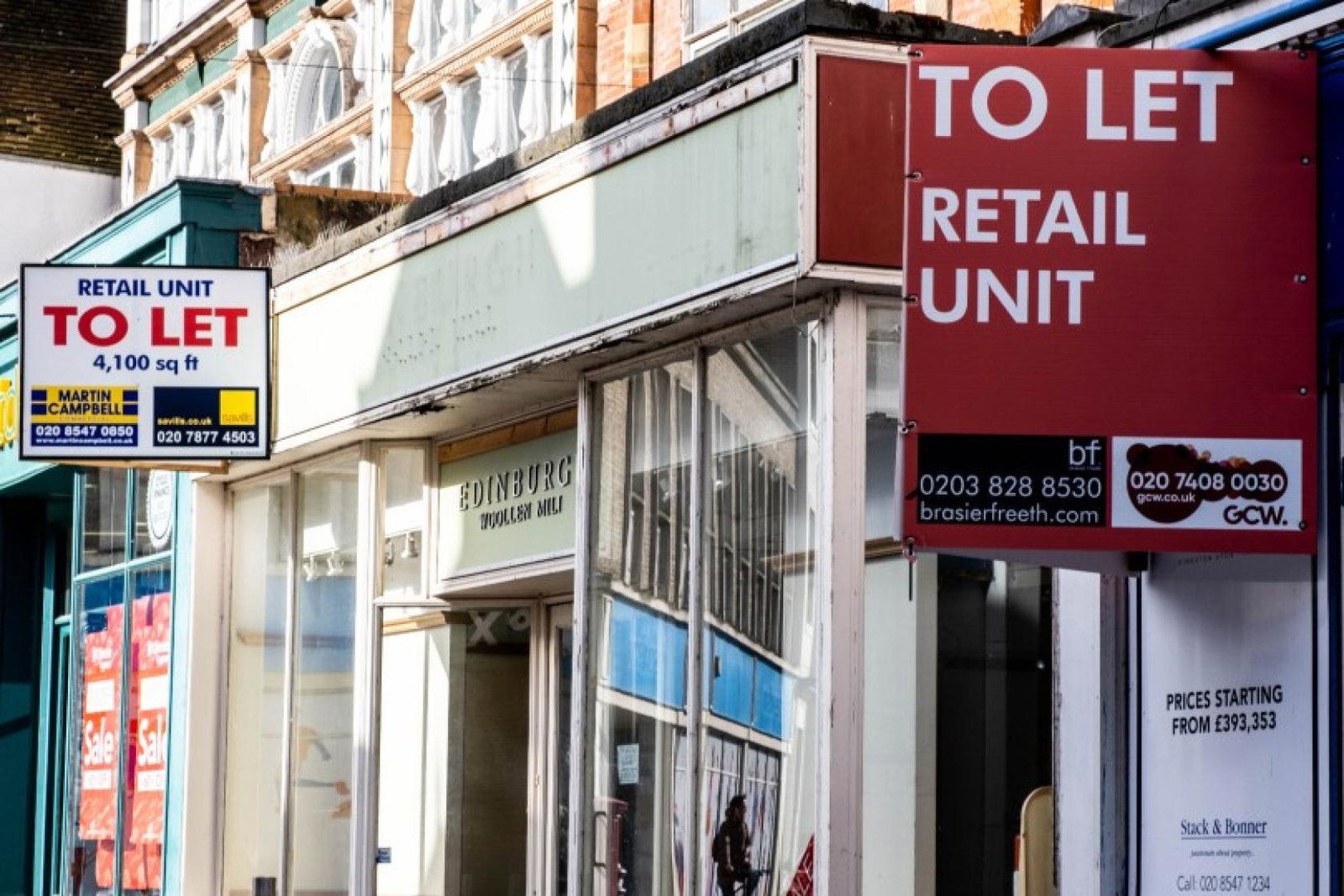
The boarded-up windows and retail statistics tell the story: the high street isn’t doing too well, with footfall down and online shopping soaring since the pandemic.
The British Retail Consortium (BRC) found total UK footfall decreased by 12.4% in August compared with the same month in 2019. BRC chief executive Helen Dickinson outlined the challenge: “25% of all shopping is done online [and] it’s closer to 40% for non-food.”
Speaking during a Westminster Forum debate, Dickinson revealed that for some purchases, internet searches preceded half of all transactions. However, she stressed: “It’s not about online killing the high street; more and more of us are searching from one to the other.”
Proof of this is the number of Google searches for “...near me”, which Dickinson said increased 50% last year.
And there is further cause for optimism. In the first half of 2022, the Local Data Company recorded 2,258 closures of multiple retail and leisure units, while the independent sector saw 1,335 openings. This is the best since 2017, with researchers saying the sector “is in a strong position despite looming challenges”.
Our towns may not yet be seeing a resurgence, but Dickinson is hopeful. She is among those who believe retail can recover, if thinking shifts. “Town centres must be places to invest in, not ones to squeeze value from,” she said.
Barrhead Travel president Jacqueline Dobson agrees. “There are empty retail units across the country. High rents, high rates and spiralling bills could deter many would-be entrepreneurs or start-ups,” she said.
“The government must look at the support and incentives available for new business launches and to sustain existing retailers," Dobson continued.
"Grants and start-up loans will be helpful for SMEs, but most only cover minuscule costs. There needs to be a long-term strategy for encouraging new retailers and supporting existing ones.”
Dobson suggests reducing business rates and working with commercial landlords. “Beyond that, it’s about having localised strategies to engage with businesses and understand how to regenerate abandoned units."
‘Experiential’
These localised strategies must embrace – not fight – digital, experts believe. Jo Morrison is director of digital innovation and research at Calvium, which specialises in apps for “digital placemaking” – the creation of online local communities.
She believes younger people will shape the high street with smartphones, which she describes as “the base layer of connectivity”. “Young people didn’t have smartphones in 2007, now 93% do,” she said. “The change has been seismic, no more so than in our town centres.”
Digital placemaking could mean, for example, using an app to organise a flash mob by a theatre group or an artists’ sale in a new community space – or perhaps a travel agency marketing initiative calling people to a town centre.
Local government minister Paul Scully is a digital placemaking enthusiast, but admitted: “First we have to make sure everywhere has fast broadband.” He ruled out the government leading digital strategy. “The last thing we want is the government coming up with an app.”
He concurs with the BRC’s stance. “My view is high streets will be far more experiential,” said Scully, highlighting how instead of people heading into town for shopping and then onto something else, many high street visits would be “almost the other way round”.