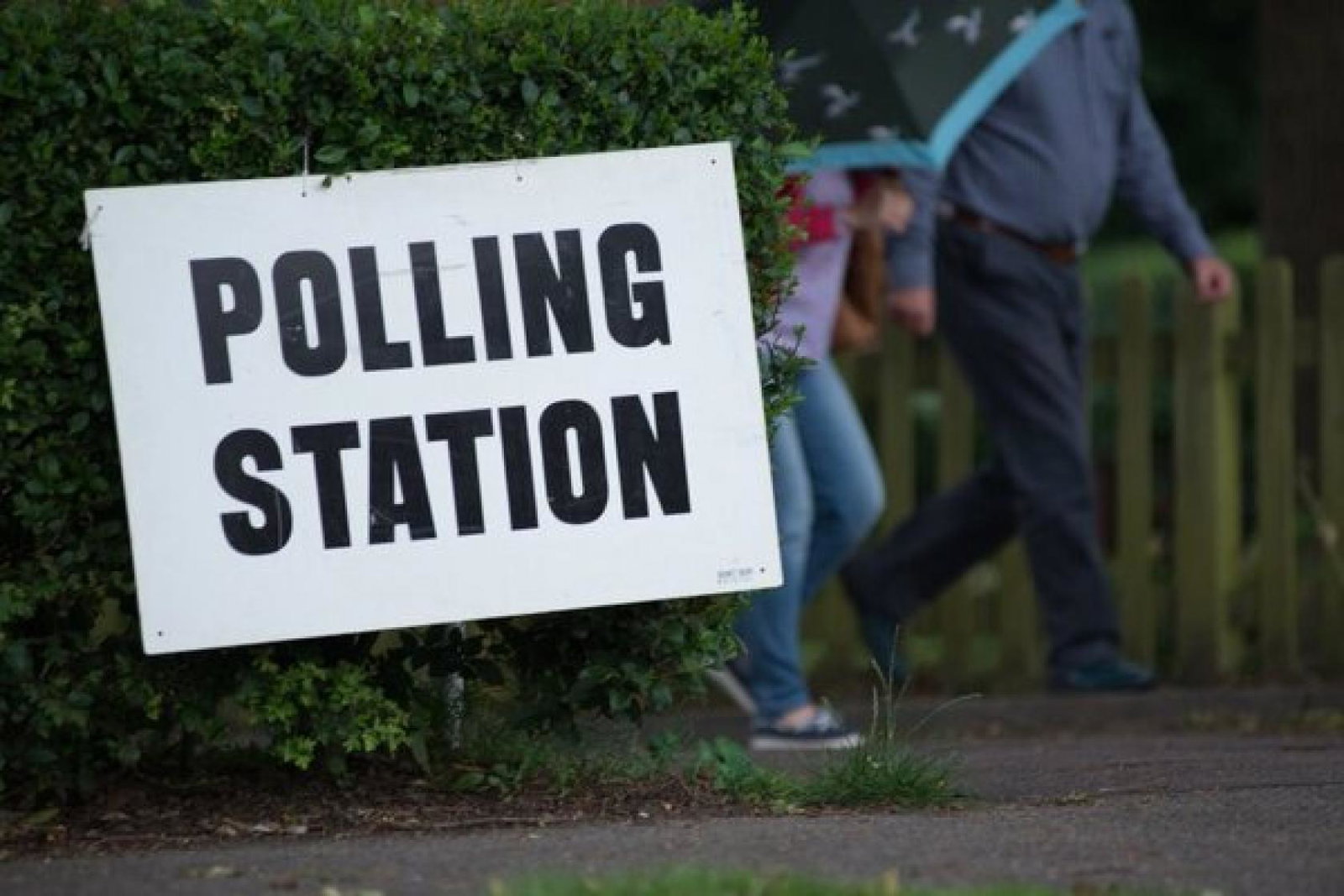
After six weeks of rigorous campaigning, UK voters headed to polls on Thursday (4 July) to vote in the first general election for five years – one, so far as travel is concerned, fought primarily on environmental issues.
It’s fair to say travel has not featured prominently on the election trail, with the major parties’ manifestos focusing mainly on sustainability, such as reducing the carbon footprint of flying and the development of alternative fuels.

With so few commitments to, or policies on, travel and tourism, it will make it even more important in the immediate post-election period for the industry to make its voice heard, regardless of who ends up in 10 Downing Street.
What’s at stake?
So what are the key battleground issues? Well, with the country entering a critical period to 2030 where sustainability is likely to influence a lot of decision-making, one focus will be scaling up production of sustainable aviation fuels (SAF) and establishing how this can be done without pushing up taxes and flight prices.
Travel also needs regulatory certainty to thrive; efforts to reform Atol protection and the Package Travel Regulations (PTRs) are under way, but what about Air Passenger Duty (APD) and the EU261 flight compensation scheme, which was carried over from the UK’s membership of the EU pre-Brexit?
Another Brexit headache is the UK’s mobility rules, with the industry keen for government to reduce barriers preventing young people, in particular, from working abroad as reps or chalet hosts, and preventing travel businesses more generally "posting" workers overseas.
High street agents, meanwhile, will be watching out with keen interest for any plans to reform the UK’s business rates regime. And then there’s the wider question of how the outbound travel sector illustrates to a new government and new MPs why it is key economic contributor and force for good.
The manifestos
Some answers lie in the major parties’ manifestos. The Conservative manifesto is light on commitments to the travel industry, limited to just three mentions of aviation.
The party plans to “support the growth and decarbonisation” of aviation by implementing its SAF mandate, which will require 10% of all air fuel to come from sustainable sources by 2030. It has also pledged to create an industry-backed revenue support mechanism and invest in future aviation technologies.
The Conservatives will also continue backing domestic flights to remote areas through Public Service Obligations routes, and give local councils powers to “manage uncontrolled growth of holiday lets”.
The party is proposing a £4.3 billion business rates support package for high street retailers, as well as improved access to finance for SMEs. It has also vowed not to raise corporation tax.
Labour also commits to promoting alternative aviation fuels to “secure the UK aviation industry’s long-term future”, as well as airspace modernisation that will allow flights to operate more efficiently.
Other pledges include £500 million to support manufacturing of green hydrogen, a potential alternative aviation fuel, while £1 billion will be used to accelerate carbon capture technology – another tool for countering the impact of aviation emissions.
Elsewhere, the party promises to reform business rates in England with a system designed to “level the playing field between the high street and online giants", as well as better incentivise investment, tackle empty properties and support entrepreneurship.
The Liberal Democrats take a stronger line on aviation emissions with five measures to "reduce the climate impact of flying", including a new – albeit undefined – "super tax" on private jet flights.
The party also plans to halt all London airport expansion and ban domestic flights that can be completed by rail in under 2.5 hours, unless they’re powered by alternative fuels.
Under the Lib Dems, a greater proportion of the tax burden on international flying would be levied on frequent flyers, reducing costs – it said – for people taking "one or two" flights a year.
More generally, the party plans to “hold businesses to account for their role tackling climate change by introducing a general duty of care for the environment”, alongside investment in renewable energy and zero-carbon transport.
Beyond the three main parties, the Green Party – unsurprisingly – takes the toughest line on aviation by proposing a carbon tax on all aviation kerosene sold in the UK, as well as a frequent flyer levy “to reduce the impact of the 15% of people who take 70% of flights”. It has also suggest banning domestic flights for journeys taking less than three hours by train and halting all expansion of airport capacity.
By contrast, Reform UK proposes scrapping net zero targets and renewable energy subsidies. Other policies include abolishing business rates for high street SMEs and exempting them from corporate tax by lifting the minimum profit threshold to £100,000.
The Scottish National Party is advocating for a reunion with the EU and promises to promote "a fair and affordable transition to zero-emission transport fuels", while Welsh nationalist party Plaid Cymru plans to raise APD and introduce a kerosene tax for private jets.
Meanwhile, in Northern Ireland, Sinn Fein is calling for development of regional airports and "greater regional balance" between Dublin, Cork and Shannon airports, one that recognises Shannon’s "vital" role as a tourism gateway to the mid-west region. It also pledges to improve rail links in the north.
The Democratic Unionist Party, meanwhile, is calling for the reinstatement of duty-free shopping between Northern Ireland and the EU, a third runway at Heathrow prioritising regional connections, and the abolition of APD.
‘It’s time to talk’
"It’s going to be a busy summer,” admits Abta chief executive Mark Tanzer. "We’re excited to have new people to talk to, because we have a lot to talk about," he tells TTG. "We’ve already started talking to politicians of all stripes so if there’s a new government, we’re not going from a standing start."
With sustainability top of the agenda, Tanzer says it’s important net-zero policies don’t make travel unaffordable or restrict choice. He adds that while it’s "good to have a goal" in terms of implementing a SAF mandate, the government needs to be "realistic" with its policies.
"What we don’t want is progressive layering of carbon taxes putting the price of aviation up and taking it out of reach of people struggling with cost-of-living issues,” says Tanzer.